Episode Transcript
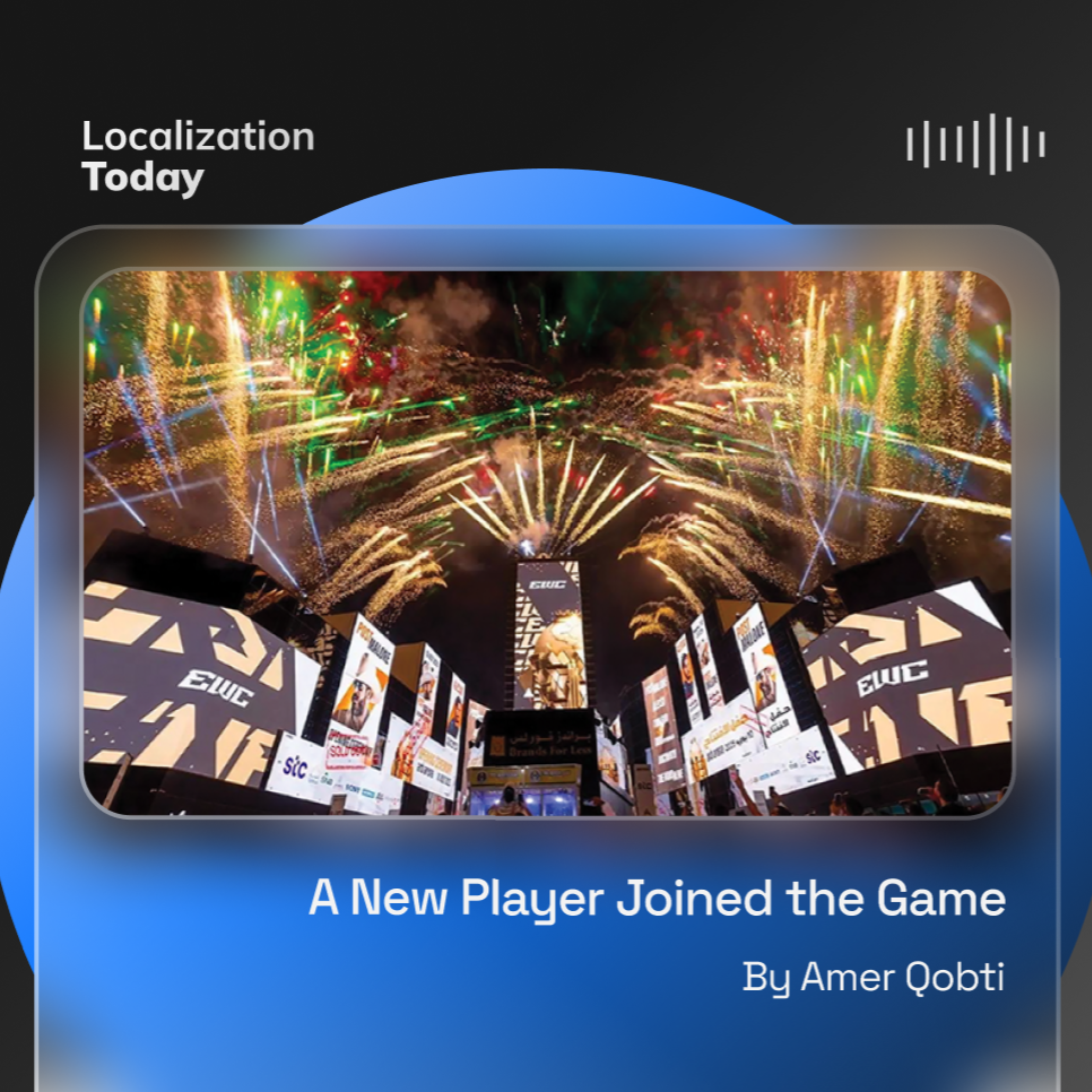
[00:00:00] A new player joined the game Saudi Arabia and the Localization of Gaming and Esports By Amir Khabdi this past August in Riyadh, Saudi Arabia, millions of fans tuned in as the world's top gamers battled under dazzling neon lights at the Esports World Cup. The roar of the crowd blended with the flicker of giant LED screens, creating an atmosphere of electric anticipation and cutting edge spectacle. With a prize pool of over $70 million that set a new record for an esports event rivaling the scale of major traditional sporting events, the Esports World cup was more than a gaming competition. It was a declaration that Saudi Arabia had arrived on the global digital stage.
[00:00:47] Attendance confirmed this scale, with more than 3 million people traveling to Riyadh to experience the tournament firsthand.
[00:00:55] With its young population driving the momentum, Saudi Arabia is making esports a pillar of Vision 2030, a sweeping national strategy that seeks to diversify the economy.
[00:01:06] This initiative is transforming entertainment worldwide and at the same time creating opportunities for the language industry, from terminology development and multilingual broadcasting to the localization of games that reach millions across cultures.
[00:01:23] Gaming as a Cultural the rise of Saudi esports cannot be understood without considering the country's demographics.
[00:01:31] With more than half the population under the age of 35, Saudi Arabia is one of the youngest nations in the world.
[00:01:38] According to various reports, nearly two thirds of Saudis identify as active gamers, a statistic that reflects a cultural identity rather than a pastime.
[00:01:49] For many young people, gaming is the language of leisure, competition and even social connection. It is where friendships are forged across digital landscapes, where skills are honed, and where communities, local and global, take root. This immense base of digitally native youth gives Saudi Arabia a unique advantage. Unlike some countries where esports feel niche or subcultural, in Saudi Arabia gaming is mainstream.
[00:02:16] The government has recognized this cultural affinity as an asset, actively using events like the Esports World cup to build a digital memory and promote popular diplomacy. By embedding traditional elements into digital experiences and attracting international participants, the Kingdom is using gaming to create shared cultural spaces and strengthen its position as a hub for creative innovation.
[00:02:41] Supporting this cultural and strategic push is a world class digital infrastructure.
[00:02:46] The Kingdom boasts near universal Internet penetration with speeds and connectivity that rival the world's most advanced economies.
[00:02:54] The Communications Space and Technology Commission has played a pivotal role, spearheading the Game Mode initiative to improve the quality of online gaming. According to the CST's Saudi Internet Report, 2024 response times for popular video games have seen an impressive 88% improvement.
[00:03:16] The CST also issues quarterly reports to evaluate service providers and has awarded the Platinum Game Operator Award to top performers. Fostering a competitive environment that directly benefits gamers.
[00:03:29] Investment in 5G and network optimization has drastically improved online gaming performance, making it possible for competitive titles to flourish.
[00:03:39] Combined with a population eager to spend money on in game purchases and premium titles, Saudi Arabia represents one of the most lucrative gaming markets in the world. According to Grandview Research, Saudi Arabia's gaming market brought in about $1.36 billion in 2024 and is projected to reach $2.22 billion by 2030, growing at roughly 7.9% annually.
[00:04:09] The National Gaming and Esports Strategy Demographics and infrastructure alone do not explain the meteoric rise of Saudi gaming and esports. The strategic blueprint for this transformation is the National Gaming and Esports Strategy, a plan launched in 2022 by Crown Prince Mohammed bin Salman to position the kingdom as a global gaming hub by 2030. The strategy is implemented through 86 specific initiatives managed by a coalition of more than 20 government and private entities with objectives to contribute approximately $13.3 billion to the country's gross domestic product and create 39,000 new jobs in the gaming and esports sectors. Its financial engine is the Public Investment Fund, one of the world's largest sovereign wealth funds. Through its subsidiary Savvy Games Group, the PIF has deployed billions of dollars to build a gaming empire that spends billions spans the globe. The approach is twofold. It acquires leading international companies and simultaneously cultivates domestic talent and infrastructure on the international stage. Saudi investments include Scopely, a mobile gaming Giant acquired for $4.9 billion, and ESL Faceit Group, the largest esports tournament organizer in the world.
[00:05:36] These moves give Saudi Arabia immediate influence in the global industry.
[00:05:42] Domestically, the vision is to create a self sustaining ecosystem. Savvy has launched initiatives such as Steer Studios, a Riyadh based developer tasked with creating games for a global audience, and the Savvy Academy, which trains the next generation of developers, designers and esports managers. The Academy offers programs ranging from workshops for school children to professional level courses, all free of charge, with the aim of embedding gaming into the educational and career fabric of the nation.
[00:06:14] Alongside NGES and PIF, the Saudi Esports Federation, established in 2017, serves as the national body for esports. It regulates competitions, develops talent and ensures the strategy translates into real opportunities for players and teams.
[00:06:34] This domestic push is also seen in the development of Qiddia City, which is being built with the slogan Play Life. This project is creating one of the world's first planned mixed use gaming and esports districts designed to redefine entertainment as a powerful economic and cultural force and to attract over 30 leading game companies.
[00:06:55] The strategy is Saudi Arabia's ambition is to be a creator and exporter of digital culture, not merely a consumer market.
[00:07:04] This ambition is most vividly displayed in the Esports World cup, which by 2025 had become the world's largest professional esports event. The tournament represented dozens of game titles and drew nearly 184 million hours of viewership across global audiences, according to the official report.
[00:07:25] The rise of Saudi women in gaming efforts also extend to inclusion beyond the impressive viewership numbers. One of the most remarkable aspects of Saudi Arabia's gaming revolution is the significant and growing role of women.
[00:07:40] General gaming participation is near equal, with an impressive 48% of the kingdom's gamers being women, according to figures from the Ministry of Communications and Information Technology.
[00:07:52] A separate study further details this, noting that 69% of online women in Saudi Arabia identify as Gamers, a percentage 1 point higher than their male counterparts.
[00:08:04] Because gaming is already mainstream for women in Saudi Arabia, the kingdom stands out globally as professional esports still skews male elsewhere. Moreover, the nation's strategic focus on gaming and esports is creating new professional pathways for women. While the global average for women in esports professions is approximately 5%, Prince Faisal bin Bandar, chairman of the SEF, has stated that within the kingdom that figure is 20% and growing. He also explained that there are 500 esports graduates at universities, many of them women, and projected that 3,000 young women will become professional players in the next three to four years.
[00:08:48] Prince Faisal also emphasized the rapid expansion of the wider community, noting that Saudi Arabia now counts 10,000 professional and semi professional players.
[00:08:59] SEF has a dedicated women's team with equal prize money pools, and the Esports World cup featured a women's invitational tournament for mobile legends. Bang bang in both 2024 and 2025, a historic milestone was achieved at the esports World Cup 2025 with the participation of Saudi female players Lynx, Lunar and Levin, who competed as part of the Saudi Twisted Minds team and advanced to the finals. Why Localization is Crucial One of the most fascinating dimensions of Saudi Arabia's gaming and esports push is its multilingual ambition. Arabic is spoken by more than 400 million people across the Middle east and North Africa, yet for decades it has been marginalized in the gaming industry.
[00:09:48] The SEF has begun to address this gap by actively promoting localization and commissioning research into how language can drive gaming success According to Turki Al Fazan, chief executive officer of the sef, the transformation of the region into a major gaming hub is tied to factors such as government support and a tech savvy population.
[00:10:11] With localization now essential to meet gamers expectations, market forecasts suggest that player spending in the Gulf Cooperation Council will rise from $2.24 billion in 2023 to $3.2 billion by 2028, with a compound annual growth rate of 7.7%.
[00:10:32] Surveys also indicate that more than 75% of gamers in Saudi Arabia, the United Arab Emirates and Qatar consider the portrayal of Arab culture as very or somewhat important, and 41% say they are more likely to play titles localized into Arabic. Successful adaptations such as PUBG Mobile and EA Sports FC demonstrate how effective localization can turn a game into a regional phenomenon and expand its global reach.
[00:11:05] Localization is also a core part of the nges, which aims to empower Saudi talent to create world class games that reflect the kingdom's culture.
[00:11:15] The Esports World cup has shown how high the stakes are for getting language right. According to analytics firm Esports Charts, broadcasts in multiple languages were a key driver of engagement, with audiences in India and Japan surging once content was tailored to them. Hindi language streams spiked nearly tenfold when an Indian team competed, while Japanese viewership quadrupled with proper localization.
[00:11:41] The report also found that platform dynamics reflected these shifts. YouTube and TikTok nearly doubled their viewership thanks to influencer driven localized content, while Twitch stagnated with a slight decline in hours watched. The data shows a simple Making esports accessible in many languages is not just a courtesy to fans, it's a winning business model that delivers measurable results.
[00:12:08] This linguistic vision extends to real time communication during the live event. As a major international competition, the Esports World cup requires professional interpreters to facilitate clear and accurate communication among athletes, officials and the media, eliminating language barriers that could hinder performance or reporting. This is not a purely commercial endeavor. The Kingdom is also actively investing in language to support this ecosystem. The King Salmon Global Academy for the Arabic Language, a government initiative under Vision 2030, has partnered with the SEF to launch the Arabic Esports Glossary, which contains more than 500 terms.
[00:12:51] The glossary is an open source resource accessible to anyone that provides a term entry, its Arabic translation and a brief definition with the goal of standardizing gaming and esports terminology and providing a unified and reliable reference for the gaming community and content creators alike. For years, many Western perspectives on gaming in Saudi Arabia have focused on strict content regulations and censorship, painting a picture of a closed off market.
[00:13:22] This view, however, is outdated. It also fails to recognize that treating Saudi Arabia as simply one more part of the MENA overlooks its unique scale and ambition.
[00:13:33] With its young demographics and immense investments, the kingdom has become a distinct and dominant market in its own right. The recent acquisition of Electronic Arts by Saudi Arabia's PIF highlighted this shift in global perception.
[00:13:49] Some welcomed the deal as part of Saudi Arabia's growing influence, while others panicked, turning the conversation into political rhetoric. The irony is striking.
[00:14:00] For years, Arab and Muslim representation in video games was shallow, stereotyped, or outright harmful, and the industry barely reacted. Yet when ownership and influence shifted, loud voices suddenly emerged, often echoing outdated assumptions about Saudi Arabia. In reality, the changes that have taken place in the kingdom over the past six years alone have been profound, surpassing the pace of reforming countries with far longer histories of gradual change.
[00:14:32] Instead of filtering this deal through old stereotypes, the industry would do better to see it for what it means, which is more games to be localized, more communication to be managed, and more content adapted. Our industry is tied to this transformation in ways both visible and invisible.
[00:14:50] Whether it is legal contracts, esports, broadcasts, marketing campaigns, product interfaces, or internal communications, everything depends on language. Localization is the infrastructure that allows these new global ventures to succeed in a multilingual, multicultural environment.
[00:15:10] The success of the Esports World cup should guide optimism and shape the way forward, showing what can be achieved when localization and global engagement are treated as strategic priorities.
[00:15:22] The reaction to Saudi Arabia's rise is not unique. When China's gaming market began to expand, similar fears and skepticism surfaced. Every time a new player joins the global stage, disruption follows. But this disruption also brings opportunity, new stories, new audiences, and new languages to serve. Rather than resisting change, both the gaming and language industries should embrace it, recognizing that global growth depends on cross cultural understanding and the ability to communicate it. As new markets connect, languages such as Arabic and Chinese are becoming central to global content strategies essential in any serious approach to internationalization and localization.
[00:16:08] This shift brings new challenges but also vast opportunities for those ready to engage with a more multilingual world.
[00:16:16] The Future of Global Covering Saudi Arabia's gaming and esports transformation is a challenge in itself simply because of the pace and scale of change.
[00:16:27] This article has focused on the most prominent initiatives, though many other projects and investments are also shaping the kingdom's role in this fast evolving global industry.
[00:16:38] Yet the vision is not only economic but also linguistic. As investment pours into tournaments, training and infrastructure, demand grows for interpreters, translators, content localizers, and terminology specialists.
[00:16:53] Projects like the Arabic Esports glossary show how the industry is pushing Arabic into new digital domains and creating professional opportunities in language services that did not exist a few years ago. The global language industry is is now looking at a market where localization has become essential to participate in an entertainment sector expanding at unprecedented speed. The Saudi gaming and esports movement is positioning Riyadh among the world's leading hubs alongside cities like Los Angeles and Seoul. The goal is to create an arena where east and west tradition and technology and Arabic and English coexist on equal footing.
[00:17:34] From Tokyo to so Paulo. Audiences are beginning to recognize that a new player has entered the global. Game developers and publishers who fail to prioritize localization and cultural adaptation risk being left behind in today's global gaming landscape. They simply cannot afford to leave Arabic out of their strategy. This article was written by Amer Kabdi. He is a Certified Translator and PhD candidate specializing in software and video game localization.
[00:18:05] His work focuses on helping international companies enter and succeed in the Saudi market. Originally published in Multilingual Magazine, Issue 248, January 2026.