Episode Transcript
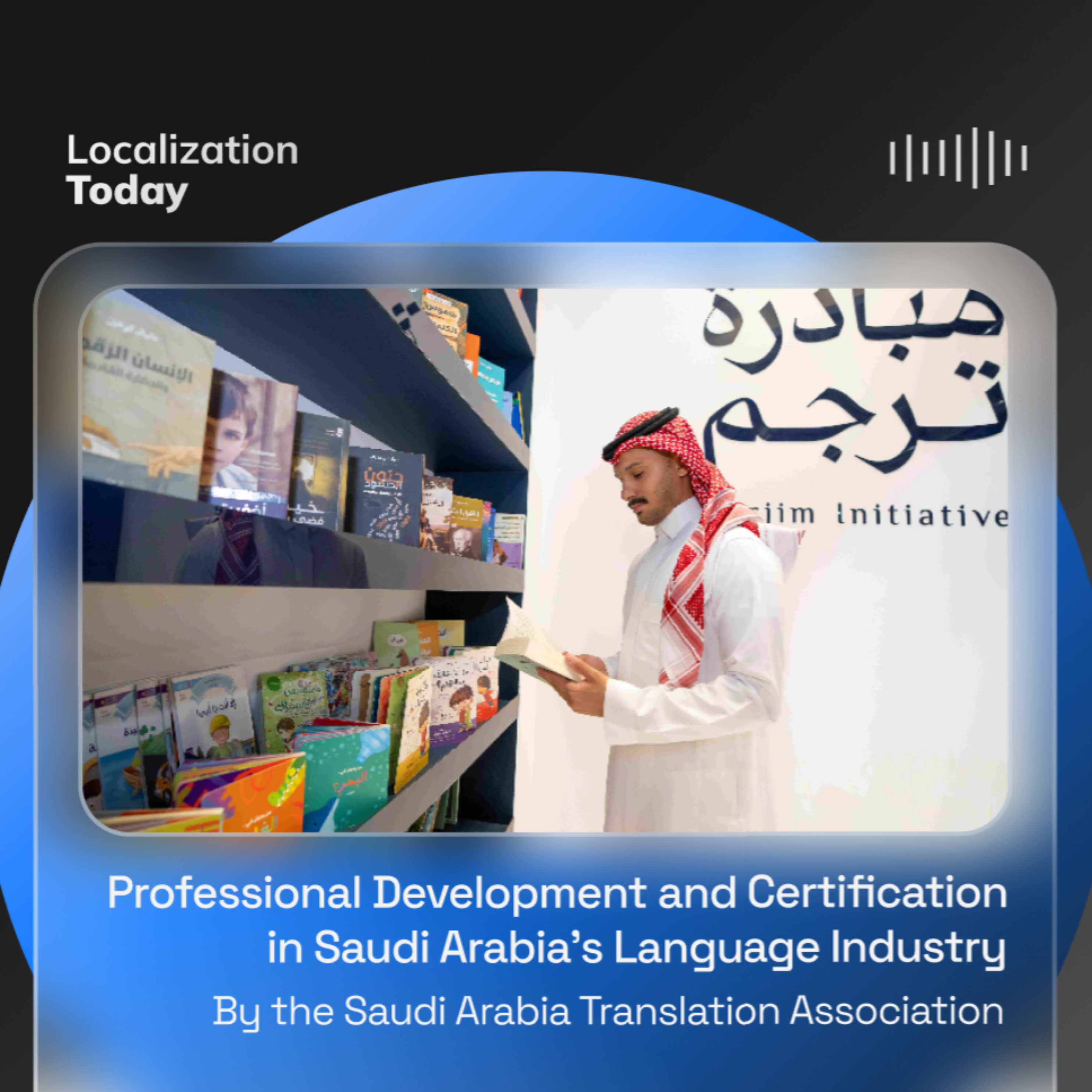
[00:00:00] Professional Development and Certification in Saudi Arabia's Language Industry by the Saudi Arabia Translation association the Kingdom of Saudi Arabia is undergoing comprehensive developmental transformations including the advancement of digital infrastructure, economic diversification and the promotion of non oil sectors.
[00:00:23] In recent years, the country has seen increased investment, enterprise and tourism, and it will host major upcoming global events such as Expo 2030 and the 2034 World Cup Soccer tournament. Amid this economic and cultural transformation, the translation and interpreting sector plays a pivotal role. Providing professional language services that are aligned with the nation's trajectory of rapid growth presents both an opportunity and a challenge.
[00:00:53] Saudi Arabia's efforts to advance the translation and interpreting sector is led by the Literature, Publishing and Translation Commission.
[00:01:03] The LPTC places special emphasis on developing Saudi national talents in the sector by offering a range of high level training programs. In collaboration with prominent national and international experts and centers of expertise invested in providing institutional support to linguists, the LPTC aims to create opportunities that advance national efforts to facilitate cultural and civilizational exchange between the Kingdom and the world. The LPTC's training system encompasses professional accreditation, specialized training, and career mentorship programs.
[00:01:41] Each program follows a structured methodology aligned with global best practices while considering the specific context and needs of the local market.
[00:01:51] These practical programs are designed to serve linguists at all levels, from beginners to experienced professionals. The Certified Translator Program this certified translator program, launched by the LPTC is the first program in the region to professionally accredit and classify translators by specialization across a wide range of fields.
[00:02:15] This ambitious initiative sets rigorous professional standards aligned with international norms.
[00:02:21] So far, the program has issued certification to more than 280 translators. The goal of the program is to secure translators rights and elevate their professional status.
[00:02:34] These certificates are more than official documents. They serve as mechanisms for recognizing the translator's expertise, protecting their professional rights, regulating the market, and ensuring the delivery of high quality services.
[00:02:48] The program's development was based on extensive benchmark studies and broad based surveys that engaged all relevant stakeholders, including translators, employers and academic researchers in the field. Drawing on these studies, the training material was designed to meet Saudi Arabia's labor market requirements and adhere to the sector's regulations and standards.
[00:03:12] The program stands out for its focus on practical and applied aspects. The training material includes realistic examples and exercises that mirror real world translation settings, tackling everyday challenges that translators may face and offering practical strategies to address them. Since the launch of the Certified Translator Program, the LPTC has accomplished several key achievements, developing eight specialized training packages across various translation fields along with a specialized exam for each area, launching the first training courses and exams in 2023, followed by three courses in 2024.
[00:03:53] Program tracks and admission criteria the program offers four specialized tracks covering high demand fields in the market General Translation, legal translation, medical translation and interpretation.
[00:04:10] These tracks adhere to strict standards and incorporate specialized assessments to ensure linguists competence in their areas of expertise with a primary emphasis on English and French. The program accommodates different professional levels in the market through two main 1. Practitioner's Track this track targets translators with 3 to 10 years of experience and interpreters with 1 to less than 10 years of experience.
[00:04:39] The applicant must an accredited academic qualification in translation, linguistics, literature or related field and a language proficiency certificate in English or French. Applicants enroll in an intensive preparatory training program alongside exam preparation.
[00:04:58] The program consists of 60 real time training hours and is designed to prepare applicants to pass the certified translator exam.
[00:05:07] 2. Experienced Translators Track this track targets translators with at least 10 years of experience.
[00:05:15] Applicants must hold an accredited academic qualification in translation, linguistics, literature or related field.
[00:05:23] Applicants are divided into two Exam Applicants must complete certification exams in their chosen specialization areas.
[00:05:33] Direct Certification Applicants are awarded the certification directly following LPTC approval based on a thorough evaluation of their professional experiences and accomplishments.
[00:05:46] Each translation exam lasts two hours and involves translating two texts, Arabic into a foreign language and vice versa. The interpretation exam lasts one hour and covers consecutive simultaneous and sight translation.
[00:06:03] It includes six texts or audio segments, two in each interpreting mode with one in each direction from Arabic into a foreign language and vice versa. The Intensive Simultaneous Interpretation Program the Intensive Simultaneous Interpretation Program is a flagship initiative that enhances interpreters skills and proficiency through comprehensive training preparing them to operate at a high professional level.
[00:06:31] It adopts a distinctive approach consisting of two main Phase 1 local training this phase involves developing local training content in collaboration with leading academics and experienced professionals in simultaneous interpretation.
[00:06:48] Phase 2 International Training this phase marks the culmination of participants efforts as they refine their skills and reinforce their capabilities through practical experience in delivering high quality simultaneous interpretation.
[00:07:03] The LPTC is committed to establishing international partnerships with leading organizations in the field of simultaneous interpretation to ensure participants receive world class training.
[00:07:16] Notably in 2024 it partnered with the Ecole Superior d Interpreties Etraducteurs at the Universit Sorbonne Nouvelle in Paris to deliver the international training component of the program.
[00:07:30] Program Outcomes Performance assessments of graduates of this program demonstrate significant improvement in their professional skills. Participants mastered vocal delivery range, rhythm management, functional pauses and flexible handling of specialized terminology.
[00:07:49] Key skills acquired included the ability to distinguish between main and supporting ideas, confidently navigate linguistic challenges and employ appropriate linguistic equivalents when needed. These skills were clearly reflected in the participants ability to deliver interpretation free of filler and hesitation while effectively conveying the core message. Program trainers reported a significant qualitative improvement in the participants performance.
[00:08:18] They noted the emergence of subtle untapped skills including performance based language skills, stylistic techniques, summarization strategies and the effective handling of various dialects.
[00:08:32] Complementary Training Programs in addition to its specialized professional training programs, the LPTC has launched a range of initiatives and programs aimed at supporting the development of Saudi linguists throughout the different stages of their professional journey. Among these is the Translation Mentorship program designed to promote the concept of one on one mentoring within the translation field. The program follows a six month framework that pairs early career translators with seasoned professionals in a structured training pathway.
[00:09:07] Weekly sessions include both one to one and group meetings totaling two hours per week and offer participants opportunities to exchange experiences in an interactive learning environment.
[00:09:19] Future Initiatives the LPTC is set to expand ITS services in 2026 through three main pillars. The first pillar involves introducing new professional certification tracks and in conference interpretation and audiovisual translation, two areas experiencing growing market demands.
[00:09:41] The second pillar focuses on expanding the intensive simultaneous interpretation program to empower more Saudi interpreters to participate effectively in international events. The third pillar broadens the scope of the translation mentorship program to reach a wider audience.
[00:09:58] Other future plans prioritize the development of specialized training programs tailored to the needs of key sectors including energy, sports, economy, environment, technology and tourism.
[00:10:11] This strategic approach reflects the Kingdom's commitment to establishing a comprehensive language services ecosystem that supports national developmental ambitions and reinforces the Kingdom's role as a bridge between east and West.
[00:10:27] A portion of this article was published in Arabic in Sada Magazine.