Episode Transcript
[00:00:01] A Word that Moves the World by Euandro Macallan in an industry now devoting an entire issue of multilingual to influencers, it is worth pausing on the word itself. What is influence, and what do we mean when we translate it etymologically?
[00:00:19] Influence comes from the Latin influentia, a flowing in. In medieval cosmology, it referred to an invisible fluid emanating from the stars, shaping human destiny.
[00:00:31] The French influence, the Spanish influencia, the Portuguese influentia all preserved this sense of something subtle yet pervasive. In Arabic, tawthar suggests an effect, a trace left behind.
[00:00:46] In Persian, tawsir carries a similar meaning. In Mandarin Chinese, Ying Shang combines the characters for shadow and echo. Influence as something that casts and reverberates.
[00:01:00] Before it became a LinkedIn aspiration, influence was cosmological, from stars to social feeds.
[00:01:08] Over time, influence migrated from the heavens to human affairs. We speak of the influence of teachers, books, leaders, institutions in the 21st century. It has been quantified, monetized, and algorithmically ranked.
[00:01:25] Influencer now describes someone who commands attention and can shape purchasing decisions or opinions through digital presence. Yet language reveals nuance.
[00:01:35] An influencer is not quite the same as a trendsetter or a thought leader. A trendsetter initiates aesthetic or behavioral shifts, the first to wear, say, a new style.
[00:01:48] A thought leader, a term popular in corporate English, implies intellectual authority and conceptual originality.
[00:01:56] Influence, however, is broader and morally neutral. One can influence silently, unintentionally, even irresponsibly. Many languages resist the recent semantic narrowing of influencer.
[00:02:09] In French, influencer has entered common usage, but often with a faintly ironic undertone. In German, influencer is borrowed wholesale from English, signaling its foreign digital native origins.
[00:02:24] In Portuguese, influenciator exists yet still feels tethered to social media. The linguistic borrowing mirrors a cultural one, the exportation of an Anglo digital model of visibility.
[00:02:38] Influence in Translation History the translation profession has long wrestled with influence both exerted and endured.
[00:02:47] Consider St. Jerome's letter to Pamachius, written in the fourth century after he was accused of recklessness in translating the Scriptures. Jerome defended his approach, articulating what would become one of the foundational debates of translation studies, verbum adverbum word for word versus sensus pro sensu sens for sens, his letter influenced centuries of theological and translational thought. Here influence operated not through metrics but through argument and intellectual courage.
[00:03:21] Centuries later, the Nuremberg Trials marked a watershed moment in simultaneous interpretation.
[00:03:28] Faced with the practical and ethical demands of multilingual justice, Interpreters innovated under pressure.
[00:03:35] The event influenced not only the development of equipment and technique, but also the professionalization of conference interpreting influence here was institutional and procedural, embedded in practice rather than proclamation. In both cases, influence emerged from crisis, criticism, and necessity. It was not self declared.
[00:03:58] Beyond human agency Returning to the words origins reminds us that influence is not solely human to human. We are influenced by climate, geography, and biology. The tides respond to lunar influence, crops respond to temperature.
[00:04:16] Languages themselves are influenced by migration, conquest, trade.
[00:04:21] Astrological traditions, whether in Hellenistic, Indian, or Chinese systems, conceptualize influence as celestial imprint. Whether one believes in birth signs or not, the vocabulary persists.
[00:04:35] To be under the influence still carries an echo of something external acting upon us.
[00:04:41] Language encodes these gradations.
[00:04:44] In English, influence can be positive, a good influence, negative, a corrupting influence, or neutral, a major influence on policy.
[00:04:54] In Spanish, influencia nefasta leaves no ambiguity. In Japanese can be beneficial or harmful, depending on context. The word itself is ethically flexible. The evaluation comes from modifiers. The Responsibility of Linguistic Influence in the age of social media, influence has become performative. Visibility often precedes substance.
[00:05:22] Yet in translation and localization, influence remains quieter and arguably more profound. When a term is standardized across markets, when inclusive language policies are adopted, when a machine translation engine shifts industry workflows, influence is at work.
[00:05:40] It may not trend, but it transforms. As language professionals, we participate in a constant exchange of influence. We are influenced by source texts, by clients, by cultural norms.
[00:05:53] In turn, we influence how ideas circulate across borders.
[00:05:58] A single lexical choice can shape public perception. A mistranslation can inflame tensions.
[00:06:05] A sensitive rendering can foster understanding. The cosmological metaphor still applies.
[00:06:11] Influence flows. It is often invisible. It can nourish or distort. It can be benign, catalytic, or destructive. Perhaps the question for our industry is not who has influence, but how we conceptualize and steward it. Are we merely amplifying signals within algorithms, or are we shaping discourse across cultures with deliberation and care?
[00:06:35] In the end, influence is less about follower counts and more about resonance. In Mandarin, remember, it is shadow and echo. In Latin, it is a flowing hymn. In our field, it is the quiet current that carries meaning from one linguistic shore to another, leaving its trace long after the metrics have faded.
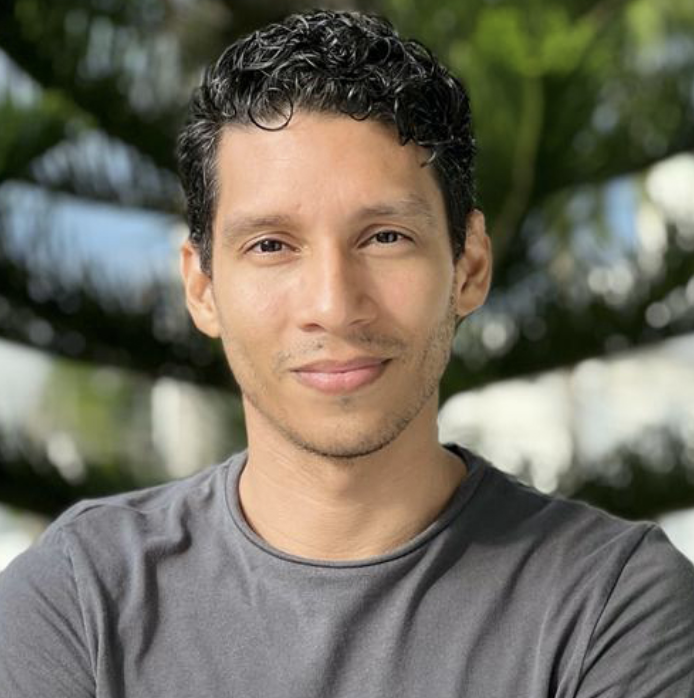
[00:06:57] This article was written by Yuandro McAllen. He is a conference interpreter, former chief interpreter in the United nations system, interpreter, trainer, and language technology advocate. He is a TEDX speaker and the author of three books, including the Language Game, originally published in multilingual magazine, issue 250 March 2026.