Episode Transcript
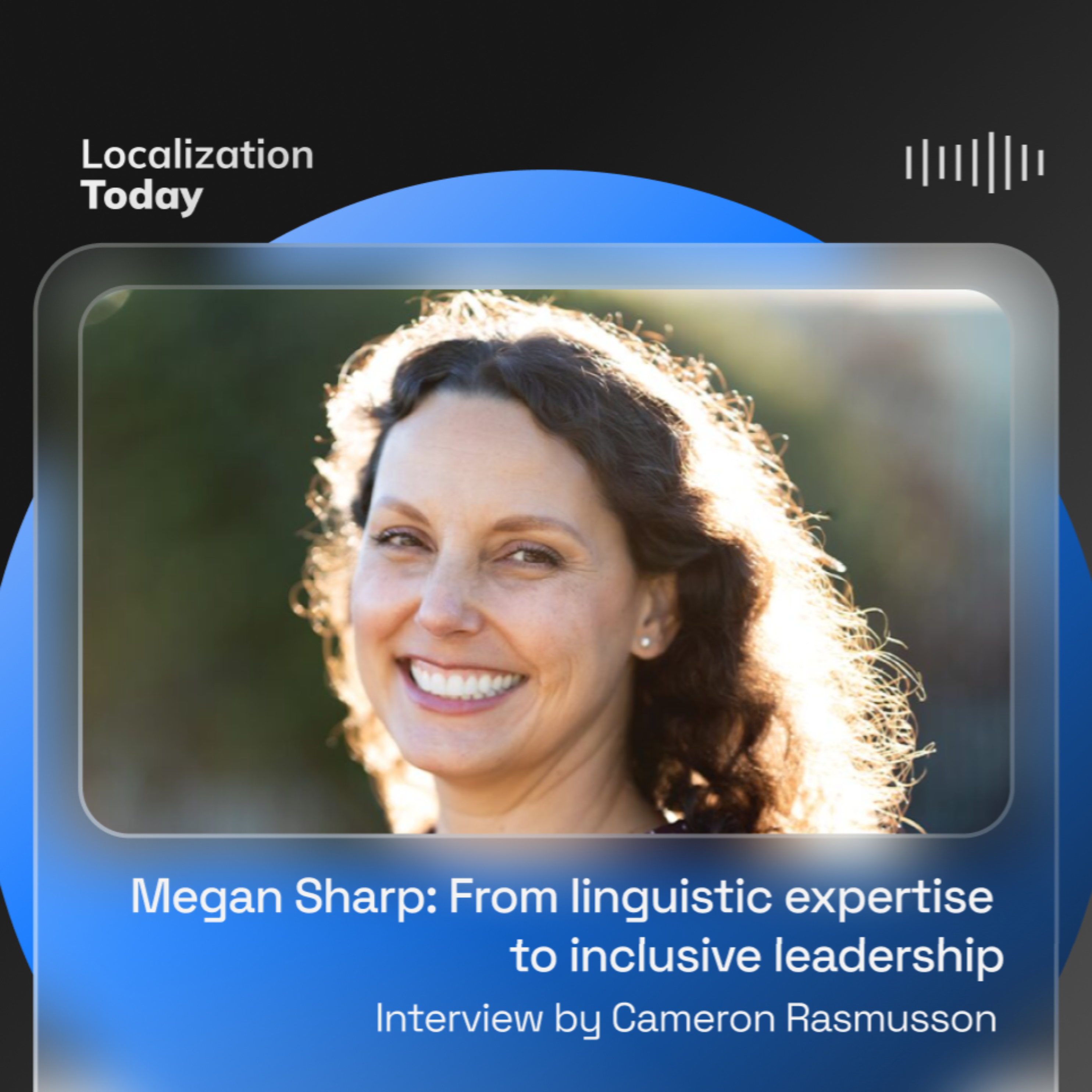
[00:00:00] Speaker A: Megan Sharpe From Linguistic Expertise to Inclusive Leadership Interview by Cameron Rasmussen As a telecommunications company that lives or dies on clear connections between people across the globe, Verizon rightly emphasizes the need for robust and effective localization operations.
And it's not a job you entrust to just anyone. After all, millions of Customers depend on Verizon's travel services to provide mobile coverage in over 210 countries. As Verizon's head of localization, Megan Sharp ensures those customers receive the same service quality no matter where they live or what language they speak. From optimizing workflows to making the most of emerging technologies and efficiency gains, staying ahead of the curve is an effort without end. Fortunately, Sharp's work at Verizon is informed by a long standard successful career as a linguist. From high stakes fields like medicine and law to the General assembly hall of the United nations un, Sharp honed her linguistic skills under some of the most intense professional pressure imaginable. No wonder then that she has the experience and composure to manage localization operations for one of the world's biggest communication companies.
Importantly, Sharp believes in giving back to the communities that helped her along the way. An active member in Women in Localization, she also helps prepare the next generation of leaders through the MIES Translation and Localization Management Mentorship program, and recently she shared her professional forecasting as a speaker at the Locke World 52 conference. We spoke with Sharp about those experiences and more for this month's issue of Multilingual Magazine. How did you land in this career and was language always an interest of yours?
[00:01:52] Speaker B: This was very much intentional for me. I grew up in a bicultural household with my mom having immigrated to the United States US As a little girl with my grandparents from Mexico. While my childhood was filled with customs, traditions and food from northern Mexico and the US And I heard the familiar yet foreign sounds of Spanish being spoken at my grandparents house. I myself was not bilingual until I pursued it as an adult. Early in my college studies I switched from majoring in business to linguistics, which felt like opening the door to a new world that finally enabled me to connect fully with my family. It also introduced me to the inner workings of language systems across the globe, starting a lifelong learning and career path for me. After earning my master's degree in Spanish Literature and Linguistics, I was accepted at mies, where I studied the translation and interpretation track and took advantage of the suite of localization offerings. After Mies, I started my career as a translator and interpreter. Over the years I worked in a premier cancer hospital as a medical interpreter, the District Attorney's Office of New York, as a legal translator and interpreter, and finally as a verbatim reporter at the un. There I had the responsibility of rendering speeches from the highest ranks of royal, political and non governmental organization.
No leadership in English regardless of their language of delivery.
Upholding the dignity, prestige, and work of these distinguished individuals, as well as protocol and procedure for the official records of the world's most influential international organization was the name of the game. These experiences grounded me in the importance of cultural nuance and context, and they allowed me the privilege of affording all people the same level of care that would be given to an English speaker. With the onset and uncertainty of the COVID 19 pandemic, I chose to pivot to localization management. I reached out to my network about any potential roles opening up, and on the fateful day I inquired about Verizon. A role had just been approved. The transition from linguist to localization manager was not something I took lightly. I understood that it would require adjustments in learning, shifting from the art of translation to the art of managing projects, vendors, technologies, budgets, and stakeholders.
What I have noted from the beginning is that this work is first and foremost about the people we work with and for. It is equally important to foster relationships internally and externally, to carry a request from ideation through production as it is to keep the end user at the heart of the process. The breadth of opportunity to learn and grow in varied ways makes each day a new adventure.
[00:04:26] Speaker A: What professional skills or qualities do you credit toward landing your current role?
[00:04:30] Speaker B: Maintaining a passion for learning, listening to and working collaboratively with others, and being committed to doing my best have always been key to my happiness and success at work. When we feel fulfilled by how we spend our time, what we produce reflects that satisfaction in spades. Moving into localization management allowed me to expand my skill set and stretch myself as a leader. Every day I choose to show up caring about the people I work with and the work we have the honor to do.
Ultimately, we are bridging gaps by designing or adapting experiences for speakers of other languages. The centerpiece of my motivation is making people, regardless of culture or language, feel included in an experience, whether it's an international meeting, court hearing, or product offering.
[00:05:15] Speaker A: Language technology is at the heart of most localization conversations these days. How have AI technologies impacted your processes and workflows?
[00:05:24] Speaker B: AI has been extremely useful in terms of efficiency in a variety of areas, such as fleshing out project briefs, kickstarting ideas, and analyzing large datasets. And then there are more localization specific applications like managing translation memory using AI powered translation workflows, and interpreting and generating reports, all of which require careful oversight and collaboration to pilot, deploy, iterate, refine, rinse and repeat. These applications have produced important time savings to reinvest in other more strategic areas like creating scalability, developing new features, launching new research, and deploying optimized processes.
[00:06:03] Speaker A: Where do you see the future heading with respect to AI and other emerging technologies?
[00:06:08] Speaker B: I think there is a lot of potential for AI and emerging tech to shape the future of work. There are still many tasks today that could benefit from automation integration and smart tools which would free up more executive think time. To achieve that wider adoption, it is necessary to build security frameworks internally in order to truly maximize usage which can otherwise be limited from existing tools on the market.
One thing in particular that could be improved with AI is the place of meetings and corporate culture. On the one hand, I feel the proliferation of meetings speaks to our desire to be connected to the people we work with, but on the other hand, I believe or hope that in the future we can use our time together to more meaningfully connect. Rather than go down a checklist, I see a future optimized by AI at the task level that allows us to have blue sky discussions, brainstorm, innovate and shape strategy, leaving things like statuses, touch bases and routine needs to technology.
In other words, I see great opportunity for more human potential and leveraging talent as we are freed from the administrative burden that constrains so much.
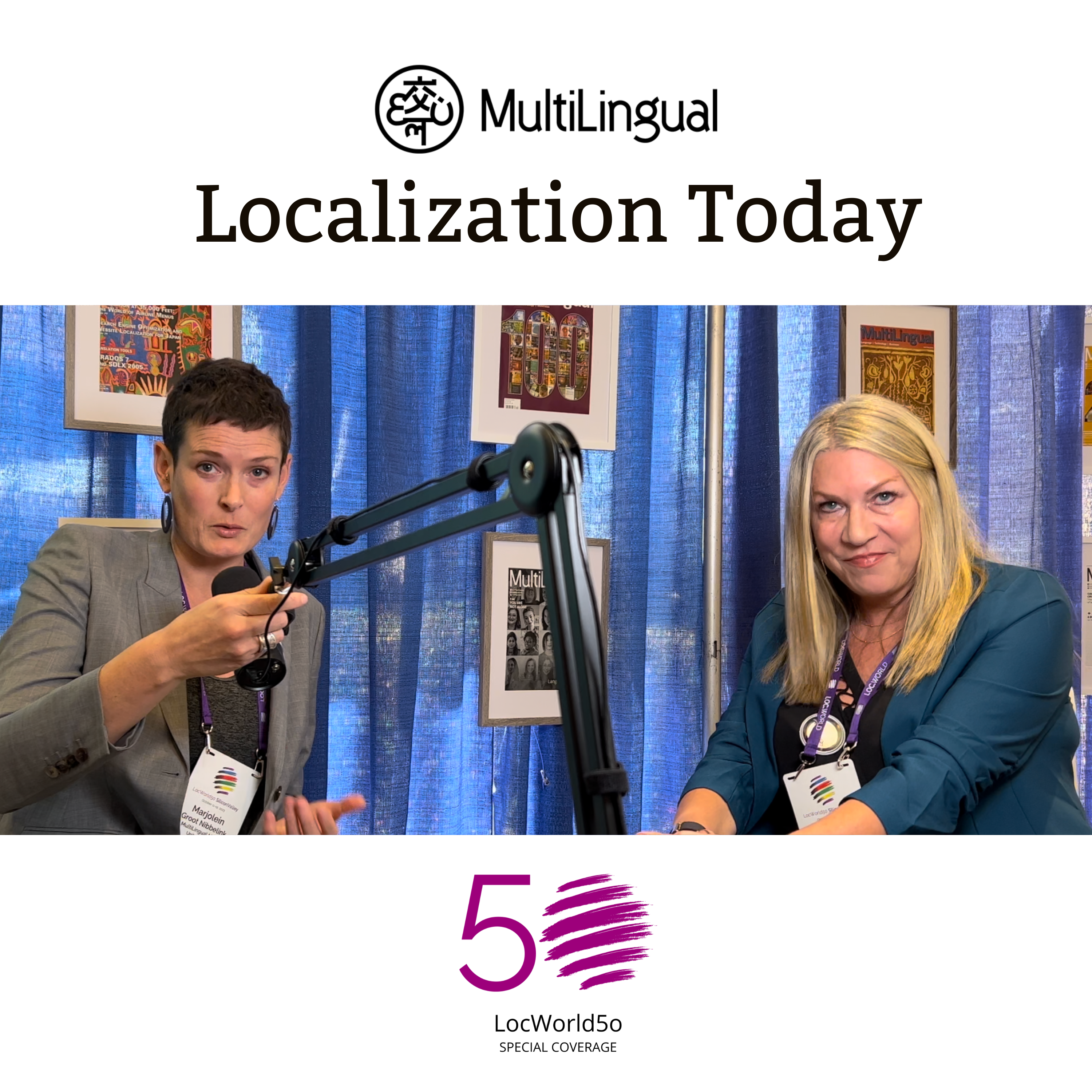
[00:07:15] Speaker A: At Locke World 52, you participated in a panel discussing the present and future of language work. What was that experience like and what lessons did you take away from the.
[00:07:25] Speaker B: Conference that was such a great experience?
We wanted the panel to be approachable, relatable and audience inclusive because the topic explored the future of the industry we all love so much. What can be more personal and shared in that space?
So while we discussed general themes and topics ahead of time, we didn't go into it rehearsed or scripted.
The result was something that felt natural and spontaneous, both amongst the panelists and with the audience as a whole. This meant that there were moments we didn't necessarily expect, but just as in life when dealing with people, listening is where the magic is. The overarching lesson here was that by allowing the audience to participate via question or comment, we created a large scale convening of minds where we could share openly and allow space for the full spectrum of ideas about the future, from skepticism about AI taking over to optimism about the continued and perhaps increased relevance of humans in localization. Diversity of viewpoint enriches the conversation and shows the possibilities of where we are headed.
[00:08:27] Speaker A: Could you describe the work you do with wl? And as a prominent woman in the language industry, what unique challenges have you faced and how do you view the state of the industry as it pertains to women?
[00:08:39] Speaker B: Being a founding member of the New York chapter of WL has been an exciting new venture, particularly because of the people the leadership team has afforded an opportunity to work with a new set of industry peers, learn the ropes of sponsorship management, and create a forum to expand and connect locally in the city. Supporting, mentoring and uplifting women is always fundamentally crucial in any context.
Localization is no exception, particularly because of how lean localization teams generally are within an organization. The challenges I've faced related to often being the only woman or the only localization specialist at the table are not unique.
And I'm not the only one to face challenges like leading by listening, putting others before myself, honoring the work first, or navigating imposter syndrome. The power of having a space like WL is in the opportunity to learn how shared these challenges are and how we can be authentic in our approach to overcoming or reframing them.
[00:09:36] Speaker A: Apart from work, what do you find to be especially meaningful, restorative or useful in your life?
What hobbies or relationships keep you energized and excited to go back to work each week?
[00:09:48] Speaker B: Life outside of work is my treasure and playground. I find restoration and movement like walking, swimming and Pilates.
I find openness amongst the trees and ocean. I find inspiration in the journeys and adventures I travel on in my books. I find joy in spending quality time with my dogs. I find peace in my creative pursuits, whether tango dancing, drawing or writing. I find gratitude amongst my family and friends, relationships that anchor, support and fulfill me.
[00:10:18] Speaker A: Is there anything else you'd like to add?
[00:10:21] Speaker B: My mom has been my greatest supporter and inspiration in this lifetime. She instilled early on that I could do anything I set my mind to with each nervous first day of trying something new. She was my cheerleader, just as with each accomplishment, my biggest fan. She was passionate about her community and one of the hardest workers I know, determined to help as many people as she could as a child support officer who often doubled as a court interpreter.
That same dedication created a home full of love and support for our family. She cooked dinner every night, attended every event my brother and I participated in, and never stopped being a mom. Even as we grew up and ventured into the world on our own. She instilled a sense of love for family and community support that became my foundation. In honor of her recent passing, I dedicate this piece to the memory and legacy of my beloved mother.
[00:11:11] Speaker A: This article was written by Cameron Rasmussen. He is senior writer and Editor for Multilingual Media. Originally published in multilingual media, issue 247, January 2026.