Episode Transcript
[00:00:00] 2001 the evolution of the African Languages Conference by Mimi Moore Growing up Multilingual on the African island nation of Mauritius, Avish du Syres, a social impact designer whose work focuses on language justice and cultural bridge building, believed in the power of language to connect people and promote cultural understanding. Joining online polyglot communities to stay connected during the pandemic, she expected to find that same spirit. Instead, she was often the only Creole speaker, and African or Creole languages were rarely mentioned.
[00:00:36] Everyone wanted to learn Romance or Scandinavian languages, Mandarin, Japanese, or well known indigenous languages like Quechua, she recalls. Most people didn't even know what a Creole language was and couldn't name any African language beyond maybe Kiswahili.
[00:00:51] In fact, she found that Africans were largely missing from these discussions entirely. Given that most Africans are multilingual or at least bilingual, the absence troubled her. The experience stayed with her. For all the talk of global multilingualism, entire linguistic worlds seemed invisible. She decided to change that. Drawing on her experience organizing conferences, Avishta began planning an event where polyglots could explore African Creole, indigenous, and other underrepresented languages, one where Africans could lead the discussion themselves. Founding the African Languages Conference to turn her idea into reality, Avishta started talking with others. Pimiya Demla, a member of the Lingua Cultura Experience community who participated in several events she had organized, introduced her to Adi Namiran Koulibaly, an entrepreneur, language professional, and passionate advocate for African languages.
[00:01:48] Adie was already leading initiatives across the continent through her company Bilingo Consult, which specializes in translation and interpretation for African language services. Paimi knew that Avishto wanted to organize a conference focused on underrepresented languages but lacked an Africa based network, and he saw that the two shared the same vision. Meeting early in 2022, they quickly bonded over their shared concerns about the lack of African voices in global language spaces.
[00:02:18] Avishta shared her work promoting multilingualism and cultural understanding, and Ady described her work advocating for African languages and the communities that speak them.
[00:02:28] With African Languages Week fast approaching, they decided to join forces under a ticking clock. They had only two weeks to organize the conference and launch it during African Languages Week. Undaunted by the challenge, Avishta drew on her experience organizing large virtual events while AD mobilized her network and community of professionals and language enthusiasts within the language services industry.
[00:02:52] For their platform, they chose Clubhouse, the social audio app that became a worldwide meeting place during the pandemic. Its voice only format made participation simple and inclusive, allowing anyone with a phone to join during a time when physical gatherings were limited. It was inspiring to see how a voice driven app like Clubhouse could bring people together, avishta says. The voice only format also helped participants open up and share lived experiences without the pressure of video. When the first African Languages Conference opened during African Languages week in late January 2022, it drew more than 750 attendees and 26 speakers. Sessions were held in English, French, and more than a dozen African languages. The response was immediate and enthusiastic.
[00:03:41] AFLC is still in existence today because of the enthusiasm and massive support generated from the first edition, ady says. We were truly awed by the positive feedback and calls from the language community for the conference to be a yearly rendezvous. This has encouraged us to keep giving our best.
[00:03:59] Evolving year by year, the first conference set the tone for everything that followed. Each year since, the conference has grown, evolving from a grassroots virtual event into an international forum dedicated to African languages. As the world slowly reopened after the pandemic, they made the second edition in 2023 more accessible by moving it to Zoom, which let them reach more people and run more structured sessions.
[00:04:25] AFLC partnered with masterword, who sponsored them with a Zoom platform. The change made it possible to record presentations and expand participation across time zones.
[00:04:36] The 2023 conference showed real progress. Feedback from attendees called for more African languages and stronger support for speakers and interpreters. Each edition of the conference gives us a chance to learn and improve, ady says. We believe that every year should build on the last. So AFLC continues to meet the needs of the language community. For the 2025 edition of the conference, AFLC introduced simultaneous interpretation for every session, an ambitious move that took months to prepare. Adie worked closely with the Advanced School of Translators and Interpreters ASTI in Boya, Cameroon, to provide interpretation in English and French and utilized her network to bring onboard professionals specializing in several African languages.
[00:05:21] We wanted AFLC to be a space where conversations about African languages could happen in African languages, she explains. It wasn't easy, but it was essential to show that our languages belong in professional global contexts. At the same time, Avishta and AD registered EFLC as a United States US Nonprofit organization, opening the door to grants, donors, and formal partnerships. Although it was a lengthy and demanding process, nonprofit status finally allowed them to grow past their volunteer led origins and build a lasting foundation for the future.
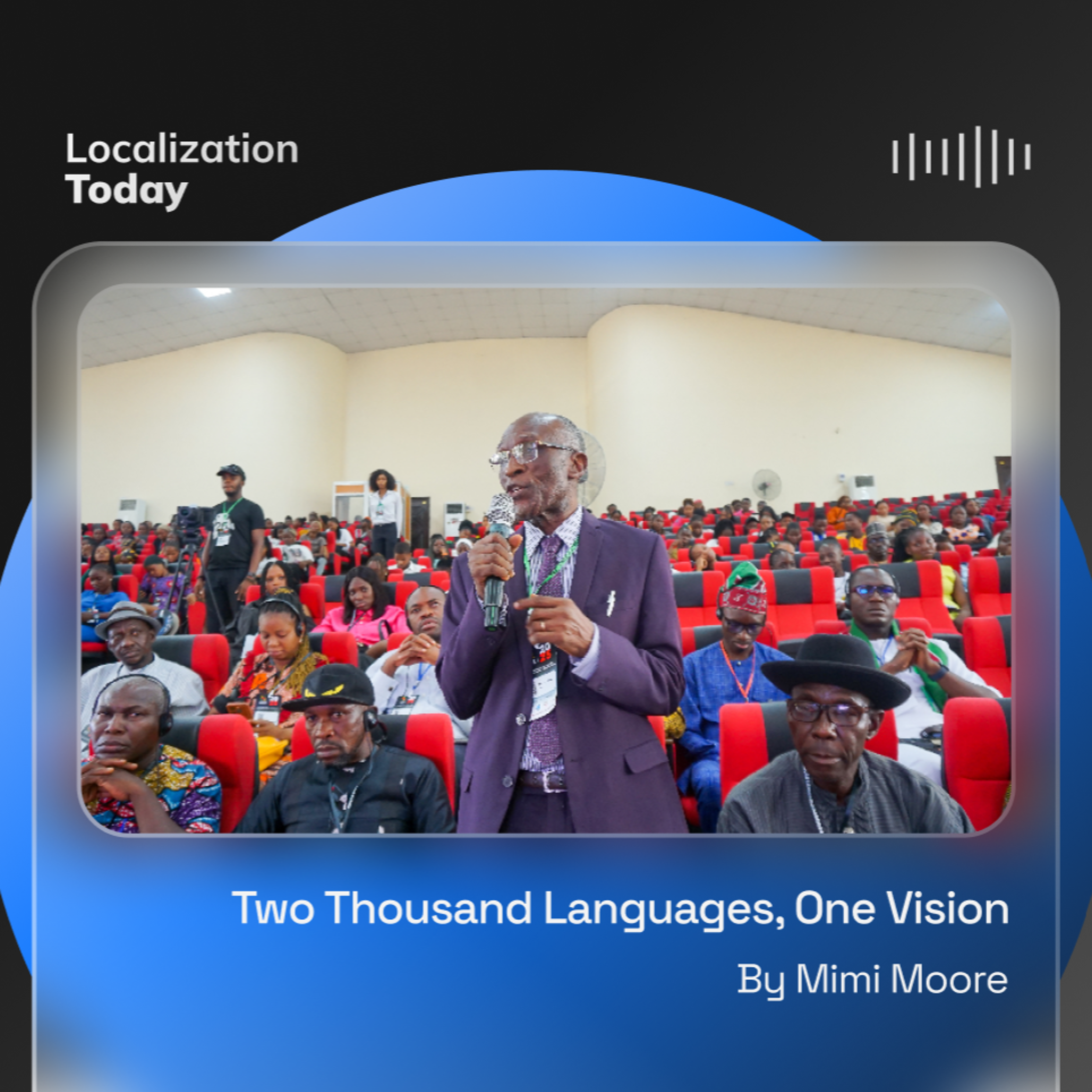
[00:05:56] By 2025, the conference reached another milestone, its first in person edition held in Port Harcourt, Nigeria.
[00:06:04] Sessions were delivered primarily in Nigerian languages with interpretation throughout, while virtual participants joined remotely. The atmosphere was lively, with attendees switching fluidly between languages as they shared research and cultural insights. Seeing the conference come to life in person after years online was surreal, avishta says. It was exactly what we had envisioned a space where people could share, learn, and connect through their own languages.
[00:06:31] Growing Recognition and Support as AFLC grew, recognition followed. What started as an experiment on Clubhouse was now drawing attention from major organizations committed to linguistic diversity. Bharavishta and Ad these partnerships show that African languages are being taken seriously on the global stage. By 2024, the African Academy of Languages, an institution of the African Union, began actively engaging with aflc. Ady, who serves on the African Languages Week Coordinating Committee of Akalan, saw the collaboration as a turning point. Having the recognition and support of Akalan and the African Union was a watershed moment, ady says. It confirmed that AFLCE had become one of the most significant events held during African Languages Week each year. A CALN's executive secretary at the time, Dr. Lang Fafadampha became a regular keynote speaker at the conference.
[00:07:30] His encouragement helped raise AFLC's visibility across the continent. Even after leaving his post at Akalan, he continued to champion the conference through his new organization, the Pan African center for Cultures and Languages.
[00:07:45] At the same time, new relationships were forming outside Africa, such as AFLC's collaboration with Stanford University's Silicon Program on Language, Inclusion in Technology and Education.
[00:07:57] Avishta says these partnerships are groundbreaking because they show that African languages are not just cultural heritage, but active contributors to innovation, research, and technology.
[00:08:08] These organizations believe deeply in AFLC's mission and vision and want to be part of the language justice movement in Africa, avishta says. I can confidently say that AFLC has become a robust global community and advocacy platform representing Africans worldwide. Each new partnership helps amplify AFLC's mission. Within three years, the conference grew from a volunteer run, grassroots event to a recognized platform for advocacy and collaboration. It is now connecting African linguists, interpreters, educators, and policymakers with a global audience eager to listen to giving African linguists a global voice.
[00:08:49] From its earliest days, AFLC set out to reshape how people think about African languages. For Avishta and Ady, the goal was to build a space where African languages could be shared, studied, and celebrated on their own terms.
[00:09:03] With more than 2,000 languages, Africa is the most multilingual continent in the world, adi says. Language professionals in Africa have left no stone unturned in order to be counted among the global language community.
[00:09:16] Despite grappling with challenges such as poor Internet connection, frequent power outages, and unstable political environments. As cultural consultants, they stand poised to share insights into the intricacies of their languages.
[00:09:30] Feedback from conference participants shows how powerful that focus is. Many describe the conference as the first time they have seen African languages featured in an international forum. AFLC has contributed significantly to bringing the conversation about African languages into the global space, ady says. The diversity of our participants, more than 2,000 from across Africa and the diaspora since 2022 shows how much people value this platform. For Avishta, the most memorable feedback came from the In Person edition held in Port Harcourt. Many people told us it felt different from any conference they had attended, she says. It wasn't just about language. It was cultural, personal, and inclusive. Anyone could share their experiences in their own languages.
[00:10:17] That spirit of inclusion is what defines aflc. Each year, the organizers prioritize hiring African interpreters and coordinators whenever funding allows, creating direct opportunities within their own community. The conference has also become a meeting point for linguists, researchers, educators, and language service providers.
[00:10:39] Avishta sees the conference as a bridge where African expertise meets global demand.
[00:10:44] As the language industry becomes more open to diverse perspectives, AFLC continues to expand. For many linguists across Africa, the conference offers community visibility and a sense of belonging. It is also a reminder that their languages and their work have a vital place in the global conversation.
[00:11:04] The Road Ahead As AFLC continues to grow, Avishta knows there's still work to do. One of her earliest goals was to bring Creole languages into the center of global language discussions. That vision remains close to her heart. From the beginning, I wanted FLC to include Creole languages with African roots, she says, but I haven't yet done enough to make that happen. She points to the difficulty of connecting with Creole speakers across Africa and the scattered nature of Creole linguistics outside academia. Avishta explains that the network isn't as visible or well established as it is for other African languages, but it's starting to change, and she wants AFLC to be a space where those voices can grow. Looking ahead, Avishta hopes that by 2030, AFLC will have traveled to at least six countries with sessions held in 50 African languages, including Creole. She envisions the conference as a continental platform that combines in person gatherings with virtual access, allowing anyone to participate from anywhere. The goal is to make AFLC a hub for all African languages, including indigenous and Creole languages worldwide, a place where every speaker feels represented, she says. They are also planning to promote and encourage the development of interpreter training programs for African languages through partnerships with universities, language services companies, and international organizations. Both emphasize that expanding opportunities for African professionals remains at the heart of their work. As AFLC moves into its next chapter, Avishta's original idea continues to guide it. She hopes the next decade will bring broader recognition of African languages as sources of innovation. There's often an assumption that African languages need to catch up technologically, she says. But across the continent, researchers and developers are already creating artificial intelligence systems, language learning tools, and digital platforms built around the structures of African languages.
[00:13:05] These languages have their own logic and rhythm and can shape how technology evolves.
[00:13:11] This article was written by Mimi Moore. She is owner of Netherlands based Wolfson Haus, writing a content marketing agency for LSPs, language technology companies, and B2B technology companies. She has 25 years of experience in the localization industry and is program manager, Content and Social Media for Women in Localization.
[00:13:32] Originally published in Multilingual Media, Issue 2, 47 January 2026.