Episode Transcript
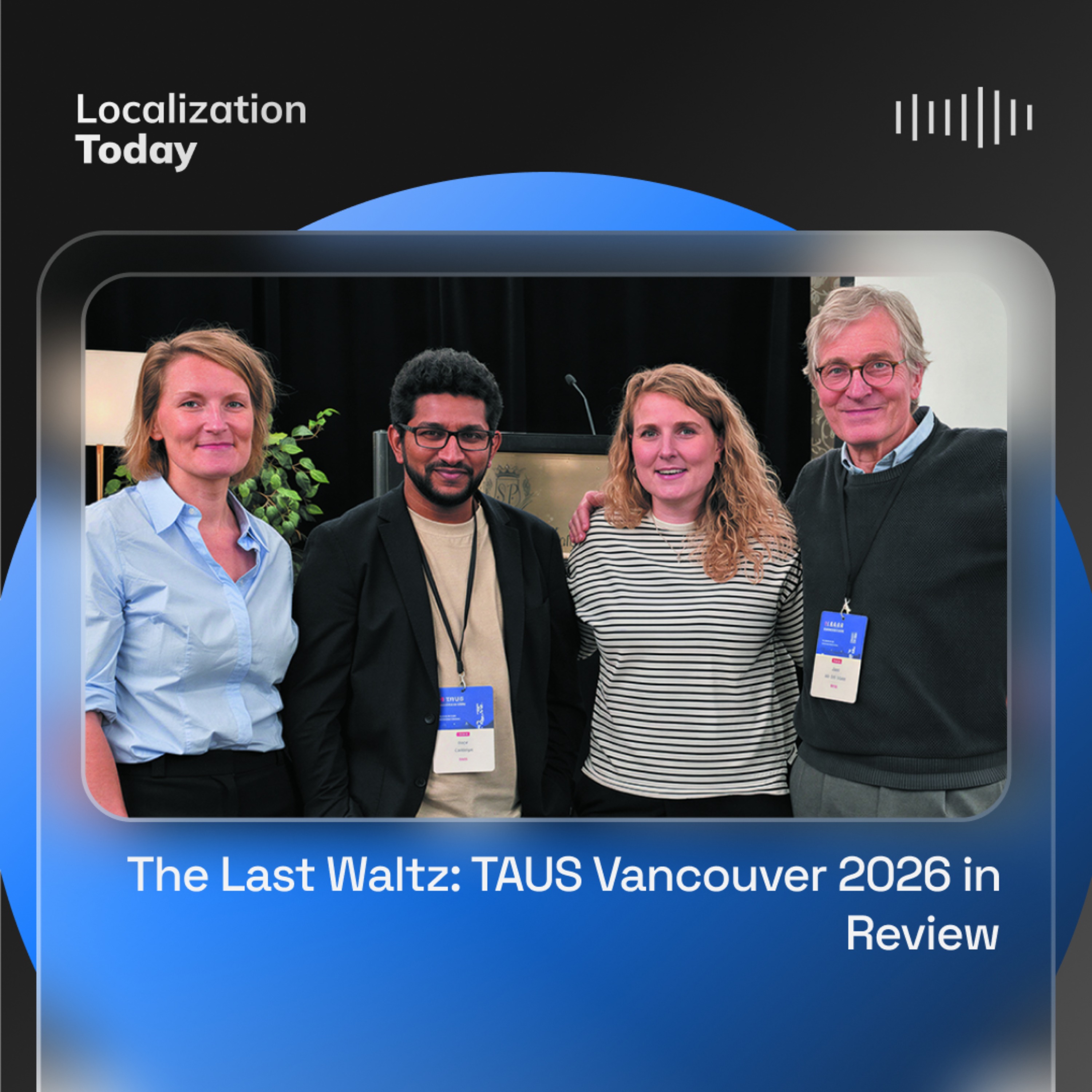
[00:00:00] The Last waltz taws Vancouver 2026 in review on October 16, the final taws Run conference ended to the strains of the Last Waltz. Over two days at the Sutton Place Hotel in Vancouver, technology vendors, language service providers, LSPs, enterprise buyers, researchers, public sector leaders and community advocates took on this year's theme, mastering intelligence as a utility.
[00:00:27] The conversations were less about whether AI works and more about what it takes to make it dependable. Who pays for that, and who it actually reaches.
[00:00:36] Pricing the industry's unsolved problem the opening investment panel asked a direct why invest in the language industry now, as the price of translation keeps falling? The question of where lasting value sits ran through both days and came back in the closing panel. Who owns the AI margin per word pricing persists because buyers understand it. New AI processing and consumption fees are under scrutiny, with some arguing they feel like attacks on using AI at scale.
[00:01:08] Token economics are becoming a business metric in their own right.
[00:01:12] Several speakers also raised a harder question how the gains from automation are shared across the supply chain, including with the translators, whose judgment the industry still relies on.
[00:01:23] No one agreed on a single model, but everyone agreed the industry needs a unit of value that customers understand.
[00:01:30] Human translation spend is falling, but demand isn't.
[00:01:35] Some of the most striking numbers came from buyers.
[00:01:38] One global enterprise said its human translation spend had fallen by roughly two thirds. A national public sector translation service saw human translation volume drop by around 70% after opening an AI translation tool to all staff, even as total volume grew. Wider access revealed demand that had never reached official channels, and more people began writing in their own language. First, the money isn't disappearing. It's moving toward AI infrastructure, governance and targeted expert work. Orchestration is about process, not just platforms.
[00:02:14] The panel on Moving from Translation Management Systems tmss to AI Orchestration found that many complaints about the TMS are really about the processes built around it. Force people into a prescribed system and they'll route around it with AI tools available to everyone. Shadow localization is growing, and the answer is to make the governed path the easiest one. The room strongly supported building on existing platforms rather than replacing them, but warned that running AI at enterprise scale takes engineering capacity. Many teams don't have One memorable A translation fixed in the TMS still appeared wrong to users because a delivery cache was never refreshed. Every pipeline has quality contracts, and when AI replaces part of a human workflow, someone still has to enforce them. Buyers want specialists, not just post editors.
[00:03:08] Enterprise localization leaders described very different starting points but similar pressures.
[00:03:13] Unit costs are falling, while total spend rises with volume, and poorly reviewed prompts can create cleanup work that offsets the gains.
[00:03:22] Buyers now want partners who can evaluate AI, review prompts and provide cultural and domain expertise. As one audience member pointed out, after years of being asked for post editors, the supply chain is now being asked for specialists. An informal vote in the LSP Transformation panel showed real doubt about the future of the LSP label, though not about the need for the expertise behind it. No single best LLM the benchmarking session made a practical case. Leaderboards are a starting point, not a buying decision.
[00:03:58] Look at results per language, not the average. Evaluate low resource languages with material created natively in those languages. Use benchmark results to decide which model handles which task. And as agents take on more work, traceability becomes part of quality. Utility means reaching more people on day two, the theme took on a wider meaning shifting Trade relationships are creating demand for languages organizations have rarely needed before.
[00:04:27] In discussions of indigenous and low resource languages, trust and consent over language resources mattered more than any financial offer.
[00:04:36] Speech translation is moving into clinical settings where structured templates keep details like medication and dosage visible and reviewable. The Sandbox pitch competition captured the same spirit. Congratulations to Chantal Kamni Localiz, Africa, who won with Engage Africa nlp, a platform for community led stewardship of language data. Guided by the CARE Principles for Indigenous Data Governance, communities and linguists Validate translations can challenge whether a data request is appropriate and keep us say in how their language resources are used. A note of thanks We've already said our goodbyes, so here is just a thank you. For more than 20 years, TA's events have been a place to test ideas before they were mainstream. From machine translation and data sharing to quality estimation in AI, what made them work was never the venue or the agenda. It was the people who showed up ready to argue, share and build.
[00:05:34] So to every speaker, moderator, sandbox pitcher, sponsor and attendee, thank you. TAWS events now continue under LOCK World and TAS itself carries on with a full focus on language data and quality evaluation.
[00:05:49] We'll see you in the room.
[00:05:51] This article was written by Multilingual staff. Originally published in Multilingual Magazine, Issue 257, November 2026.