Episode Transcript
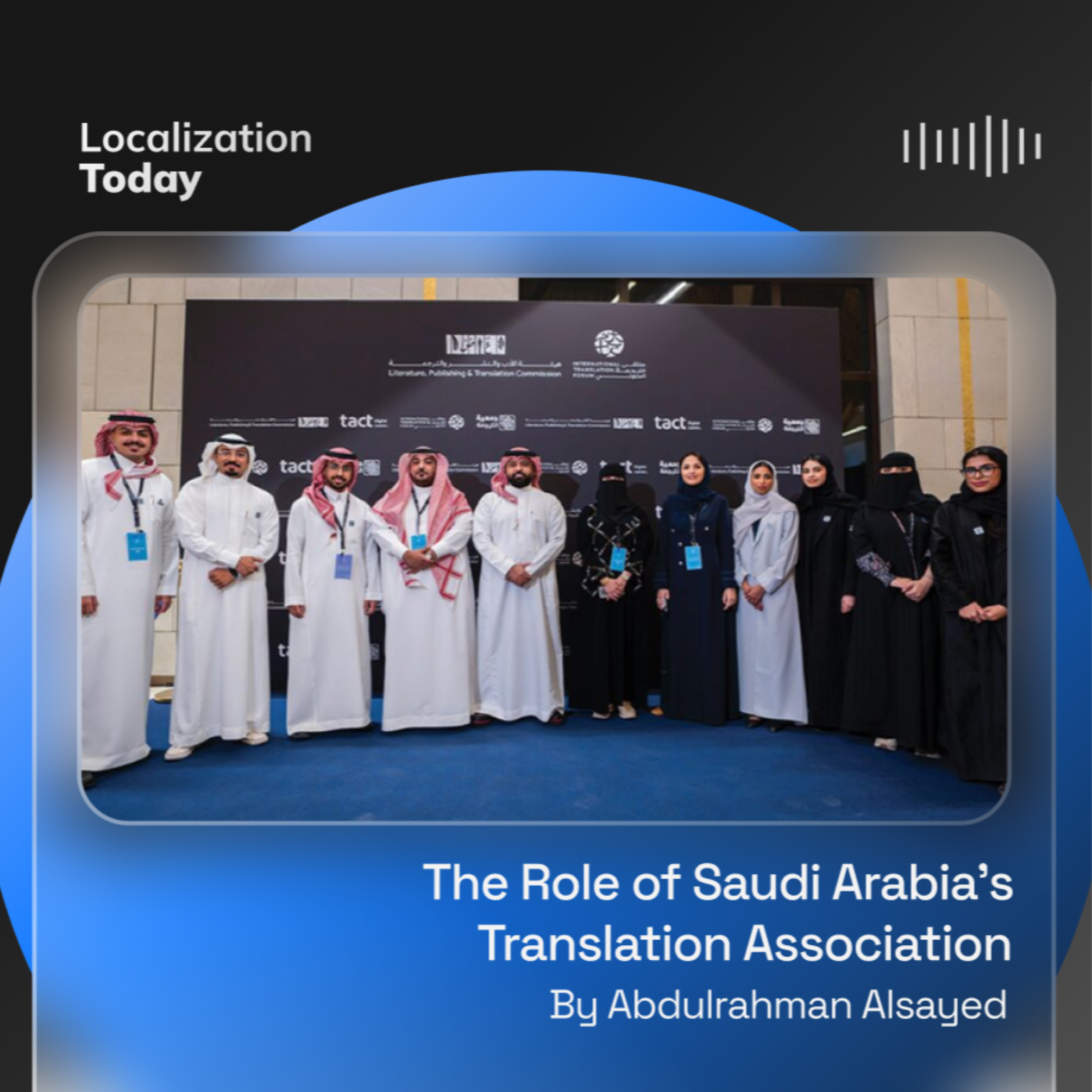
[00:00:00] The Role of Saudi Arabia's Translation association by Abdulrahman Al Saeed Saudi Arabia's economic and cultural transformation relies heavily on language services, which has inevitably raised new and pressing questions about the nature of translated content production, the institutional and professional structures that shape it, the environments in which it is practiced, and the standards that govern it.
[00:00:27] These questions have raised awareness of the need for coherent frameworks capable of protecting translation from fragmentation and improvisation while ensuring quality, consistency, and long term sustainability.
[00:00:40] Within this context, the idea of establishing a translation association emerged as a response to a long standing professional gap experienced by practitioners in the field. Prior to its founding, the translation landscape was largely shaped by individual efforts and irregular pathways of training and professional development.
[00:01:02] In the absence of a unifying professional body that could provide a platform for dialogue, represent translators voices, and contribute to advancing the practice from within, language services in Saudi Arabia suffered from uneven quality, a lack of shared standards, fragile professional networks, limited interdisciplinary integration among translators, and marginal presence in broader cultural debates. It was against this backdrop that the Saudi Arabia Translation association was founded in December 2019.
[00:01:36] From its earliest beginnings, SEDA chose to operate within a comprehensive vision of its role, one that neither reduces translation to a purely functional task nor nor confines the association to seasonal or event based activities.
[00:01:52] It adopted an approach that views translation as a professional practice with cultural and intellectual dimensions and recognizes the translator as an active agent in the production of meaning. This vision was reflected in programs and activities that emphasized dialogue, critical reflection, and the exchange of experience.
[00:02:14] Foremost among these initiatives was the Translation Salon, whose gatherings evolved into an open forum bringing together translators from diverse backgrounds to engage in discussions on translation issues, fields of practice, professional ethics, and the transformations introduced by modern tools free from rigid pedagogical frameworks or formulaic rhetorical discourse.
[00:02:38] As SEDA's activities gained momentum, it embarked on the deliberate construction of a comprehensive professional ecosystem to empower translators and advance their practice.
[00:02:50] This took shape through a wide range of training programs and workshops designed in response to concrete needs within the translation market.
[00:02:58] These practical initiatives were rooted in the lived realities of the profession and informed by the direct involvement of experienced practitioners and experts.
[00:03:08] In parallel with these efforts, SADA recognized that the consolidation of a stable profession cannot be achieved without a body of knowledge that accompanies practice, documents it, critiques it, and fosters informed dialogue around it.
[00:03:23] This awareness led to the launch of SEDA magazine as a platform dedicated to producing content grounded in lived experience and professional practice.
[00:03:33] The magazine engages with issues shaping the translation field while raising critical questions related to ethics, technology, professional identity, and the labor market. As the scale and diversity of its activities continue to grow, SEDA turned its focus towards strengthening its institutional foundations, guided by the understanding that sustainability can only be achieved through sound governance, strategic planning, and methodological clarity. It adopted structured approaches to project management, impact assessment, and role allocation, while placing particular emphasis on the satisfaction of members and beneficiaries.
[00:04:14] This orientation was reflected in the expansion of its programs to more than 10 regions across the kingdom, the establishment of a network of ambassadors and advisory committees, and rising levels of trust and satisfaction. Another important project was the publication and dissemination of the Translator's Professional Guide, which aims to equip translators with a clear understanding of their position within the country's economic value chain and to strengthen their awareness of the economic worth of their work.
[00:04:45] The guide addresses issues such as translators rights, pricing, project management, and relationships with publishers and clients.
[00:04:54] The publication presents the translator as a conscious economic actor, moving beyond the perception of translation as a marginal service.
[00:05:03] Over the years, SEDA has strategically expanded its partnerships, recognizing that the growth of the profession depends on a network of collaboration rather than a single entity. It began within academia, partnering with Saudi universities that offer translation programs.
[00:05:21] The idea was to bridge the gap between education and professional practice, giving students early exposure to the realities and career pathways of the field.
[00:05:31] Simultaneously, SADA forged ties with governmental and private institutions, highlighting translation as a tool for institutional empowerment, effective communication, content creation, and public discourse.
[00:05:46] These collaborations have enabled SEDA to strengthen translation's presence across both public and private sectors. At the international level, SATA has pursued a distinct path in building its external relations, grounded in the exchange of expertise. A major milestone of this approach was its membership in the International Federation of Translators, a step that represents full integration into the global professional community.
[00:06:14] This affiliation has opened new horizons for Saudi translators, providing them with opportunities to align local experience with global practices without compromising identity or independence. Through it all, the translator has remained the focal point of Saida's work. The association involves translators in shaping its annual programs through their professional gathering, Lawan al Tarjama.
[00:06:39] It also engages translators in advisory committees and across various platforms that allow them to share their experiences and voice their challenges openly. Moreover, SEDA has placed special emphasis on nurturing the new generation of translators, recognizing that they bring fresh perspectives and unique challenges.
[00:06:59] The association has developed targeted initiatives for students and beginners, mentorship opportunities with experienced practitioners, and dialogue spaces. Exploring the profession's future amid rapid technological shifts. SEDA aims to foster professional dialogues on responsible artificial intelligence use, emphasizing that no tool can replace the human dimension, cultural insight, or the translator's ethical and intellectual responsibility.
[00:07:31] SEDA strives to empower translators to see technology as a supportive tool, not a substitute for the core essence of the profession. Today, SEDA stands at a stage of maturity where the challenge is no longer establishing itself, but deepening its impact, expanding reach, and building sustainable models that align with national and international transformations while upholding core values.
[00:07:57] This requires ongoing awareness, tool innovation, and fidelity to the vision that has guided the association since its inception. In conclusion, SEDA continues to strengthen its role as a national professional hub, shaping the translation sector, empowering practitioners, and linking professional practice to the wider cultural landscape.
[00:08:19] It envisions a future where translation is practiced with awareness, knowledge is managed responsibly, and language serves as a bridge for meaning, creativity, and culture. Reflecting Saudi Arabia's ambitions and its growing presence on the global stage. Abdulrahman Al Saed is CEO of the Saudi Arabia Translation Association.