Episode Transcript
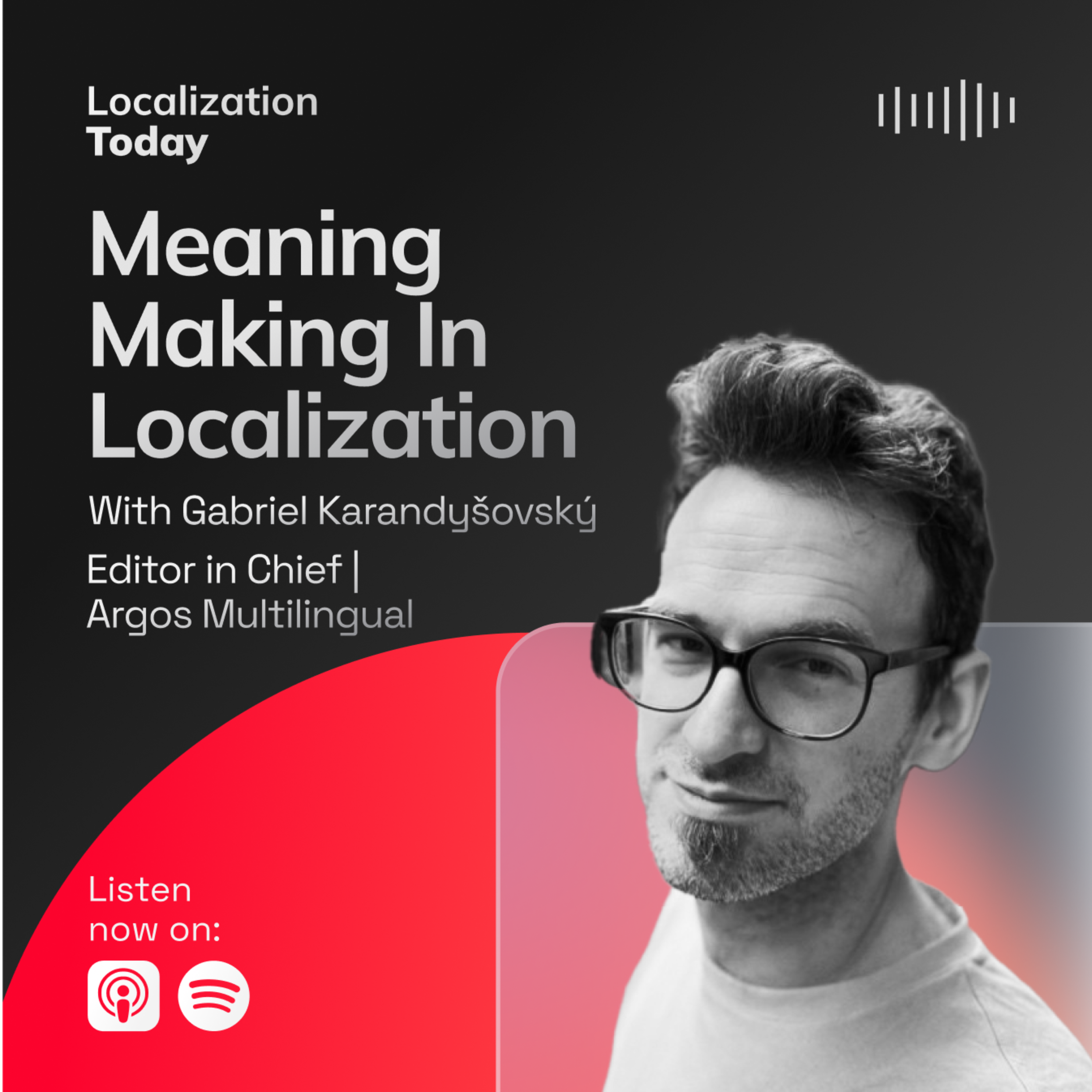
[00:00:03] Speaker A: Hello and welcome to Localization Today, where we explore how language, technology and community converge to unlock ideas for everyone everywhere. I'm Eddie Arrieta, CEO here at Multilingual Media. Today we're getting an early look Into Global Ambitions 2026, the annual special edition created by Argos Multilingual in collaboration with Multilingual media, launching digitally September 7th. A year ago, much of the conversation was about AI disrupting localization. Today, the questions are becoming much more practical. What should organizations actually do with it? What should they automate? Where should they experiment? And where does localization create value when translation itself is becoming easier and more accessible? Joining us once again to explore those questions and the preview of this year's edition of Global Ambitions is Gabriel Gabriel Karamdiszewski, Editor in chief of the Global Ambitions publication from Argos Multilingual. Gabe, welcome back to Localization Today once again.
[00:01:19] Speaker B: Thanks for having me. Always a pleasure.
[00:01:21] Speaker A: Yeah, it is a pleasure to have you with us. And of course, when we spoke last year, Global Ambitions was capturing an industry dealing with a huge amount of technological disruption. When you look back at 2025 and the 20 edition, Gabe, what conversations were you trying to start then? And what changed enough over the past year to make the 2026 edition feel different?
[00:01:47] Speaker B: Good questions.
I suppose in hindsight, it feels like 2025 was sort of a culmination of the hype surrounding AI. Do you also feel like that, Eddie, that was sort of hype was at its strongest?
Even if you could still make the case that it's alive and well, there's the never ending stream of AI related news. And then depending on your corner of the universe, the hype may be more or less pronounced. But 2025 broadly gave us, in my case, traumatizing things like AI slop. And you've surely heard that slop has been designated the word of the year by Merriam Webster as well.
With the magazine itself, with the 2025 edition of Global Ambitions, I think we wanted to sort of acknowled diversity of realities.
It wasn't all hype. It wasn't just a revolution, nor was it something seemingly inevitable, such as the word evolution tends to suggest. And for those of you who may remember, or if you don't, the title of last year's edition was Revolution in Motion.
So essentially, everyone has a different answer to this movement that we're all part of.
And these answers are not definitive. They coexist or are not mutually exclusive.
Your AI influenced reality, Eddie, will be different from mine, and it coexists with mine, and my reality coexists with someone else's and so on.
So in essence, in last year, we wanted to show movement, movement onward. Everyone was and still is looking for answers and solutions, but everyone is in motion, rolling up their sleeves and making progress. And progress can mean different things for different people.
So that was last year. I think the sort of most palpable change between 25 and 26 of this year, and I think our jadedness with AI slop may be a byproduct, is the rising awareness of AI's limitations.
Just as an example, we've had some excellent research papers pop over the last six months that point to all sorts of side effects sustained AI use has on our language, on our ability to communicate, and so on. So there seems to be more or less of a public reckoning going on with AI.
You know, people at large are now more exposed to its limitations and sometimes are oftentimes exploitative and politically charged discourse and practices of its creators.
So we're talking about things like ethics, digital sovereignty, the EU AI act, the past few weeks anyway, and watermarks and things like that. So the nature of the discussion around AI is evolving. It's not about, okay, how do we make this work? The question is more along the lines of what's the point? Or a myriad of questions, starting with why?
At the level of the industry, you see and hear about all of these AI implementations, and that's just the tip of the iceberg of all the work and money that went into them.
And it seems there's much more focus on, okay, what outcomes are we influencing or generating if we use AI. And so I think there's a. This year, more than before, again, it's perhaps a little bit more pronounced, is there. There's an underlying search for meaning in our actions, and that is more or less can be intentional, it can be vocalized, said out loud.
And that's the motif of the 2026 global ambitions which we're calling meaning making.
We humans continuously search for meaning or want to assign deeper meaning to our actions and what we interact with in the world. And that's what we're sort of giving testimony in this year's edition.
[00:06:01] Speaker A: Thank you, Gabe, for sharing exclusively with us meaning making. And of course, you've said some very particular concepts. You've talked about realities and really awareness around what is happening around AI. And it gets me to a question about what you feel about our industry. Do you feel that the industry itself has become more realistic? People were emotion last year and that motion you know, confronts you with realities. Do you think the industry itself has become more realistic about AI over the past year?
[00:06:35] Speaker B: I would think so. Or you know, either think or hope that can be interchangeable in my answer, but I would certainly think so.
I'm tempted to say we've grown up, but that would be what the second or third wave of growing up the industry has done.
We've done so much combined growing up. By now I feel, I would think that the language services industry has always done rather well working under constraints take things like limited time for localization, often at the end of someone else's process or budgets being compressed, essentially contexts that didn't necessarily favor the kind of artisanal, craftsman level work that, that flourishes when you have unlimited time and budget and that we often think about when, you know, when it comes to translation and localization.
So and, but at the same time I also.
It feels important to give people their flowers. There's a legion of very smart, highly educated people in our industry.
So in this sense, yes, we've been perhaps more realistic spotting what AI can and cannot do. And A, we're doing our best with the tools we have and B, we're trying to influence the varied organizations we're part of to ask tough questions about ethics, bias, risk management and governance and the like. So, you know, long winded answer. I would like to think that we're perhaps a little bit more realistic, perhaps have grown up a little bit over the, over the past year.
[00:08:22] Speaker A: We are very lucky because our industry and we've experimented in the different interviews we've had in localization today, where you can really feel that awareness in the different leaders in the different teams that are using artificial intelligence in the use cases that, that don't seem like what you would see in other industries. Fluffy case studies that just look really good for investors perhaps. We see a lot of real application, real value being transferred to the end consumers, better user experiences coming out of the uses of artificial intelligence. So we're really lucky to have a publication like Global Ambitions tackling it like you are doing it now, meaning making through the usage of these technologies. And for those that are listening, you should pay attention because Global Ambitions is releasing three special articles. If you're watching or listening to this conversation, you're probably going to see in the description link to the landing page of Argos Multilingual. You'll have access initially to the first three articles and then you'll be shortlisted of course to get the free version of Global Ambitions 2026, meaning making and if you are a subscriber of Multilingual magazine, you will get both publications on the month of September. So please make sure that you are sending us your subscriptions. If you don't have it, you will get a free subscription for sure. We'll send it to you anywhere you are around the world. So that is our commitment with those that are listening. Gabe, thank you so much for doing this. Once again, we have amazing articles to talk about today.
First one It's a Trap or why Coming up with the Name Is the Easy Half of the Job so what is this article about and what is the central argument Jose is making about how localization teams need to evolve?
[00:10:18] Speaker B: We've had a little bit of fun with the name of the article. Hopefully that comes across for people who read it.
To be completely honest, I think I may have strong armed Jose into writing this article, but he was up for it. Though some of you may remember an essay that Jose wrote and posted on LinkedIn last year so in 2025 in which he detailed the logic and process behind his team at Coupa becoming called Global Experiences, I would encourage the listeners to read it. Perhaps we can also drop the link in the post or in the comments. Yeah, Eddie, maybe that's an idea.
[00:10:59] Speaker A: Yes, absolutely.
[00:11:01] Speaker B: So in essence, the naming question has been around for a while whether we should call ourselves translation folks or localization folks. Global Experiences and so on. And it even resurfaced at the most recent gala conference in Berlin a few months ago.
So my question to Jose was what happens after you rename the function?
Are you like done?
And that's the trap that is referenced in the title of the article. Jose is making the case that renaming your function from localization to whatever else is the easy half of the job. You actually need to change the attitude and rebuild your processes.
If I were to summarize maybe here's recommendations and there's more detail in the full article, of course, is that teams should focus on outcomes.
So what the business that they're part of aims to do and work backward from those.
And secondly, start securing the small wins. Do a favor for a stakeholder there, de risk a project for another one there, and your street cred and level of support within the organization will continue to build.
That being said, and I think Jose would point this out to me and would insist on this caveat is that the complexity inherent to language work and ensuring the survival of localization teams within the org doesn't just go magically away by changing the function's name so yeah, that's a little bit of a teaser for this particular article.
[00:12:48] Speaker A: Thank you. Thank you so much for sharing. And of course it sounds particularly interesting coming back to the concept of meaning that you were talking about and why. So if you don't have clarity on your why, if you don't have clarity on your meaning, a lot of these things just become fluff. It just becomes superficial. So it's very interesting.
And yes, I remember we actually had an interview with Jose about the change name so we can refer all these in the description so that everyone can have an opportunity to get more context on this article. That would be once again in Global Ambitions 2026 meaning making second article that's available to those that are listening to this, those that are going to be receiving or receive this over email from us and from the Argos Team Chaos to Order sure, but where do we start? In chaos to order, you make the case that localization teams need to move from reacting to AI adoption to actively reshaping it. So not just reacting to it, but shaping it. What does that transition from an execution role to becoming the company's internal language AI expert actually look like in practice?
[00:14:03] Speaker B: I'd say that the recent past, the recent few years has seen everyone in the industry so you put in the reps like your repetitions and you build upon it. So the point being is we all either practice our, just a fancy way of saying it, our aies by being hands on, or we practice really hard, the parts of us and the parts of our craft that have nothing to do with AI.
Perhaps in a bit to secure our confidence and cushion our sense of exceptionalism.
But either you put in the reps, practice in the AI parts, or you don't willfully and you practice the more human elements of who you are and what you do. So I'm sort of giving a roundabout answer to this question. I'm a little bit wary of the whole AI expert label, although it's still a necessary label. I think the case Jerome in his article is making is something that has been echoed across recent conferences and the various forums online or in person.
You become an expert over time and by putting in the reps. That's why I thought about the reps portion of it. You practice your craft, you do the experiments even if no one has asked you to do them, and you don't wait around until they tell you to put in the reps. You come with a roadmap you're already several steps into, along with your frameworks and your governance programs.
Sure that can mean more work in the immediate run. But and this is perhaps also the connection with Jose's article is that you need to change the attitude and do the small but highly strategic things on your own.
And essentially doing so, you grow into the expert boots over time. You just, you know, maybe right now you just put them on without asking or without anyone telling you. And yeah, you grow your feet into them by practicing, by doing the reps.
And all of that compounds.
[00:16:12] Speaker A: It totally compounds. And you can tell when someone is not doing the reps. They might look buff, but I might
[00:16:18] Speaker B: just all be all the legs. Don't forget the leg day.
[00:16:24] Speaker A: Yeah, definitely don't miss leg day. You can really tell over time where someone has been putting their eggs. And very interesting also what you mentioned about being an AI expert. I don't see anyone saying I'm a Whats imessenger Expert, I'm a LinkedIn expert. At some point some of these things are just gonna become part of what you are expected to be using and been doing. So very interesting that you mentioned, of course, looking at both chaos to order and it's a trap.
Why were these two perspectives important in the context of what you've been explaining for global ambitions?
How do they fit into the broader story of this year's publication? Of course you have the whole scope. You know the other articles that are coming up and tell us how these two fit in the broader story you're trying to tell.
[00:17:11] Speaker B: I think one of the parts of the fun parts about working on this publication is putting in the very perspectives and ensuring there's a through line and there's a deeper layer of meaning underneath. But for these two articles, I think what both Jerome and Jose have in common is that they, that they tackle what happens next. And in Jerome's case, he talks about localization being presented with a problem to solve, which is the relative chaos created by the emergence of Genai. And now there's a need to wrangle it, to create with it, to build solutions from it. So how do you do that?
So that's his starting point. So what happens after the chaos? Essentially, Jose's article talks about what happens after you solve the initial problem, after you rename the function. If you thought that, oh, perhaps our problem is not having a seat at the table because no one understands localization, so you solve that problem, what happens after that? What does your team's life look like then?
So I suppose a different way maybe to describe the theme of this year's magazine is what is left when you sort of start to peel the onion, you solve one problem, then encounter another or encounter a different set of circumstances, and you are forced to go through the exercise again and again.
I mean, no one peels an onion that way. You just kind of strip the outer layer and then you slice it and dice it. Right. But the job remains the same.
But that's also the piece I find really interesting is what is at the core. Why do you keep doing the job you're doing?
Complexity isn't going away.
And so that's what I think.
Jose's and Jerome's article, but also others talk about the how, but also in doing so, they expose these additional layers of meaning, if you will.
That's at least my humble hope for the people that will be reading those articles, that it will spark something for them. Anyway.
[00:19:29] Speaker A: And I can't wait to get rid of these first two articles September 7th. If you see or listen to this conversation beforehand, don't forget to sign up. Make sure that you get access to these two articles September 7th and then the actual publication. Gabe, give us a few expectations on where can we see the entire publication?
I know that we're gonna have some copies of this available at Lockworld 56 in Vancouver.
When are we gonna be able to see some of this published?
[00:19:59] Speaker B: Good. Yeah, good question, and I'll just correct you a tiny little bit. September 7th is the release of the full magazine. So there is not much more ways to go. The two articles that we're discussing right now are a preview and they will be available sooner before September 7th on the globalambitions.net website.
As soon as you're basically receiving and watching, they should be up there.
The full magazine is coming live. The digital version, which is free to produce and to read at your leisure, is coming out on September 7th again on globalambitions.net and then we'll have fancy printed versions coming with the September issue of Multilingual Magazine. So, yeah, those should be coming in your post box mailbox, near you or at your address. So subscribe to those.
I don't know. Do we have other sort of fancy world takeover plans? Eddie? I think that's more or less it, right?
[00:21:04] Speaker A: More or less it. We will be sending more information on the publication. We'll hopefully have another conversation once we have all of the articles available.
As we said in the intro, my apologies to everyone. Yes, September 7th, and hopefully we'll get to talk a little bit more about the other articles. I know that you also have conversations with the authors of the Articles that are available on the landing page of Global Ambitions. What expectations can we have on those conversations for this year?
[00:21:31] Speaker B: Very good. Thank you for reminding me to do my job properly. So we should also have individual videos that are sort of teasers where we ask the authors a few questions and what's in their articles. We have 13 different contributors this time around, all brilliant people. It's been a delight working with them and learning from them. And then we'll also have have a live webinar in support of the magazine's launch the week of September 7th, normally on Thursday, September 10th. So we should have a few authors over there.
Yeah, more discussions, more questions being asked. That's just how we like it.
[00:22:16] Speaker A: That is wonderful. So everyone will make sure that we remind our audience through our different mailers, our social media, so that we can all join this special movement which now it's become a great tradition. Global Ambitions 2026. Gabe, before we go, I have another question about the bigger picture. Of course, if producing multilingual words is no longer the differentiator, then what is? What should localization professionals and LSPs become exceptionally good at over the next, let's say, five years?
[00:22:50] Speaker B: Yeah, gosh, yeah.
Mirroring this back to you, has our ability to produce multilingual words ever been a differentiator for us?
I mean, sure, although I also say it was or is the ability to produce not just the words being produced, that is the differentiator, maybe both the ability to do so and the words that come out. But I think right now we co share the ability and the output with machines.
But then we discover that actually, hold on, there's a soul or spark missing in whatever the machine produces or whatever you want to call it, really.
So I'd say there's that third ingredient that is in the hands and minds of the experts that we just talked about and is either subconsciously or very deliberately infusing the whole process of creation or transformation.
Can call translation and vocalization, either, or creation or transformation.
So I'd say that's my answer.
When you think about the next five years, what is your magic dust? What is your secret sauce? Where does it come from?
Zero in on the source.
How can you cultivate it, nurture it, express it? I mean, the reality is likely that the business world will keep chugging on.
Words will get translated, whether it's by a machine or a good old human doing it.
So that would be my answer. What is your magic dust that you can sort of start working on, but at the same time, there's also maybe a parallel answer to your question. There's not just one.
The honest truth is, I don't know.
We just don't know what the next five years will throw at us. And anyone who says they know as either being disingenuous or needs to be ready to be proven wrong, or there are scientists working on something the public has not even heard about yet. So I don't know. Let's REVISIT the question five years from now for Global Ambitions 2031. Eddie, does that sound like a plan?
[00:25:12] Speaker A: That sounds like an amazing plan. I'm all in on doing that. And of course I will remind our listeners that that you gave us some great concepts.
Looking into the why, looking into meaning is probably going to help us work in the things that we need to work on. Focus on the things that we need to focus on and use that secret sauce you're mentioning to actually get meaningful work done and add value where value needs to be added. Great. Thank you so much for your time. I know you are spending some amazing time with family in a great countryside. So we really appreciate your efforts to be here with us today.
[00:25:48] Speaker B: Thank you. Yeah, thanks for having me. Always a blast. Thanks, Eddie.
[00:25:55] Speaker A: Yeah, of course. And thank you Gabe. And like we said to our amazing audience, I promise is a promise. We will have Gabe back here after September 7th to talk a little bit more about the other articles that are available in Global Ambitions 2026. Remember, September 7th is the day when Global Ambitions 2026 mini making is going to be available for everyone around the world digitally. If you have a multilingual subscription, you're going to get the physical copy with it. Please please rate, subscribe, comment so that others can see this and when you are getting this mailer which is going to be this Monday, August 23rd. Mila yes, August 24th. My apologies. You are going to be able to have access to It's a trap on why coming up with the name is the easy half of the job and chaos to order. Sure, but where to start? Gabriel again, thank you so much for joining us and giving us an early look to Global Ambitions 2026. Global Ambitions 2026 by Argos Multilingual in collaboration with Multilingual Media Again September 7th it's going to be available.
Everyone who has joined us, thank you again and you can catch new episodes localization today on Spotify, Apple Podcasts and YouTube. I'm Eddie Arrieta with Multilingual Media. Thank you for listening and see you next time.