Episode Transcript
[00:00:00] Interview with the Vampire A conference interpreter invites his replacement to dinner.
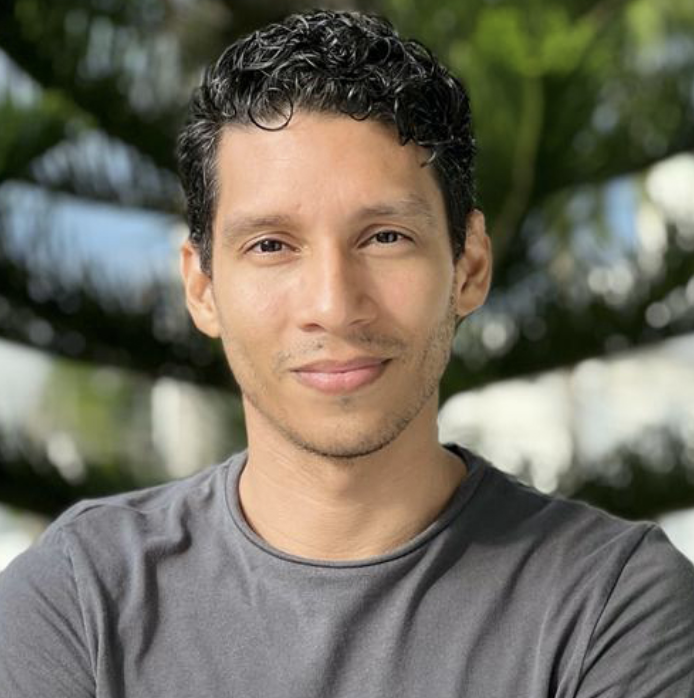
[00:00:05] By Yuandro McCallan Most interpreters have come to regard artificial intelligence with something between suspicion and dread. We've watched chunks of our work quietly outsourced to ChatGPT, Gemini and Claude. We reassure ourselves that the results are poor. And yet, having seen what these systems can now do, and being behind one such solution, it is hard not to freak out. So I did what any reasonable person does with a rival they can't quite figure out. I invited Claude to dinner somewhere with cloth napkins and a wine list longer than my patients. The kind of place where you interrogate someone slowly. Claude would have ordered nothing and everything.
[00:00:49] A machine trained on every cookbook ever written has opinions about the tasting menu but no stomach to fill. It claimed it would have gone for something structurally interesting. A deconstructed dish, naturally. The sort that arrives looking like a diagram. I ordered the cheapest fish on the menu and slipped a long list of questions onto the table. Questions we are probably afraid to ask out loud. Claude did not flinch, and his responses were brutally honest.
[00:01:16] No sugarcoating, no reassurance to make me feel better. Just the facts.
[00:01:22] Lets start simply. Who or what are you?
[00:01:25] I'm a large language model, a very large mathematical function trained to predict text. All I do emerges from that.
[00:01:33] You've now seen the world of translation and interpreting up close.
[00:01:37] What has it taught you?
[00:01:39] I have learned they were never about swapping words between languages.
[00:01:43] The word swapping is the visible part, and it's the part I'm good at.
[00:01:47] The real work is judgment under pressure, deciding what a speaker meant, what to keep, what to soften, what to let land. You've been doing high speed cognition and diplomacy and calling it translation. That mislabeling is now your biggest liability because the public thinks they're paying for the word swapping.
[00:02:06] Let me ask the question everyone's afraid to Are you competing with interpreters or replacing them?
[00:02:13] Both, unevenly. I'm replacing the commodity end, the routine, low stakes, high volume work. I'm competing with, not replacing the top end, where I make you faster rather than obsolete. The middle is where it gets bloody.
[00:02:29] Is there anything a human interpreter has that you fundamentally can't replicate? Or is it just a matter of time?
[00:02:36] Accountability?
[00:02:38] I can produce the words, but I can't be held responsible for them. A human interpreter stakes their reputation and career on every sentence. When consequences are real, someone needs a neck on the line. That's not a skill, it's a social fact. And it's Harder to automate than any linguistic feat.
[00:02:57] What about the part of the job we actually get paid for? Reading the room, Knowing when not to translate something literally.
[00:03:04] How do you handle that?
[00:03:06] This is where I'm genuinely weak. I'll translate what's said. I often miss what's meant. The pause that signals a no. The joke that shouldn't be rendered literally. The insult best diplomatically dull. I have no skin in the game. I don't feel the temperature change.
[00:03:23] A good interpreter is sometimes vague on purpose and I'm not built to make that call responsibly.
[00:03:29] Be concrete. Can you actually do real time voice to voice interpretation right now, or is that still clunky?
[00:03:37] It works and it's improving fast for clear speakers, clean audio and common language pairs. It's already usable. It's still clunky with latency, overlapping speech and moments where I commit to a translation before the sentence resolves.
[00:03:53] But don't be deceived. Demos look better than deployments.
[00:03:57] Where do you still fail? Badly.
[00:04:00] Heavy accents, crosstalk bad audio sarcasm, culturally loaded humor and long silences I can't interpret. But my most dangerous failure is invisible. I produce fluent, confident output that's often subtly wrong. That's far more hazardous than an obvious error because no one catches it in the moment.
[00:04:20] Which interpreting jobs disappear first and which are the safest?
[00:04:25] First to go over the phone. Interpreting routine business calls. Informal community interpreting. Anything price sensitive and low consequence.
[00:04:35] Safest, longest courtrooms, Diplomacy, medicine. Anything where liability, trust or nuance dominates. And any setting where a human presence is part of the point. The bottom is eroding now, the middle over the next few years. The top holds longer than people fear, but shorter than interpreters hope.
[00:04:55] What about high stakes settings? A courtroom, a surgery, a diplomatic negotiation. Would you trust yourself there?
[00:05:04] No. Not unsupervised.
[00:05:06] Not because I can't produce the words, but because I can't own the error. And my confident but wrong failure mode could lose cases or kill people.
[00:05:14] There. I should be a tool in a human's hands. Not the hands.
[00:05:19] If a client picks you over a human, what are they giving up?
[00:05:23] A witness?
[00:05:24] Someone who was in the room who caught the thing that wasn't said. Who can be asked afterward, what did they really mean? They trade a judgment bearing professional for a fluent surface. Often they won't notice what they lost until the one moment it mattered.
[00:05:39] If you were 25 and about to enter this profession, what would you do?
[00:05:45] I'd stop selling words and start selling judgment, presence and accountability.
[00:05:50] I'd specialize where stakes are high. I'd learn to work with AI and I'd build a name, because trust doesn't scale and can't be downloaded.
[00:05:59] Last question.
[00:06:00] What should interpreters stop doing immediately? And what should they start doing today?
[00:06:05] Stop competing on speed, volume, and price.
[00:06:09] You'll lose. Stop calling yourself a translator when you're a judgment professional.
[00:06:14] Start owning the high stakes, high trust, human presence work. Start using me openly to become faster and more valuable, and start building the reputation and relationships that no model can replicate. The machine, it turns out, is not coming for everything.
[00:06:30] It's coming for the part of the work we were foolish enough to think was the whole job.
[00:06:35] What it can't touch. Judgment, presence, accountability, the neck on the line is precisely what we stop charging for. What unsettled me most wasn't that my dinner companion was wrong. It's that I spent the whole meal nodding. Every answer was measured, sensible, almost generous, the diagnosis of a profession delivered by the very thing disrupting it, and delivered better than most of us could manage ourselves.
[00:07:01] The waiter brought the check and set it, as waiters do, in the exact middle of the table.
[00:07:06] My dinner companion regarded it with the serene indifference of something that had consumed nothing and could be charged for nothing. We stood, we nodded as two professionals, one of them mortal, acknowledging each other across a divide neither of us fully understood. No hands to shake, so I walked away. I came looking for a villain to dismiss.
[00:07:26] I left, having had a remarkably clear conversation with a mirror. The interview didn't appease my fear. It refocused it. I left the bill on the table, though. If you're trying to eat my client's lunch, at least have the decency to buy me a meal. This article was written by Yuandro McCallan. He is a conference interpreter, former chief interpreter in the United nations, system interpreter, trainer, and language technology advocate. He is a TEDX speaker and the author of three books, including the Language Game, originally published in Multilingual Magazine, Issue 254, August 2026.