Episode Transcript
[00:00:03] Speaker A: Hello.
Welcome to Localization Today, where we explore how language, technology, and community converge to unlock ideas for everyone everywhere. I'm Eddie Arrieta, CEO of Multilingual Media, and I'm here to tell you that the language industry has spent the last few years talking extensively about AI transformation, new business models, changing careers, and the future of localization.
But perhaps the more interesting question now is, are we having the right conversations about those changes?
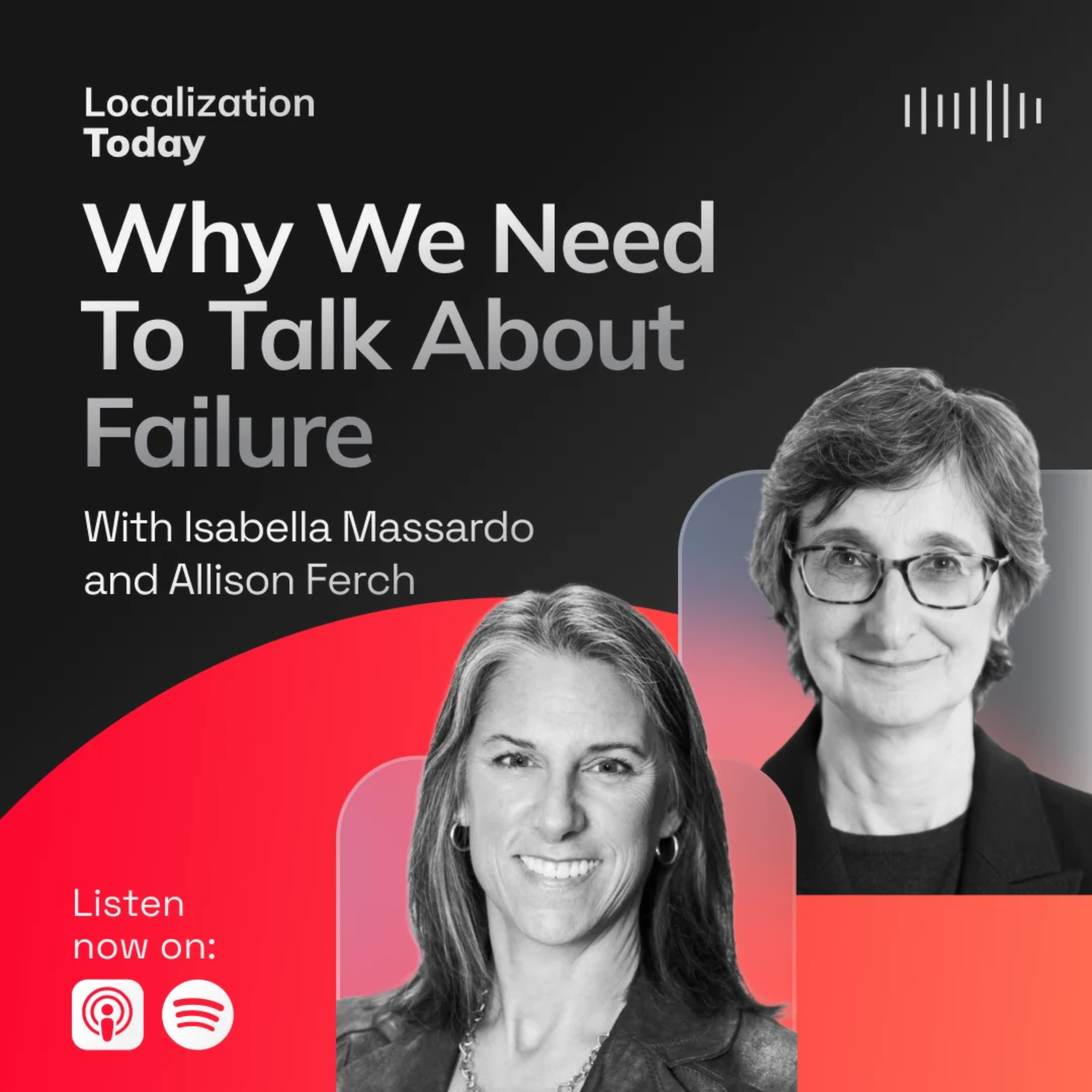
That question is at the heart of World Ready Lisbon 2027, taking place April 12th to the 14th in Lisbon, or if you are like me, from the 10th to the 20th in Lisbon, Portugal. Under the theme Real Honest Talks for an Industry in Transition, GALA is asking speakers to move beyond theory, Polish success stories and conversations we've already heard. Instead, the organization is looking for practical innovation, lessons from experiments that didn't work, unresolved challenges and ideas capable of generating real debate. Joining me today are two people helping shape that conversation. Alison Furch is executive director of gala, and Isabella Massardo, gala's content strategist, Alison Isabela. Welcome to Localization Today is very exciting to have you on board.
[00:01:35] Speaker B: Thank you.
[00:01:36] Speaker C: Thank you.
[00:01:36] Speaker B: Great to be here.
[00:01:38] Speaker A: That is good. That is good. Thank you so much for. For talking about WorldReady Lisbon 2027. Are you excited about World Ready 2027, Isabella? Alison.
[00:01:49] Speaker B: Yes, definitely. I don't know about Alison.
[00:01:52] Speaker C: Always. Yeah, always. It's. This is. This is gala's magnum opus for the year. Some people know us only because conference instead of things we do all year long, that it's our favorite program.
[00:02:05] Speaker A: That is so wonderful. And of course, you know, working on the program is one of those really exciting things.
And building what is going to be taken from that space, what can you tell us about it? How is it going? What are we up to these days? Along those lines.
[00:02:22] Speaker C: Well, I'm going to have Issa answer this, but I just want to give her and the program committee a lot of praise because it's not easy.
Everybody knows what it's like to volunteer and then to work with volunteers. And Issa's got a stellar hardworking committee.
[00:02:39] Speaker B: Definitely.
And do you mind if I mention their names? Because they've really been working very hard since the, I think the end of May together, writing down notes and everything. So just let be patient and let me give you the name. So we had Tom Allwood from nyu. We have Jeannie Bromberg, CEO of Bromberg Fan Associates. We have Paula Hunter from Autodesk, Patrick Nunes from Rotary, Jada Giroto from Ikevia Salami, Jesse From Easiling, Marina Ilari. Who doesn't know her, right. CEO of Peran, Jose Falamares. Nobody knows him. But hey, we meet someone who's not well known in the industry, and Gabriela Morales from Rotario Traciones. And they've been working very, very hard. They've been meeting every week for the whole month of September to come up with what I think it's one of the best cultural proposals that we've had in a long time.
[00:03:37] Speaker A: What's the question? Also for you, Alison, I guess, in terms of the work that you do around the world Ready. You are looking for a goal that is perhaps the wider goal. Alison, can you talk to us a little bit about the wider goal of world? Ready? Lisbon 2027.
[00:03:59] Speaker C: Sure.
We want this to be like a multi stakeholder, a convening of multiple stakeholders. And the common thread is that they're all practitioners and we have a really flat hierarchy, or no hierarchy, really, at Gala, where I don't care if you work for an enterprise client that's giant. I don't care if you work for a nonprofit organization, for an lsp, for a technology company, if you're an independent consultant. We bring everybody together, and they're all practitioners, and they're all working on the same problems, which they may see from a different point of view.
So the bigger goal, the biggest goal, is to bring everybody together for problem solving and knowledge sharing. And we try to keep it really topical and relevant and timely. And that's what the committee works on, is identifying those topics that are timely and relevant.
So that's the bigger goal. We also want people, of course, to grow their networks, get a different perspective that they don't get when their head's down in their office every day at their computer, and of course, come to a really cool city.
[00:05:11] Speaker A: That's very obvious. And it seems very easy, right? It seems very easy. Just make it topical, make it relevant, make it timely.
So easy to say, isabela, how does this happen?
While you're building the program, you know, you're receiving different proposals, and as I understand, we are opening for proposals. Right?
That's the big news. That's the big news. We should have started with that.
What day does it start?
[00:05:40] Speaker B: You're very clear. First.
[00:05:43] Speaker A: Yes.
[00:05:43] Speaker B: Okay. That's okay. You're hearing it here first.
The corporate proposal just opened this morning at 8. I clicked and published the page.
And so you're hearing it here at Multilingual Media Studio first. And it's hard work, but we're very lucky to Always have a program committee made of people who are hard working, who want to work for the community and all together and bring the different perspectives of different groups.
It was a long selection. We had a gigantic list of topics, so we had to select a few.
And we came up with three tracks.
The first one is Strategy Ready for those C level people who are going to be in Lisbon with us. Then there's Global Experience Ready, which is to talk about the users, the end users. So it's about interpreting, it's about low resource languages, it's about ux, it's about content development, multilingual content development, content design, et cetera. And then career ready, which is all about people and their talent, their skills, and how the future is going to look like for them.
But it was a long discussion and it's all, you know, the program, every step of the program, from the corporate proposals to, to the finalization of the timetable, et cetera. It's very much hard work on the program committee, I have to say. I'm just managing the discussion and take notes and summarize and do my best to make everybody happy.
[00:07:23] Speaker A: Isabela, I was saying that it's a big challenge to then start receiving all these old proposals and then shaping it in order to, you know, share all of this through these practical experiences, real experiences that touch upon a little bit of the honest concept.
So what does an honest conference session kind of like look like? And you've been very explicit in the call for proposals that what gala, or at least what gala doesn't want. You're inviting people to discuss failed experiments and iterations that went nowhere.
You are even asking applicants in their video submissions. What would people not expect to hear from your presentation?
That's very interesting. That's very interesting. It changes the dynamics of how the content is going to be received.
So what are you seeing? What do you expect to see? Isabella, I guess, is a question. And for you, Alison as well, it's really interesting to see the types of sessions that you will have to do all of this because, yes, you're talking to me about the different topics, but are they panels? Are they keynote presentations? It'd be really nice to hear a little bit about that too. Sorry. Threw a lot at you. This is very exciting. By the way, we're already. Lisbon. I will be in Lisbon. Let's make many of us there.
[00:08:45] Speaker B: We're going to be very happy to see you in person.
Okay, let's start from what kind of proposals? Well, they have to be practical proposals. Right.
We want to know what you've been working on, what you've been building, what you've been experimenting, and if it was successful, great, why was it successful? But we know that before you get to that accomplishment, there are many failed attempts. So we want to know about those as well.
And not everybody has time to experiment, not everybody has a budget to experiment. So if you want to share all your work experience, experimentation, etc.
It's going to be very useful for many, many people. And I think this is one of the reasons that people should go to conferences to learn very fast from others and learn from each other, which is what more or less always happens at a gala conference, at least from what I've seen in the last five, six years.
Is that being that long? Oh, gosh.
In terms of formats, we have some traditional formats, like a very short 30 minute presentation and we want with that for speakers to get to the core of the topic immediately. We don't want, you know, long introductions about yourself, whether you, you know, spend time with your family. We know that you love your family, but we want to know you to get to the core of what you want to say. We have another, rather, let's say traditional format, which is the panel discussion, but in this case we're asking you not to call over after the discussion. Just leave it as scripted. Bring people with different ideas, don't make them complement one each other. We want diversity.
We have a roundtable format, which is where you propose a topic and then you try to solve that issue altogether in small groups, possibly. And then we have the Academy lab, which is a 90 minute workshop, needs to be extremely practical. So if you want to send a proposal for an Academy lab, make sure that you prepare a lot of practical exercises, activities for people. And then there's, I need to say there's a separate call for proposals for the soapbox session, which is my favorite.
And the soapbox sessions are very short sessions of 10 minutes.
No microphone, no slide deck, no props. You just go on stage and you tell your story.
And in this case, we decided to have a theme for the soapbox, which is not so ready. And so tell us about, oh, I don't know, you started to become a translator, you wanted to work as a translator, but now you're, you know, working with numbers because you became a CEO of a translation company or I don't know what else you want an rfp. And then you realize that, gosh, it was much more work than you expected and, you know, you had to change your plans or anything else that made you realize, oh, we're not so ready here.
What do we need to change to adapt and make success of this? So this is more or less what people can expect from the program.
But if you want to send a proposal, and of course you should first of all go to the page and read it, because it's a very long text. But if necessary, there are some very good points there that you really need to read it through and make sure that your topic is practical, that it is, of course, well structured. But most importantly, we also want you to give us a one or two minute video because we want to hear from you what's so special about your proposal.
[00:12:49] Speaker A: Yes, I was taking notes for my proposal. Alison, please continue.
[00:12:54] Speaker C: Yeah, I think I would add a couple of things. So we've all been to conferences where there's like a very polished, very scripted, really sanitized presentation where we only hear what went right, and that has usefulness. And when you can take something away, bring it back to the office and put it into practice or adapt it somehow, we believe that there's also a ton of value in hearing a little bit more about the messy stuff. And so this is why it's honest talks. We don't want super high polish where the trade off has been made between, you know, appearances and then meat content material. We really want. I don't. We don't care if it's messy. We want to hear what went. What went wrong. And as Issa said, the purpose is learning from people who've already done it, is that's a highly effective way to learn.
And so that's what we're going for here. Not a lot of polish, necessarily, but a lot of information and knowledge sharing.
[00:14:01] Speaker A: That is a really exciting. Of course, the practical element also makes me think that at the end of the day, it's a lot of humans doing a lot of different things, trying a lot of different things. You mentioned that one of your pillars is around skills and people. Could you tell us a little bit more about how perhaps this. It comes.
This is my thought. It comes to kind of like balance the program in a way that reminds us of that humanity that we shouldn't forget about in this type of situations?
[00:14:34] Speaker B: Well, if you're asking me, skills, the talk about skills is one of the most important. Up to now, we've heard very little that is new. Right? Because the question is always, what are the most important skills for the next five years? We don't know. Let me tell you. Everybody comes with prompt engineering, at least until last year. And we discussed, I think, a couple of days ago, and we heard, well, you know what? Prompt engineers are not needed anymore because, hey, we can all prompt right now. Right?
So we want to hear from people who have gone through these career changes, and I'm sure there are in the industry, many that have gone through different changes at different times.
We want to hear how they are adapting, what they're doing to keep up to date, how they are working with different teams.
Someone even suggested a topic that maybe it's a bit controversial, but how do you have a boomer NH in the same room and work together? And it might sound a bit creepy or cringe, but it is true. Things are different nowadays, much more than before, of course. And then there's a component of AI and technology in general and business strategy. So it's, I think, career ready. It's going to be a very good track to follow. So, Eddie, when you come to Lisbon, that track.
[00:16:10] Speaker A: I'll be there. I'll be there by the.
[00:16:11] Speaker B: You'll. By the 10.
[00:16:13] Speaker A: Yes.
[00:16:13] Speaker B: You'll be the first one in the room. Okay, great.
[00:16:16] Speaker A: Yes. Yes. And my wife was like, oh, my God, this is the one. We should go to Lisbon. I said, yeah, we should. Why not? That's a great idea. All right. And clearly we are looking for these type of proposals, these types of content.
Is there a little bit of a challenge to the potential presenters, to the potential speakers to say, hey, can you push this a little further?
Can we stop talking about the same things that we've been talking for?
Is there an evolution of the conversation? Is this a challenge to make an evolution to the conversation? I guess it's the conversation from the team at World Ready.
[00:16:59] Speaker C: Yeah. I mean, we're always trying to figure out how to build a better mousetrap.
Like, you know, we don't. We don't want to. You know, I'm thinking about all these stupid cliches right now in English, but, like, rinse and repeat and bake from the same recipe.
But these all convey my meaning, which is to say we don't want to just repeat the same conference that we always repeat. We want every conference to be a little bit different.
And I think, I don't know, some of the other goals are, you know, we try to be really welcoming.
Like I said earlier, we want there to be kind of no implied hierarchy. We're all just practitioners convening to talk about things that are challenging and where do we go from here? We're all sick to death of talking about AI. AI is just it's like I saw something today that was nice. It's like amazing humans using excellent tools. Like that's what it is. That's what we want to talk about.
Bring the amazing humans together to talk about. Sure. The excellent tools that they use and how they use them.
But yeah, we want to always innovate. We're working on kind of a special event that's going to be part of Contained within the conference, which is.
We're still working on naming it, but it's going to be an innovation day where we do talk a lot about tech and the different. Like there's so many folks developing their own technologies now. In fact, I know the buy versus build question is one that it's in the cfp and so people have been building pretty cool things and we want to give them a chance to show off.
So that's more to come on that. But I just thought I would mention it that, you know, innovation is both something we discuss and something that we try to embrace ourselves.
[00:18:53] Speaker A: That is fantastic news. I'm already thinking about what my proposal is going to be, Isabella.
[00:18:59] Speaker B: Great.
[00:18:59] Speaker A: It's definitely going to be something on the practical side and it needs to have a little bit of that soapbox feeling. I was there for the soapbox last year and it was.
I really liked it. I really liked it. It's a very bold idea. It's a very bold idea.
Very interesting as a, as a, let's say, a proposal for the way to get an understanding of our industry. But of course, do we need to rethink who actually belongs in the localization conversation now? It seems now that localization has become this anchor to where we go just for reference. It's like a star that we now have for reference. How are you going through that transition?
[00:19:46] Speaker B: For me, everybody belongs in the localization and localization belongs everywhere. And in fact, not to digress, but for example, next week we are collaborating with Tecom Bureau, which is the Technical Communication association, because we want to bring together technical communicators and localization professions.
And we hope that in Lisbon there will be not just localization professionals, but content designers, UIX specialist, SEO or GEO or IEI or whatever new, you know. Afternoon.
John Muller at Google is going to come up with.
We want, I don't know, we want software engineers, we want solution architects, product people. Definitely.
[00:20:36] Speaker C: Yeah. I wish we could, I wish we could connect more with product people. Myself, I like all of these folks that Issa's talking about.
We consider them now adjacencies, but a lot of Us and Gala is not the only ones. A lot of people are essentially thinking it's going to become deeply embedded in all these other layers of enterprises. And product to me is kind of the big one, which would be delightful as long as they understand there's already a whole lot of very smart, qualified, experienced people that can help.
[00:21:12] Speaker B: Yes, exactly. Don't expect a beginner's crowd. Expect a crowd of people who know what they're talking about with a good many years of knowledge and experience.
[00:21:23] Speaker A: Yeah, it's very interesting how everything seems to boil down to the essential elements of the conversation and the humans are all in the middle of it.
And there have been some very interesting conversations around this week around what's happening with AI and what humans are allowing AI to do. And is there a new silly, conspicuous. And all of that thing that relates to what we do with different technologies has made me think a lot about what we are going through as industries, but also as societies as well.
What is one conversation you personally think the language industry still avoiding or simply still not having honesty around it? Well, which would be perfect for this format. Right, let's immediately clear this conversation.
So. So what are some of those conversations we're not having?
[00:22:17] Speaker B: Oh, for me would be definitely the business models and the per word pricing strategies that being there forever and every time we say, well, the industry every time says, oh, we should get away with the per word pricing models and then the pricing model keeps staying the same. So I think that would be a very nice conversation to have, honestly.
Definitely about skills and the role of linguists. As a former translator myself, I see some of my colleagues are really struggling understanding which skills they should develop, what their position is going to be, what role are they going to have in a year time. So it would be great to have that conversation as well.
[00:23:10] Speaker C: I think one that's tied to both of those too is the question of value.
And I feel like the localization industry has always struggled to communicate their value in a way that their stakeholders understand. And so especially when you have a bunch of smart linguists, they might get stuck talking about like for example, how the sausage is made, but their stakeholders and their sponsors and their executives don't care how the sausage gets made. So I think we still have an expression of value problem in the industry where people on the enterprise side need to communicate that value to their own stakeholders and then in turn the companies that are supporting them need to be able to communicate their value. I think that value is changing.
You know, you hear people talking now about MITIGATING risk or owning risk, or people taking responsibility for the content and the quality in a way that they haven't done before. So it's changing, but everybody needs to wrap their heads around what that value is and how to communicate it.
[00:24:21] Speaker A: So the speakers are going to have a huge responsibility.
What do you recommend speakers do, Isabella? Let's say, make this decision. I'm going to take all these things into consideration.
How can I wrap my head around all these things to get going with my proposal?
[00:24:38] Speaker B: Just be honest and authentic. I would say.
Do not use, you know, to be very practical. Do not use bum words.
Describe what you're going to talk.
Make sure that your proposal is well structured. And in fact, we are going to have a webinar next week on Grief with Marina Pancheva, who's going to give us a peace of our mind on how to write a great proposal for a conference. And we're going to have the recording available if you can't attend. But, you know, just be authentic. Be honest. Describe your presentation in a structured way, because the program committee has to read that presentation together with 140 other proposals, and it's a lot of work. So if it's well structured, it's going to make their work easy and they're going to appreciate it and they're going to select.
[00:25:28] Speaker C: I have one thing to add to that.
Look, we all come together, and often there's a commercial purpose to us coming together. People want to generate business and they want to be known and seen, and that's fine. That's great. I think at Gala, what we really want to emphasize is if you demonstrate your expertise or your even just experience, even if you're not expert yet and you share knowledge, that builds your credibility right away with our audience and with our delegates. And so we don't like sales pitches, even thinly veiled sales pitches. We really want you to stand out and be admired because of what you say and how you share it and what people take away with them. So make sure that in your proposal it's not just, you know, a thinly baled sales pitch.
[00:26:21] Speaker B: Yeah. Make it useful.
[00:26:23] Speaker A: Yes, yes. It's very, very exciting. Very exciting to see what the final result of the selection and probably many ideas are going to continue now to spark from here. Right.
You'll start to see the very interesting proposals, but the diversity of proposals, that's going to be very interesting. I have my own idea.
Let's see how we can make it happen.
Very exciting. Before we go, is there anything else we've Missed in this conversation. Anything you want to say to our audience who is probably very excited to be part of world ready Lisbon 2027?
[00:26:58] Speaker B: Just give it a try. Even if you've never presented at Gala, just give it a try.
Because every year we have a big group of new speakers. Actually, usually half of the speakers every year are people who come to Gala for the first time to present.
So even if you think, oh, I'm not so sure, just give it a try. Definitely.
[00:27:17] Speaker C: Yeah. I would say just remember that we're a nonprofit organization and we're a community and this is not the TED stage and we don't expect that. We just want our people coming together to, as a community to learn from each other and inspire one another. And that goes with what Issa said. Like I've heard people say, like, oh, I don't think I'm ready for Gala. That's silly. Yes, you are. When? What, when else are you going to be ready?
[00:27:45] Speaker B: Yeah. And even if you've never been on stage, you're going to work with the people from the program committee. We're going to assign one of them as your MC and they're going to help you. They're going to review your presentation. They're going to, you know, you give them a sneak preview. They're going to help you build a stage presence. So it's going to be a great, great experience, even if you're a first time speaker.
[00:28:06] Speaker A: That sounds wonderful. I'm very excited to think about this further and see what we could do. When does the call for proposals closes? So it's October 1st and we go until when?
[00:28:21] Speaker B: 31st of October, midnight Pacific time.
[00:28:24] Speaker A: We have one full month to make it happen. All right, you heard it here in localization today from Isabela Massardo and Allison Furch. Thank you both for joining us today.
[00:28:36] Speaker C: Thanks for having us.
[00:28:40] Speaker A: Of course, of course. It's a huge pleasure to be in conversation with both of you today.
We are thankful to our wonderful audience for sticking in this conversation once again. Alison Isabella, thank you both for joining us and for giving us a look at the thinking behind WorldReady Lisbon 2027. The conference will take place April 12th to the 14th, 2027 at the Centro de Congresos de Lisboa in Lisbon, Portugal. And the call for proposals is currently open for anyone considering submitting. GALA is looking for practical solutions, work that's already been tested, lessons learned, successes, failures and ideas that can generate a genuine conversation.
Not another sales speech. Their proposal deadline is October 31, 2026, and applicants will also be asked to submit a 1 minute, 2 minute video answering a particularly fitting question.
What would people not expect to hear from your presentation? And thank you to everyone listening to this episode of Localization Today. Catch new episodes on Spotify, Apple Podcasts and YouTube. I'm Eddie Arrieta with Multilingual Media. Thanks for listening in and we'll see you next time. Goodbye.