Episode Transcript
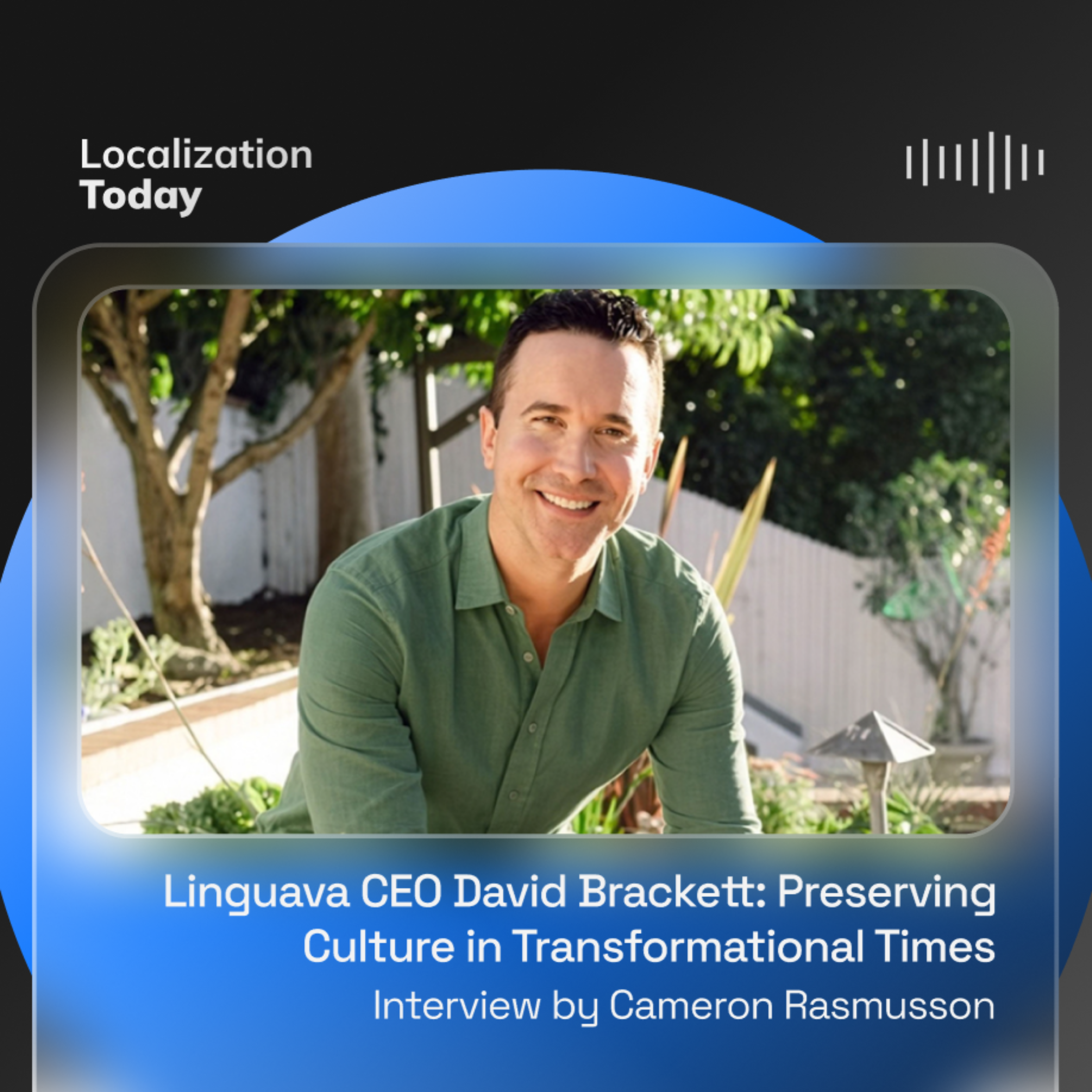
[00:00:00] Speaker A: Linguava CEO David Brackett Preserving culture in Transformational Times Interview by Cameron Rasmussen Healthcare is a field where language access matters most. It's also an environment where linguistic mistakes and miscommunication carry particularly severe consequences. When a patient doesn't fully understand the requirements of their treatment or the proper dosage of a drug prescription, it can mean delayed healing or even lasting harm. Linguava has distinguished itself in a challenging service market by not just supplying language service, but also delivering it with an attention to nuance, detail, and compassionate communication that puts both medical professionals and patients at ease. But times are changing fast.
As AI technology throws new curveballs at the industry and the company works to meet demand, Linguava founder and CEO David Brackett finds himself contemplating a unique question, both a dilemma and an opportunity.
How does a company scale and embrace change while preserving the culture that built its success in the first place? Could you give us a brief overview of your career before founding Linguava?
[00:01:09] Speaker B: The most important lessons I brought into Linguava weren't necessarily technical ones. They were lessons about people I Learned from living 5 years in Spain and working as a Spanish healthcare interpreter. Over the years, I've become convinced that business is ultimately a people endeavor. You can have the best strategy, technology and systems in the world, but if you don't have the right people values and a culture where those people can thrive, you're going to struggle. One of my favorite quotes is from Peter Drucker, culture Eats strategy for breakfast. That philosophy has shaped how I lead Linguava today. My job as CEO isn't to have every answer. It's to surround myself with great people, establish a clear vision and set of values, and then create an environment where people feel trusted and empowered to do exceptional work.
[00:01:56] Speaker A: What inspired you to found linguava in 2010?
What need did you spot in the market at the time, and what foundational principles did you lay out for the company?
[00:02:06] Speaker B: When I founded Linguava in 2010 with my dad, I saw an industry providing an incredibly important service but often treating it like a transaction. The language service company where I worked as an interpreter would pay me and many others with checks that bounced. It was a painful experience.
I wanted to build something different. Interpretation isn't simply moving words from one language into another. Especially in healthcare, there's a human being on each side of that conversation. Someone may be receiving a diagnosis, making a decision about surgery, giving informed consent, or trying to understand what's happening to their child or grandparent. That changes the responsibility we have. From the beginning, I wanted Linguava to be a company that puts people first, prioritizes well being and honors the humanity of everyone. We engage with our patients, clients, vendor partners and employees, treating them with the respect, compassion and the understanding they deserve. We strive to build a people centric culture where everyone feels heard, appreciated and empowered. We recognize that as humans, none of us are perfect and we may make mistakes.
As we've grown, the technology has changed dramatically, our services have expanded, the company has become much more sophisticated, but that foundational idea hasn't changed people first. I've learned that culture isn't something you preserve by refusing to change.
Great cultures actually give organizations the confidence to change because people know what will remain constant even when everything around them is evolving. This mindset stems from one of our other core values we call the pursuit of progress, where we embrace continuous and constant, never ending improvement.
[00:03:49] Speaker A: What are the most common service requests you receive and are there any aspects of your business that are new or growing in popularity?
[00:03:57] Speaker B: Healthcare remains at the heart of Linguava and is our core focus.
Historically, on site interpretation has been a major part of what we do and we continue to believe strongly in it. There are healthcare encounters where having a qualified interpreter physically present can provide tremendous value.
At the same time, healthcare organizations increasingly need flexibility. They may need an interpreter physically present in one situation, video interpretation five minutes later, and telephonic interpretation in the Zulu language at 2am that's why we're evolving from simply being an interpretation company into being a comprehensive language access partner. We're expanding video, remote interpretation over the phone interpretation and translation while continuing to invest in on site interpretation.
The future isn't about forcing every encounter into one modality. It's about giving healthcare organizations the ability to access the right language professional through the right modality at the right moment. Our vision is to ensure that every patient has a seat at the table to fully participate in their healthcare no matter what language they speak or sign. That's a much more interesting problem to solve.
[00:05:07] Speaker A: Could you describe the procedures and policies associated with language work? In a highly regulated field like medicine,
[00:05:14] Speaker B: healthcare interpretation carries an enormous responsibility. Accuracy matters, but qualification, confidentiality, professionalism, ethics and understanding the healthcare environment matter as well. You are placing someone into conversations involving sensitive medical information and potentially life changing decisions. For Linguava, quality therefore begins long before an interpreter assignment. We invest heavily in qualification, training and compliance processes, including medical interpreter training and ongoing professional development. We also have systems designed to ensure the professionals serving our healthcare clients meet the applicable requirements of those environments. It's one of the reasons we decided to build our own accredited interpreter training program, the Linguava Interpreter Academy. The academy ensures we provide the necessary training to all our interpreters before they get onboarded. But there's another dimension to quality that I think can get overlooked. Compliance is the floor, not the ceiling. You can check every compliance box and still deliver a mediocre human experience.
Our goal is to combine rigorous standards with exceptional service. We want the healthcare professional to feel supported, the interpreter to feel prepared, and the patient to feel respected and understood. That's what quality should look like.
[00:06:34] Speaker A: When you hear from medical professionals actively working in the field, what are their most frequent requests for language services?
[00:06:42] Speaker B: In one word, access.
Healthcare professionals want qualified interpreters available when and where they need them, without creating additional friction in an already complicated clinical environment.
They don't want to think about the infrastructure behind language access. They want to know, when I need someone, will they be there? Will they be qualified? Will the connection be easy, and can I trust the quality? That means our job isn't simply to supply interpreters. It's to remove friction and provide the right, meaningful language access solution at the right time. The better we become at integrating on site video telephone and other language solutions into the healthcare workflow, the more invisible that complexity becomes to the clinician. That's when we've done our job well.
[00:07:27] Speaker A: Could you tell us how Linguava manages its network of language professionals?
[00:07:32] Speaker B: Our interpreters aren't widgets in a scheduling system. They're professionals doing extraordinarily important work. That's an important distinction. We put significant emphasis on recruiting, qualification, training, compliance and development. Our Healthcare Interpreter Training Academy helps prepare professionals for the realities of healthcare environments. And our operational teams work to connect qualified interpreters with the appropriate client needs. But I think our culture plays an equally important role. One of the mistakes companies can make as they scale is creating distance between the organization and the people actually delivering the service. We want the opposite. We want interpreters to understand why their work matters, feel connected to Linguava, and recognize that they are part of something larger than an individual assignment. Technology can make matching supply and demand increasingly sophisticated. But leadership still has to make people feel valued.
[00:08:28] Speaker A: It's the inescapable question in the language industry.
What are your thoughts on AI's role in language services, particularly interpretation? How do you currently use AI in your operations?
[00:08:41] Speaker B: I actually think we're asking the wrong question. Everyone keeps asking, will AI replace interpreters?
The question I'm much more interested in is what becomes possible when extraordinary human beings have extraordinary technology working Alongside them. That's where I think the opportunity is. At Linguava, we're embracing AI. We use it internally to improve productivity, analyze information, streamline processes, and help our people spend less time on repetitive work and more time on work that requires judgment, relationships, and creativity. And we'll continue exploring where AI can responsibly enhance language access itself. But I don't believe the future is simply human versus machine. I believe it's human multiplied by machine. Healthcare makes the distinction particularly important. A conversation between a physician and a patient isn't merely an exchange of vocabulary. There's emotion, context, culture, trust, fear, body language, judgment. Sometimes silence communicates as much as the words themselves. AI is going to become extraordinarily capable at language. But language and human connection aren't exactly the same thing. So rather than asking how AI can eliminate people, I'm asking how AI can make our people better, faster, and more impactful. That's a much more exciting future to build.
[00:10:03] Speaker A: What do you think the future of interpretation looks like as AI technology evolves?
[00:10:09] Speaker B: I think the next decade will change our industry more than the previous 50 years. Some forms of language work will absolutely become automated. Pretending otherwise would be a mistake. But I also believe new categories of language work will emerge that we can't fully see today. The companies that succeed won't necessarily be the companies with the most interpreters or the newest AI model. They'll be the organizations that figure out how to combine technology, human expertise, quality, trust, and culture into one experience.
That's what we are preparing Linguava for. We're expanding beyond our traditional geographic footprint, building our remote capabilities, and exploring how technology can help us deliver language access at a much larger scale without sacrificing quality. And internally, we are encouraging our people to experiment with AI rather than fear it. That's important to me as a leader.
When major technological change happens, leaders can either create a culture of fear or a culture of curiosity. I want curiosity. The organizations that remain curious will discover opportunities that organizations focused exclusively on protecting the past will miss.
[00:11:19] Speaker A: Are there any other fields besides healthcare that Linguava pursues? And what about the company's work today excites you most?
[00:11:27] Speaker B: Healthcare is our primary area of expertise and where we've built an incredible foundation. But what excites me most today is the opportunity to take what we've learned and scale it. Linguava began as a regional company with a strong presence in Oregon. Our vision now is much bigger. We're expanding geographically, growing remote interpretation and translation capabilities, investing in technology and building toward becoming a nationally recognized leader in healthcare language services. But growth itself isn't what excites me most.
The challenge is seeing how big we can become without losing who we are. Anyone can talk about culture. When a company is small and everyone knows one another, the real test of culture comes when you scale. Can you grow into new states, adopt new technology, add new leaders, potentially acquire other organizations and dramatically increase revenue and still have people say, this feels like linguava? That's the challenge that energizes me.
[00:12:26] Speaker A: Anything you want to add?
[00:12:28] Speaker B: I've spent a lot of time thinking about what leadership looks like in an age when technology is advancing this quickly, and I've come to a somewhat counterintuitive conclusion. The more technological the world becomes, the more important the human side of leadership becomes. AI can analyze information. It can automate processes, it can translate languages. It can make organizations incredibly efficient. But people still want to belong. They still want purpose. They still want to trust the people they work with. They still want to know that their work matters. That's why I believe culture will become more important in the AI era, not less. The technology will continue changing, and linguava will continue changing with it. But our job as leaders is to make sure that as we become more technologically capable, we don't become less human. For me, that's the future worth building.
[00:13:18] Speaker A: This article was written by Cameron Rasmussen. He is senior writer and editor for Multilingual Media. Originally published in Multilingual Magazine, Issue 256, 10-20-26.