Episode Transcript
[00:00:03] Speaker A: Hello and welcome to Localization Today where we explore how language, technology and community converge to unlock ideas for everyone everywhere. I'm Eddie Arrieta, CEO here at Multilingual Media. Today, we turn our attention to a topic that often defines the success of language organizations, but it's rarely discussed in depth. The importance of engaging with the community of language industry professionals.
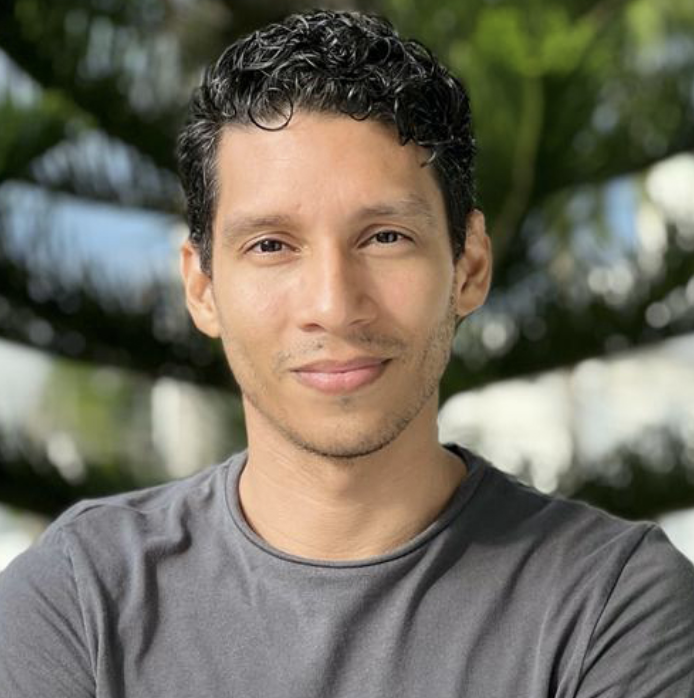
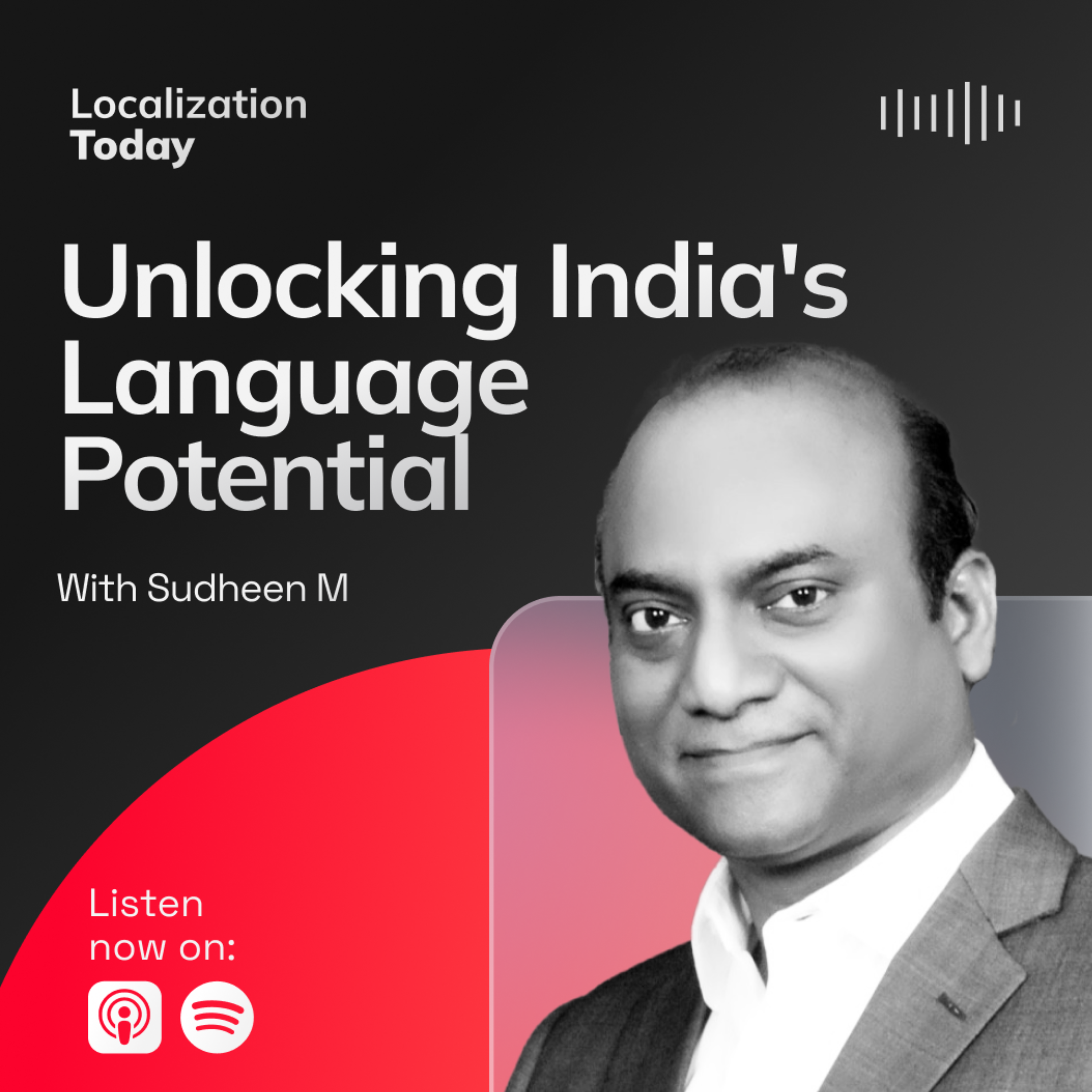
The strength of our ecosystem depends on how intentionally we connect, collaborate and support one another. Joining us is Sudin Serial, founder and president of sidlob, who has spent his career building organizations, teams and opportunities across the language industry.
As founder of Crystal Hughes and an advocate for community engagement, professional development and innovation, he brings a unique lens to to how collaboration shapes the future of localization. Sudin, welcome. Thank you for joining us again here.
[00:01:08] Speaker B: Thank you very much, Eddie. It's wonderful to be here with you. Wonderful.
[00:01:13] Speaker A: And it is always amazing to talk because every time we talk and just backstage we were also talking with the wonderful Camilla Sabo Gal, who is our producer, and we were talking about India. Every time we talk, we bring in something that we had not discussed before. And you were talking to us a little bit about the cultural diversity of India and some of the history behind what drives that diversity. Sudin, we love to talk about India. We'll talk about, love to talk about the ecosystem today.
Please say hi to everyone in the audience and please, if they don't know you, please tell them how they might be able to describe you or how would you describe yourself to them.
[00:01:59] Speaker B: Thank you very much, Eddie, for having me here and hello everyone in the audience. Well, my name is Sudin.
If someone has to describe me or if I have to describe myself in couple of words, I would say I'm passionate about creating opportunities for people to grow, helping them mentor with my experience and knowledge that I've gained over the years.
So that's about it. And so of course, I have pursued my interest, which varies some language to not for profit, supporting not for profit, and then the school ecosystem.
So I have been lucky to be able to pursue all my interests, different ventures in all of these.
[00:02:48] Speaker A: Fantastic. Sudin. Of course, part of what makes this industry amazing is the community, is the ecosystem, is the collaboration, is the cooperation, is the collective intelligence. And there is huge nuance to that because one can be very superficial and just say, you know, when two humans work together is better than one or two humans working individually. But if we really dig deeper into it, maybe we can find some of those textures that make all of this make sense. We were just talking about India.
Can you tell us about India's history a little bit, the cultural influences that it has. Maybe you might have one or two stories to tell us that can give us some sense onto how rich that actually is. You had mentioned that in some places cows are sacred, while in others is staple food. Why don't you tell us some words about that?
[00:03:47] Speaker B: Yeah, well, India has always been a country of lot of mystiques, I would say. So it's, it's a cultural fusion. So you will have, you know, India has states which is pure vegetarian. The whole state is a vegetarian.
You will have a state which is in which alcohol is prohibited and it's not necessary that a vegetarian state would not have, would not serve you alcohol.
So that's on the, on the food side. Yes. And then you will have, you know, India is by and large Hindu majority. So you have a religion called Hindu or Hinduism. And then about a majority, maybe about, say 75 to 80% of the population of India would be classified as Hindu. And for them there are certain animal which is sacred. And that's one of the reason why you'll find a lot of vegetarians in India.
And one of the sacred animal for Hindus is a cow.
But then if you go to certain states in India, you would find that, you know, beef is the staple food there. You know, you have.
So you, you'll see a lot of contradictions, I would say. Not contradiction, but diversity, as diverse as you can imagine.
Another aspect is, you'll have, you know, not very many people know that. Of course people know that India was called colony of England, of course, once upon a time.
But not very many people know that not just England, but it was a colony of certain part of India was a colony of Portuguese.
Certain part was Dutch dominated. Then certain part was French colony too. So you, you go to certain parts, you would see a different architecture or Portuguese architecture or French architecture. The language for them, the second language, or maybe some, maybe the first language is French in certain those parts or the second language is Portuguese in those parts. So you'll see a lot of diversity, not just in culture, not just in the way, the kind of food that they eat, but even the languages. Of course, India has its own 22 official languages, which means that as many states and as many languages, then the another unique diversity India has is.
So Hinduism is a religion that's very, very open, welcoming, I would say. So you would see the first church before even it happened. Churches were there in Europe. It would be the first church would be in India, almost dating it very Very close to the Christ himself. You know, you would see the first mosque in India which is almost at the same date as Prophet Muhammad. You would see a synagogue as old as you can imagine. And all these are there even today. It's so you what, what I'm trying to say. You'll see all kinds of religions in India and all of them. So you would have a church and a mosque and a temple so close to each other and people are actually so, so okay with you being following any religion, you know. So, so it's very diverse. It's very difficult to imagine unless you guys come here. So you guys need to really visit India once to see what diversity actually mean. People think diversity means different, but this would kind of just the stark contrast and diversity is something that would make your mind blow.
[00:07:43] Speaker A: I would say we'll be there inshallah, absolutely inshallah, next year here.
And you'll see that in this context you also have a country which its states are divided by depending on the language origins.
So that diversity of course translates into many languages and in that context is where Sidlop comes to life.
Why don't we start talking Sudin about like we said, more of the coopetition, cooperation with competition, collaboration, but also community building that has happened in, in India and of course in, in Southeast Asia. You've been at the center of it. Why, why is it important even to talk about that? So, so, so how have you experienced it? Why is it relevant to talk about it today?
[00:08:36] Speaker B: Yeah, very nice. So the language industry. So language is something that's close to my heart. So something that I pursued when I was really young and I had a lot of hairs on my head.
So. More than you, Eddie.
So India, like I said before, you have 22 official languages.
And when I started, these languages were just on either in the printing press, you had to go to a printing press to get anything published, or it was just a handwritten note that you will get in the language. There's nothing that you can get typed and neatly printed now. It's kind of default that everything will be typed and printed.
So coming from that, those experiences, I felt that most of the people who now are in language industry, they, they, they don't. Especially in India. There's no, there's not an umbrella organizations representing them.
So their voice is neither heard by the government, of course not because there's nobody representing them. But their common knowledge, common interest that could help each other tremendously in saving cost.
I, I think and, and definitely time so, so important to Save nowadays that that was missing. And that was when we decided to have an association for language industry in India. And I strongly feel that being part of an association or a community of their trade or industry makes a huge difference in, in helping them avoid costly mistakes, avoid costly overruns in terms of resources and of course, time.
[00:10:39] Speaker A: And Sudhir, you're touching upon a really important point, which is when we work as community, when we work collectively, what happens? And I think we have romanticized that conversation.
Two people working together, like we said, versus two people working individually.
But there is something gained for the individuals and also something gained for the collectives, meaning several collectives work together. One of the panels that you worked in your Sambad conference, which we'll talk about in a little bit, is with associations, so that the people involved in the strategy of the associations talk about their impressions from the collective that they represent.
And sure, they are an individual, but they tend to bring together the perspective of that collective. And then when you have several collectives working together, something seems to happen. Sudin, from your experience, what happens to the collectives, to the companies and to the individuals when this sort of cooperation, collaboration starts to happen and to be built?
[00:11:53] Speaker B: So one of the, when people first wanted to know what's in it for them, they come with the expectation that, okay, it will help them get more revenues.
So that's the expectation. Of course, being in any industry or trade, the expectation of whatever activity helping them generate revenues is of course very natural and quite obvious.
But as an association, what we have seen is revenues of course come because there's a lot of opportunities to con, to collaborate, network with each other, so that, that of course they find new opportunities.
But more important than that is the way they, they are able to run their businesses, share knowledge, experiences from their peers. And as, as a, as an industry, they are able to represent the collective knowledge in the right forums. For example, in Shitlob, we were able to partner with India's largest trade and industry organization, which is Ficci.
And that kind of exposed a small industry like ours, the language industry, to the larger trade association, the umbrella trade association. Of course that gets us a seat on the policy table at the government level also. So there's a lot of benefits that of course we always work on Hindu del basis. We always look at a peer networking and collaborative networking that will lead to some kind of revenue. But on this, this is huge. I mean, when you're, when you're a part of a community, you suddenly become exposed to, or the opportunities become so vast as I just mentioned and access to an industry, industry playground which is so vast. And then being an association, we have been able to partner with international language industry associations which kind of again gives this community of s an access to not just the collective opportunities and information and knowledge share that we have within citlab, but also the international, you know, expertise that gets shared between these associations and the members of these associations being part of. So being part of a community is I think a very, very essential activity that any professional should spend their time, effort and maybe money to. I, I think it's, it's going to make a lot of difference between how they would, you know, how they would chart out their park to their, you know, to achieve their own goals and if they are part of a community and how, how they achieve their goals. So there's a lot of world of a difference between these two. Of course you would, you would sometimes feel that, okay, most of the members are my competitors, but they are also your collaborator, they are also your peers, they are also your, I would say, brothers in arms if you have to really, you know, chart out a goal that you want to reach. So that's it. I think being part of a community has helped me a lot because even before forming the association I was kind of networking with all my fiercest competitors. So all my fiercest competitors were also my great friends. You know, we would catch up on launches and so, and that was quite easy for me to be part of an association that involve them in part of the association. So I think whether you have an association or not, being part of the community and forming the community is very, very essential.
[00:16:10] Speaker A: And Sudin, if you allow me to be a bit practical now on the conversation, obviously from the collective, there are many decisions that are taken that affect the way in which, you know, skills are transferred, in which directions companies are going. And that has an effect on especially those that train. And companies do a fair amount of training that sometimes gets overlooked. But universities are training the talent of the future. Associations in fact play also a role in many cases in this type of training. We are in a fast paced ecosystem right now where technology seems, at least for the time being, moving faster than our adoption rate and also our acceptance rate. Even so, what role should the academics, the associations, the training teams and companies be thinking about in this rapid technology growth and technology adoption curve that we find ourselves in these years?
[00:17:17] Speaker B: I think this question is, I think the most important question that a community or an association can really address very, very well for its members, academia or the academic institutions.
They create the resource pool, which kind of, I'm not saying only for the language industry, but for any industry they create the resource pool.
And for most of the professions it's mandatory for them to get into an internship before they are absorbed in any practical work in any profession. Unfortunately, language industry doesn't mandate such requirement before you get placed in a, in a professional, you know, as a, as a, as a language profession, this requirement is not there. Hence I feel the academy institution they should, it's very mandate, it's very important for them to really prepare the resource pool that they are creating or they're developing to help them connect with the industry, connect with the, with the actual on ground players so that the resources who are, or the students who are pursuing their, or who are pursuing their interest to become a language professional, they actually are industry ready before they actually get into the market. That's one side. So I strongly feel that being a community, that we are being an association of language professional, that we are, we could really help the young students who are now pursuing language as a career to help them understand what the industry requirement is, how to align themselves with what the practical side of application of what they have learned in the industry.
The most important point that you've said, the rapid technological changes that you're seeing in the last couple of years.
Well, well, technology was always changing every year or maybe every couple of years.
So you would have a PC that, that goes obsolete in a couple of years. You would have probably an application or software that kind of doesn't support you after a year or two or the feature that you require is not available in the old version.
So you always had to invest in technology, especially languages. Industry has been one of those early adopters of technology from day one.
You always had, you know, a part of your cost structure was the adoption of technology and you know, providing or making provision for its obsolete in couple of years. That was part of the language industry business.
So now what has changed is that probably two or three years of investment in technology has, because of the rapid changes in technology, it's probably now shortened to maybe one year, maybe even less. So you would see a lot of companies struggling with it. And what an association can do especially or is doing in these situation is helping each other with their experiences with the kind of technology adoption that they have done, what's their success rate, what works, what doesn't work and making sure that you know, each person's experience helps the collective knowledge and the collective collective momentum to move forward and reap the Benefits of adopting the technology, even avoiding costly mistakes and, you know, reworking on it or dumping an investment that you made in a not so adaptable technology.
So health technology changes. It has always been changing.
Obsolete is not something that just came out of the blue. It was always there, part of our life.
What changes, the speed of change, that is something that is something that we have to prepare for. And I think the community, not just in India, but the, the associations across the world are really helping their members understand the landscape much better than they would do alone.
I think. Yes, technology changes. That's the way we have always evolved, especially the language industry professionals. I think for them, the technology is just part of their journey right from day one.
[00:22:35] Speaker A: And you said it yourself, it has evolved. The current situation, it's interesting for those of us that have come in this cycle, let's put it this way. So I'm curious, Sudin, to understand a little bit more about the dynamics between companies collaborating and professionals collaborating. How has that changed from when you started and then collaborating has become easier just because of technology. Right now it's much easier for us to connect. Me in Colombia, you in India.
It's much easier than it was 30 years ago, that is for sure.
Could you tell us about those collaboration elements that you've seen over time evolve and in general, what you've seen in those collaborations among community members?
[00:23:23] Speaker B: Yeah, sorry. So I've seen a time when there was no Internet and there was no easy access to network and collaborate except in person. So the only way you could collaborate and network was in person. Of course, on phone you could do that, but you could do only as much on phone. So from those times to now, it's such a huge blessing to have the technology that helps us. Like you just mentioned, Eddie, we are able to talk to each other, record stuff, record this podcast worlds away, actually, the exactly the opposite sides of the world. And so collaborations have become very, very easy nowadays. And.
But that also means that the earlier advantage of you getting paid for a collaboration that you could charge for it probably doesn't exist anymore. For example, if in those days you had to get a language which is not available in the country, you really had to pay a premium to get those kind of language services for your requirements.
That doesn't really exist now because the language access to a resource who's not in your country, who's across the world, is very, very easy now.
So the premium that you were able to fetch then, that probably doesn't happen now, but then the kind of technology that we have, it helps us open up number of other opportunities. For example, the voice, video, content creations, learning programs, the training programs, so many other content that gets generated every second is all up for an opportunity that can be tapped into.
So languages, of course is the only way that you would be able to communicate, the only way you'd be able to expand your market, the only way you would be able to create opportunities. So there's a lot of ways that technology can help a business grow.
So in real terms, how a technology can be used or the challenges of these rapid changes in technology can be used from an old era when there was no technology.
I think it's up to your imagination.
[00:26:22] Speaker A: And I think you are right.
There is a difference as well. When we are building community from building online communities, which I assume during COVID this is something that many experience for the first time, which is to have virtual events just to work remotely fully to companies that had, you know, in person activities. And we see it when we attend online and virtual events versus attending physical events. Of course, you also represent the wonderful Sambad. I've been in Sambad, unfortunately couldn't make it this year because of other arrangements, but last year I attended, next year 2026. Like I said, inshallah, I'll make it.
But what it's gained, I guess my question, when we're building companies, when we're building collectives, what's the competitive advantage gained by forging these physical relationships? And I mean, you've seen it with Sambads, right? So maybe you want to tell us about Sambad and what's happening there when people are meeting in person.
[00:27:31] Speaker B: Yeah. So I think technology has been a great enabler in building communities. Yes, it has been a great enabler in helping store and share knowledge. Yes.
But and you know, our. Because of COVID we had a couple of editions of samvar, which is our annual conference of language community virtual conference.
So these couple of virtual conferences were fantastic. I would not say that we didn't achieve the objective that we set out, but the way we were, the kind of impact that we were able to generate, the kind of opportunity that we were able to create with an in person samvad.
So an in person engagement or an in person, in person activity, there's no way that you can do it virtually even this, this, this our interview. I wish it was so much in person, it would have made so much more difference.
But you know, I'm not saying that technology, Sorry, I'm not saying that technology is something that is not as efficient as in person engagement, you. I think that the bridge or the gap between a virtual engagement and an in person engagement is now a very small gap, but a significant gap still.
I would say, you know, a virtual event, a virtual engagement, what it takes maybe over the course of maybe five engagements is equal to one engagement is to equal.
[00:29:51] Speaker A: I would say, you know, there are different goals that can be achieved and I think we are getting past almost like the conversation with artificial intelligence and humans. We're going past the unnecessary debate of which one is best.
I think the answer is, like always, it depends on what the goals are. And there is huge value in the physical events. How did Sambad go this year?
What can you tell us about it? What was exciting about it that we should know?
[00:30:23] Speaker B: Wow. So somewhat this year was it had many firsts and the biggest first I think was how we were able to partner with the largest industry association in India, the business association in India, which has about 250,000 companies, which means that our community of language professionals were basically had an access or visibility to 250,000 companies across India.
So that was a first for us.
And I think this is, this is going to lay the foundation for the future Samwaj and the future additions of somewhat to become much more deeper in the collaboration between these two industry associations.
I mean the industry association, which is sidlob Language Industry association and the business industry association which is called fici.
The next edition would see of much deeper libraries.
So that was a huge first.
We also had multiple stakeholders from across India, across communities, across industry verticals participating. So you had language service providers, you had language technology companies, you had government establishments, you had trade and industrious organization participants, you had.
So it was a very interesting mix of delegates and a lot of each of them sharing their, you know, participating in sessions, sharing their knowledge, sharing their case studies expertise.
It was very interesting and I hope the next editions will be even more interesting than that. And yes, so while we are talking, so SITLOB itself is going to going to go through a change because we have an elections happening right now and the nominations are being taken. So we would see a new executive board from the financial year which is 2026, January onwards.
So all this is to ensure that the community is represented or given the opportunity to lead an association like Ziplob with their fresh idea, fresh perspective.
[00:33:18] Speaker A: And.
[00:33:19] Speaker B: Of course new, I think Gen Z Energy, which, which is very, very critical to any provider.
[00:33:29] Speaker A: That is fantastic to know. I have to confess that now I have some ideas of things that we can do In India. Did you say over 200 companies?
[00:33:37] Speaker B: 250,000 companies.
[00:33:40] Speaker A: Wow, 250,000 companies.
And of course we understand that there are many things in terms of knowledge transfer that need to happen for a lot of the ecosystems and the sectors to mature. What do you see in the ecosystem in India? What is happening that you see from your associates at Zitlob?
[00:34:02] Speaker B: India is.
So India has, like I said before, India is diverse in its, in its, in its as a community, as a, as a country because we have 42 languages and the, so we of course the, we have a huge population which speaks and which understands English. But that's so out of maybe one and a half billion people that we have now approximately about, let's say 500 million could generally assume to be speaking English or understanding English.
Now is the time when the rest 1 billion needs to be talked to because this 500 million is already kind of saturated.
So and then the new market that is not yet tapped is the language locked market, 22 languages. So the access to this new consumers, which is a billion in numbers, is the key is languages.
So I see language is going to be one of the key requirement for any business to succeed and that's already happening. For example, you take any industry that you see a lot of focus on language access and opening up certain states which speak different mark, different languages.
So most of the commercial establishment, they are now making sure that they are opening up new markets just because of using a new language that they didn't have before.
So India is again unique in the sense that even if they are language locked, but the digital infrastructure, for example, the way they do payments or the way they, they engage with the government services, it's all digital. So we, the digital infrastructure or the digital adoption in India is really deep. So you go to the remotest village today, you would find Internet there, everyone using mobile, the farmers getting information that they want on mobile, including access to, you know, a market that they want to sell their produce.
So if, if that kind of access is there, the technology which is already happened in India now the only bottleneck is can they reach that farmer who speaks a different language to make them as their customers. So that's what is new untapped market. And I think that's where we have a lot of opportunity, especially the language industry in India, huge opportunity.
[00:37:20] Speaker A: And of course there are many different sectors growing in India, huge consumers. And you know, you mentioned the key is languages. And from what you have seen historically, have you seen the demand grow and get more sophisticated, meaning the companies that are growing in India that are successful, do you see that level of sophistication growing as well as the markets grow?
[00:37:46] Speaker B: Yes. Oh, yes. So in India, you typically had most of the companies, their order books full, but just maybe one or an English language and maybe one other language. So their order books for the whole year was full. So they didn't really need to go and tap into a new market.
But then every year they need to grow and now they have reached a saturation point that, okay, this one or two languages is not going to help them open up the new market that they want to get into us or help them achieve the new targets that they want to go to or grow to the next level.
So you would see a lot of them adopting technologies that help them reach new markets, adopt strategies, which is a very different.
Which is a very different sophistication level to help them reach new markets, partner with communities like us, associations like us, to help them in their strategic decisions.
So a world of a difference in the sophistication then and today.
[00:39:16] Speaker A: And I'm really glad to hear it. We are really looking forward to Sambad 2026, being able to be there in person, hopefully being able to do interviews also in person.
And we'll find a way. I'm getting some ideas. I'm getting some ideas and I think there is something we can definitely do. Sudine, it's been amazing to talk to you as always, of course. Would love to know if there is anything else you think we should talk about before we go.
It's laid there for you in India, for me in Colombia, today is just starting. Your day is almost finishing.
Is there anything you'd like to mention to our audience?
Anything we'd like to talk about before we go?
[00:39:59] Speaker B: But India is a potpourri of culture and a huge basket of opportunity.
And I think whether you come look at India for pure tourism, pure research into different cultures, or if you are looking at India for business growth, I think you must definitely explore India once before you explore other markets. And I think that's something that will be worth, will be worth the time. And like Eddie, you just mentioned, it's. You already have come here a couple of times, but each time you would find something new. So India is a place where you can experience snow, beach, desert, monsoon every other day.
First day you can see snow. Second day you can go to the beach. Third day you can get into a monsoon. Fourth day you can.
So you, you have. You can experience maybe four.
Four seasons in four days. So that's how diverse even in the landscape if you're just coming for tourism. So I think it would be a great experience for all. Thank you, audience.
[00:41:21] Speaker A: All right. And Sudin, thank you so much, like I said for the conversation. I'm sure we're going to have follow up conversation either in person or virtually. So it was great to have you here today.
[00:41:32] Speaker B: Thank you, Eddie for giving me the opportunity to talk. Thank you very much. Wonderful having you.
[00:41:40] Speaker A: Okay. And to all of our audience, thank you for joining us on Localization Today. Like I said, a special thanks to Sudim for sharing his perspective on why community engagement, technology and professional development are essential to the future of the language industry. To learn more about Sidlob and Sudin's story, follow their updates across industry channels. You can catch new episodes of Localization Today on Spotify, Apple Podcasts and YouTube. I'm Eddie Arrieta, your host from Multilingual Today. Thanks for listening and we'll see you next time. Goodbye.