Episode Transcript
[00:00:00] Inside the Fight to save Middlebury Institute of International Studies by Cameron Rasmussen for many staff, students and alumni, the news that Middlebury Institute of International Studies at Monterey was closing hit like an earthquake. Established in 1955, Mies is an indispensable educational pipeline for aspiring translators, interpreters, language service managers and other linguists into professional careers.
[00:00:27] The longtime supplier of translators and interpreters for the Olympic Games, a close linguistic partner to the United nations, and a treasure trove of institutional knowledge and history, the institute is essential infrastructure for the professional language community. Given that pedigree, the Middlebury Board of Trustees decision on August 23, 2025 to conclude all in person programs and two online programs by August 2027 left many language professionals wondering what could possibly fill the void left following its closure. It was a shock to the system, said Andrea Hoffman Miller, associate professor, program chair of Translation and Interpretation degree programs and program head of German Translation and Interpretation. In December, with AI becoming more prevalent in translation and interpretation, we expected changes, but we didn't think the whole thing would be shut down. On May 11, Middlebury announced that university officials were in talks with SOCA University of America about a potential sale of MIEs.
[00:01:25] Now, MI's stakeholders, alumni, students and supporters hold their breath as they await news of the institution's ultimate fate.
[00:01:33] A glimmer of hope for those who believe in linguistic higher education, the stakes couldn't be higher when it comes to MIIs's survival and failure. Should the institute disappear, the US will lose its only translation and interpretation program. There are schools in Canada and in Mexico, hoffman Miller said. So the Americas still have schools, but the United States won't have one. Certainly not one that offers seven languages, which is what we offered. And it's a little ironic because 2025 was also our 70th anniversary, she added. We were founded in 1955, which for the United States I think is a pretty long run. While the potential SOCA acquisition lifts the MIES faculty's spirits, some are concerned over the form a final deal will take. According to SOCA University, it aims to continue graduate degree programs in non proliferation and terrorism studies, threat intelligence, translation and localization management, and international policy and development global governance. However, MI's Associate professor of policy analytics, Philip Murphy, told Monterey County NOW he was concerned that the Master of Arts in Translation Translation and Interpretation Conference Interpretation Program hadn't yet been mentioned. We are getting a glimmer of hope, he told Monterey county now. But without our translation and interpretation colleagues, it is a bitter victory. Details are still developing as the two universities approach the end of the 60 day due diligence period, which began May 11, according to Monterey County. Now, more details regarding the potential deal's final form should come sometime thereafter should the institutions opt against extending their allotted time for due diligence.
[00:03:14] It is normal to keep things quiet during due diligence, said Localization Project Management Program Director and Professor Adam Wooten. Indeed, SOCA University declined to offer additional details apart from confirming that negotiations are ongoing. SOCA University of America is currently engaged in discussions regarding the future of the Middlebury Institute of International Studies programs, a SOCA University spokesperson said. More information is available in our public announcement. We look forward to sharing more when we're able to do so. Nevertheless, the initial announcements from MIES and SOCA paint an early vision for negotiations.
[00:03:49] Under those terms, SOKA would acquire the MI's campus in Monterey, California, as well as operation rights for select Master of Arts programs.
[00:03:58] SOKA will not disclose the purchase price and plans to begin recruiting new students as early as this summer, depending on staffing and program planning. Middlebury remains committed to completing its teach out through summer 2027 uninterrupted, Soca University said in its statement. The timing of the sale is expected to align with that schedule, ensuring continuity for students, faculty and staff through the completion of all programs.
[00:04:22] The CNS building, which houses the James Martin center for Nonproliferation Studies, will continue to operate in Monterey beyond June 2027 under Middlebury. Under SOCA oversight, MIES will keep its existing acronym under the new moniker Monterey Institute of International Studies at SOCA University of America. It's a choice that Middlebury officials praise as a symbol of continuity and respect for MIIS's long history. In fact, the name harkens back to 1979, when the school was known as Monterey Institute of International Studies before its acquisition by Middlebury College in 2010. The congenial choice reflects a relationship between two universities broadly aligned in their priorities and values. According to mies, that relationship blossomed three years ago when the two universities worked to establish accelerated pathways into MIES master's programs. For soca, the potential deal represents a head start at establishing a suite of graduate programs, not to mention a second campus in Monterey.
[00:05:20] Under pressure, it didn't take long for Mies Dean and Vice President for Academic Affairs Jeff Dayton Johnson to recognize that financial matters would dominate his tenure upon assuming leadership in November 2014.
[00:05:32] In fact, it was his second day. The precariousness of the finances has been a constant, he said. Like many similar organizations and institutions that provide useful and needed services for the public. Money matters are a constant source of anxiety. It's no easy task to maintain institutional ethics, integrity and academic rigor while simultaneously generating enough revenue for self sufficiency. Yet shortly after moving into the Mies dean's office, Dayton Johnson sat down with the full financial staff and Middlebury provost for a three day meeting in January 2015 to do just that. That's why I became aware of just how difficult it is to operate in the black, he said. And so my time in this position has been dominated by efforts to reduce the deficit to launch new sources of revenue generation. The Mies team took a careful look at redundancies between the institute and Middlebury College, ultimately tightening integration to share fundraising operations and pool resources and talent that brought down expenses. And on the revenue side, the team explored approaches to expanding its program options, focusing on building attractive new offerings, introducing fully online programs and launching shorter versions of existing programs. We looked at areas that were closely related to our educational strengths, but in new formats to reach new audiences, he said. And a lot of that was successful. Unfortunately, events outside anyone's control would introduce new challenges.
[00:06:55] The COVID 19 pandemic had a particularly severe impact on institute operations, Arriving right as finances began trending in the right direction, the consequences to Miis's financial health were severe. Since COVID the trend has reversed and it's become worse, dayton Johnson said. The operating deficit has grown every year. That's driven by declining applications, declining enrollment, declining revenues. Other factors besides the pandemic likely contributed to declining enrollment.
[00:07:25] The impact of AI is one possible factor as prospective students worry about job availability and security.
[00:07:31] There's also the factor of declining visits to the US More broadly, following the heightened immigration enforcement implemented by the Trump administration in 2025. According to CNN, 4 million fewer tourists visited the US in 2025 compared with the previous year, and Time magazine reported a 20% drop from 2025 in foreign student enrollment for the 2026 spring semester. We used to have a lot of international delegations come to the United States to learn from each other, hoffman Miller said. And it completely dried up in February 2025. For the Mies faculty and student body, that's a hard pill to swallow, given the campus's reputation as a vibrant blending of cultures and traditions.
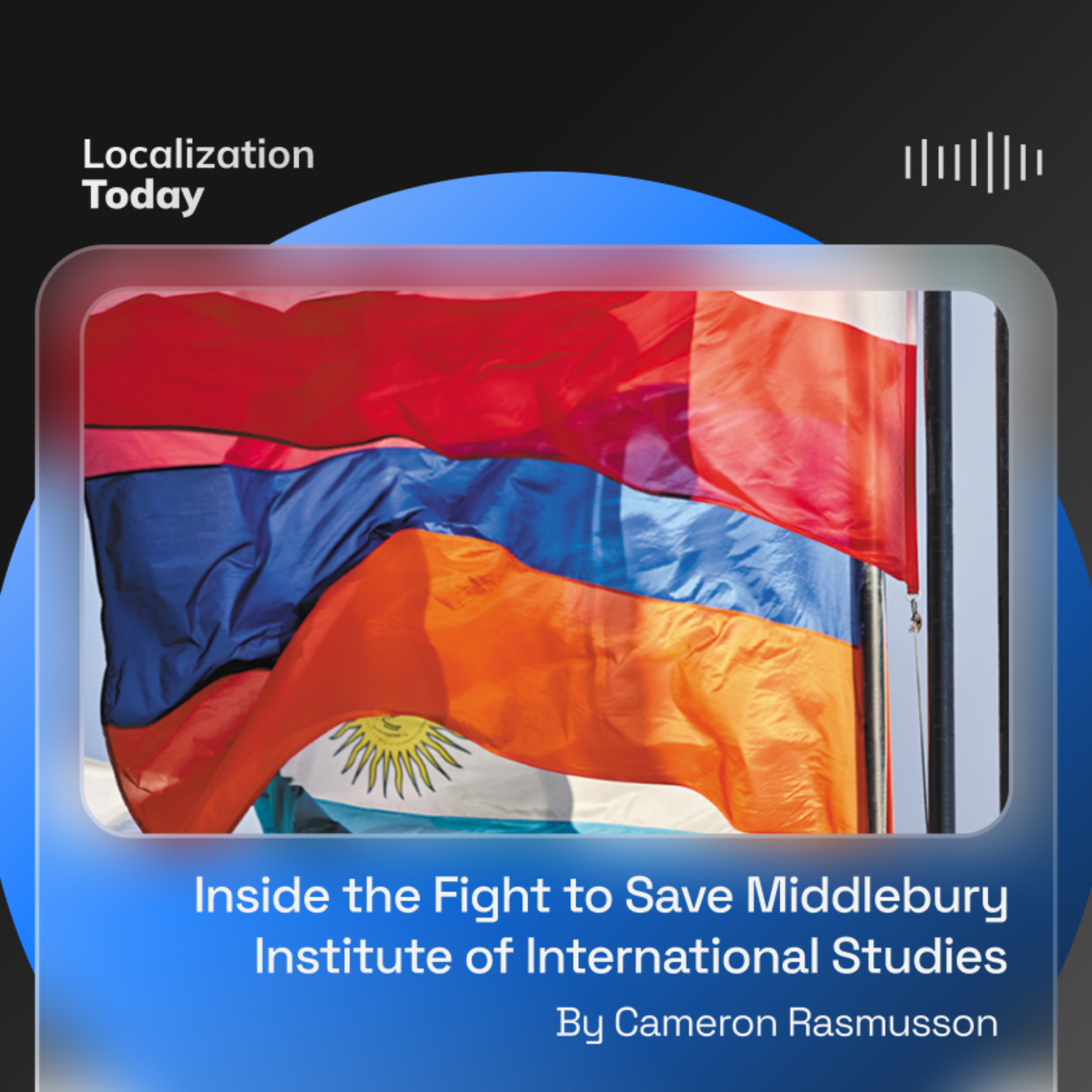
[00:08:11] Graduating classes invariably featured students from dozens of countries, as many as 42among one group of graduates. The celebration of world cuisine, fashion and recreation was central to Miis's identity and culture. It's a very international atmosphere, hoffman Miller said. If you ever have the chance to experience a graduation. It's amazing. All these people march through Monterey to the plaza and they're carrying the flags of all the students that are present there. A legacy to treasure beyond M IIS's educational value and its indelible contributions to the professional language community, it's a bastion of institutional knowledge. Founded in 1955, just 10 years after the end of World War II and the creation of the United nations, the institute began its operations at the dawn of the modern international order. From the Cold War to the acceleration of globalization to the innumerable technological changes of the past 70 years, Mies occupied a central role in developing and iterating professional practices. Perhaps no one bore witness to more of that history than Bill Weber, who began teaching at the institute in 1978 and served as the dean of the Graduate School of Translation and Interpretation.
[00:09:21] A veteran interpreter with decades of experience, Weber's record includes interpretation work for the United nations and presidents from Gerald Ford to Barack Obama.
[00:09:30] His association with MIES began when he contacted them over a potential student exchange program with the University of Geneva, where he worked at the time. The correspondence ultimately led to a job offer overseeing the translation and interpretation program.
[00:09:44] I came over here for a week in May 78 and signed a contract for one year, and to make a long story short, we never left, he said. Throughout his time at Mies, Weber saw the addition of several languages to its academic offerings. He also navigated the often dicey political dynamics of the post war era, from a French international studies specialist castigated for his association with Vichy France to an instructor who served as a high ranking member of the East German Stasi. He only lasted a year because he wanted to apply the very authoritarian teaching methods of Eastern Germany to the American students, weber said. It just didn't work. One of Weber's proudest achievements is the tight relationship between Mies and the Olympic Games. He orchestrated the first exchange of translation and interpretation students for the 1984 Olympic Games in Los Angeles, and the partnership only flourished from there. From then on, I was chief interpreter for over 35 years in 15 Olympic summer and Winter Games, he said. And of course I hired institute graduates. They needed to have at least 100 days of experience in the field, and then I gave them special training. Over the decades, Weber reckoned with the financial struggles of previous eras, finding recruiters and wealthy benefactors who had a heart for the institute's mission.
[00:10:59] Those efforts culminated in Middlebury's acquisition of the institute in 2010. For the next 15 years, it proved a financial lifeline as its fortunes waxed and waned. With a new ownership deal under discussion, only time will tell what will become of Mies in the years to come. But one thing is certain. There's no shortage of enthusiasm for the institute, a beloved fixture of the professional community. Its contributions cannot be fully tallied and documented, but they live on in the hearts of alumni who have forged significant careers in the language industry and pioneered new ideas to push it forward. The Mies faculty aren't ready to throw in the towel, and neither are the thousands who hold it dear. We are not done yet, hoffman Miller said in December, before any potential deal emerged. I'm a big optimist. We might be under somebody else's umbrella, but I don't think we're done yet. This is my hope and my gut feeling.
[00:11:50] This article was written by Cameron Rasmussen. He is senior writer and editor for Multilingual Media.
[00:11:57] Originally published in multilingual magazine, issue 253August 2026.