Episode Transcript
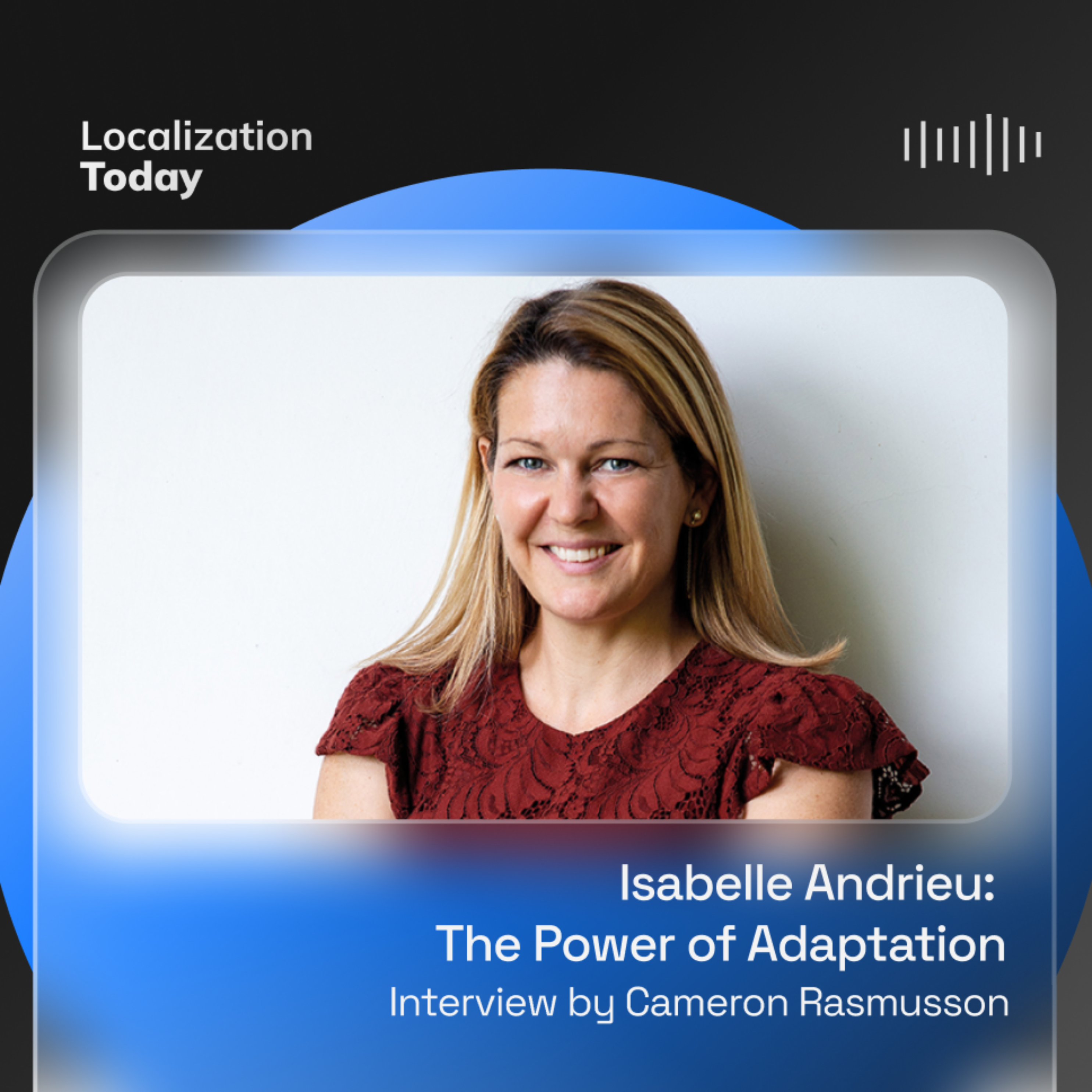
[00:00:00] Speaker A: Isabel the Power of Adaptation Interview by Cameron Rasmussen When Isabel Andrew founded Translated with her partner Marco Trombetti in 1999, they knew their venture's potential. They knew the Internet, still undergoing broader public adoption, would change the world forever. They knew that translation and linguistic work, perhaps even more than most industries, would change forever. For all that, the scope of Translated's rise over two and a half decades is remarkable, growing from one couple's vision to one of the world's largest translation businesses. It's a stunning trajectory, and one with its fair share of rhyming couplets. In 1999, the world stood on the cusp of a transformational change, and the 2020s find the world in similar straits as it adapts to artificial intelligence technology.
It's a disruption that Translated has anticipated for years, and one to which they've applied a consistent vision. The company's goal was to develop an AI system that evolves alongside translators, one that recognizes and adapts to linguistic complexity and its underlying context.
By combining machine power with its gargantuan network of human translators, Translated pursues a future of unparalleled productivity. That symbiosis informs everything from the tools Translated builds to the investments it makes in human linguists. Just as important to Andrew is the culture underlying both the technology and the people wielding it. It's another fundamental element to Translated story, one that informs decisions and daily operations to this very day.
That can do culture memorably expressed itself in 2024 when Andrew Trombetti and their crew completed the Ocean Globe Race 2024, circumnavigating the globe in a months long voyage. It's a journey that reflects the company's own ethos to face the unknown fearlessly and with a passion only humans can foster. We asked Andrew about Translated's origins, its preparations for the AI era and the future it envisions for its many clients and translators.
Language Technology has been Translated's focus since its inception in 1999. Could you give us insight into how it's evolved in over 25 years? What key changes and new capabilities emerged during that time?
[00:02:13] Speaker B: What matters is not the technology, but how it behaves in production environments and improves over time. We found it translated at the dawn of the Internet and have progressively built a production learning system based on state of the art technologies. The first generation of tools for translation tried to structure a language. They were useful, but they captured fragments. Translation operates through context, exposure and judgment.
That is why the major shift came with the introduction of the Transformer architecture, which Today powers large language models like ChatGPT.
It changed how machines process language. We worked closely with some of the researchers behind the transformer. This allowed us to bring these advances early into production, making modern MT one of the first commercial applications of this architecture. What has evolved in recent years is the integration of context. We moved from segment based systems to models that consider full documents, instructions and external signals, such as lara. This reflects how translators actually work. They build meaning across the entire text. Still, these systems lack grounding in real world experience.
Language is deeply connected to experience.
Understanding comes from interaction with the world. With the DVPS project, we are exploring multimodal foundation models that learn through direct interaction with the physical world. And I can tell you they will come earlier than expected.
[00:03:28] Speaker A: You've since adopted an AI forward model that blurs the line between AI and human translation. Could you tell us when you adopted this strategy and how has it progressed since then?
[00:03:38] Speaker B: This was never a strategic pivot. It is how we built the company from the beginning. Most AI systems are trained once and deployed. Our system improves continuously through production, usage, learning from professional decisions at scale. This comes from a decision we made early on as a translator. I believe machines could support us only if they learned how we reason about language. We focused on building a continuous feedback loop in production where every correction, approval and choice contributes to improving the system. This turns AI from a static tool into a system that evolves with usage and a genuine partner for the translator. This intuition shaped the way we design our systems. In 2015, we introduced the MAKEAT computer assisted translation tool, which was powered by adaptive machine translation that learns directly from translators edits.
It was one of the first moments where you could see a feedback loop forming, where human input was immediately improving machine output. With Modern MT, in 2017, we introduced context awareness in machine translation. The system started to look beyond individual segments and incorporate surrounding information.
This was an important step because it brought the machine closer to how translators actually work. With Lara in 2024, we reached a new level of integration.
Humans and AI now operate on the same unit of work, the full document. With access to instructions and external inputs, they contribute to a shared output. The process becomes continuous rather than sequential.
[00:05:02] Speaker A: You've trained your translation AI, lara, with the goal of having it think like a translator. Can you tell us how you accomplished this? What separates it from other translation AIs and how has it performed?
[00:05:14] Speaker B: Every translation project generates signals, choices, corrections and discussions.
We decided early to capture this process, not only the final output. Over time, this created a continuous stream of production decisions that Reflects how professionals evaluate and refine meaning. LARA is built on this continuous learning loop. Each translation generates a cycle output Human decision system update, improved output. This loop runs in production across enterprise workflows, capturing how meaning is validated in real conditions. This creates a structural difference.
Traditional AI systems rely on static training data. Our system learns continuously from real usage. This feedback loop is proprietary and replicating. It'd require years of coordinated production activity, not just model training. This changes the role of the translator. With lara, professionals shift their time from fixing recurring issues to improving meaning, tone and communication effectiveness, building a feedback loop that benefits both and allows for the production system evolution.
This also changes how quality improves over time. Many systems require heavy post editing to reach acceptable quality. We designed a system that supports translators in producing better outcomes from the start. It improves through their interaction, reducing edit effort and turnaround times and ultimately creating a cycle of compounding quality improvement.
[00:06:30] Speaker A: Tell us about the various translated products that LARA powers. What markets are you tapping into with each iteration?
[00:06:37] Speaker B: The most important integration is actually translation os, which is not a product. Translation OS represents an infrastructure layer for global communication.
It orchestrates AI and language professionals across enterprise workflows, adapting dynamically based on content, value and context. This enables AI driven localization, making the whole process seamless, transparent and predictable. LARA is also integrated in all of our tools for professional translators and creatives. MakeCat for text, Matesub for subtitles and Matedub for dubbing.
With our SaaS platform laratranslate.com, we're also addressing the consumer market which is now reaching a mature level.
Obviously we have an increasing number of third party applications including lara as a translation AI. With lara, we are addressing the huge opportunity arising from the gap between the amount of content created and the amount of content people can truly understand.
As more countries build a strong digital presence, more content is created and shared globally.
At the same time, people expect to interact in their own language and to see their values resonating in every message they receive. This creates a growing demand for translation across all markets. Companies are starting to respond to this. They move from translating only what is necessary to translating everything and then deciding where human expertise creates the most impact. We are moving from selective translation to universal understanding.
[00:07:56] Speaker A: Translated also boasts the world's largest network of translators.
Can you give us insight into how the labor balance works between your AI products and your human translators?
[00:08:06] Speaker B: We approach this as a system design question, not a question of balance. We must distinguish between the most common language combination and the long tail ones which don't benefit from large data sets for trained translation AI systems and still require a lot of language professional involvement.
As we all know from a recent CSA research paper, only a very small fraction of the content created in the most spoken languages every day is translated, and 99% of translated content is produced by AI. This is also true for companies working with us. What is interesting is how this evolves over time. Most of our customers consider localization a driver for growth, and they continuously increase the amount of content they translate. A larger share of that content is handled by AI, while their investment in professional translators continues to grow. This is where the real difference emerges. When companies invest in translators as part of the production system, they see such improvements as reduced editing effort, faster turnaround times and compounding quality increase as a consequence of continuous learning from human edits. When they try to minimize the role of human expertise, turnaround times and overall quality are affected by critical issues arising downstream. The reason is simple. AI can generate output at scale, but meaning alignment and effectiveness still require human judgment. If that layer is underinvested, the system becomes less efficient overall. When it comes to translators, we have observed that those who embraced AI tools since the beginning have now improved their revenues up to four times in just seven years. This human in the loop model is what we have been building since the inception of the company. AI expands what can be translated. Humans ensure that what is translated actually resonates with its audience. This only works because the system continuously learns from production decisions, which static models cannot do.
[00:09:46] Speaker A: Are there any specific jobs, projects or other efforts that you believe embody what you want to achieve in this new era for the company, we see ourselves
[00:09:54] Speaker B: as a partner for brands developing their global impact. What I'm personally excited about is helping brands truly operate as global entities, not just companies that translate content. We support them in going global in a way that feels authentic, not diluted. I am particularly enjoying the work we are doing with Nike, amplifying the brand and evolving it consistently across markets. Nike doesn't just communicate, it inspires, provokes and leads culture. The challenge and the ambition is to ensure that this power translates globally without losing its edge. That means connecting with their audiences, whether that's athletes, creators or communities, through language that carries the same emotional weight, cultural nuance and brand intent everywhere. It's about being felt. So the kind of projects that embody this are those where language becomes a strategic leverage, global campaigns that resonate locally, storytelling that feels intimate across cultures, and brand voices that stay unmistakably themselves even as they scale globally. Moving from translation as a service to language as a driver of global brand
[00:10:53] Speaker A: impact PI Campus and PI School are tech forward efforts spearheaded by Translated. Can you tell us what they are and how they've fostered opportunities for both linguists and the company itself?
[00:11:04] Speaker B: PI Campus and PI School are two complementary initiatives that reflect how Translated approaches innovation not as a standalone effort, but as something that grows through ecosystems and shared experience.
PI Campus started in 2007 as one of the first incubators in the Rome area. As founders who had bootstrapped translated, my husband and I had experienced firsthand how difficult it can be to build and grow a company without the right support. We wanted to create a place where young entrepreneurs could benefit from both mentorship and financial backing, and where ideas could develop in close proximity to other founders, researchers and engineers.
What began with one or two early investments in applied AI startups based within the campus quickly evolved over time. PI Campus expanded its scope, moving from a local incubator to a global private venture firm with over 60 investments worldwide.
This evolution reflects a broader ambition, supporting founders not only at the earliest stage, but across different phases of growth while staying close to emerging technologies and new ways of building companies. High School complements this by focusing on applied innovation.
As Chief Executive Officer of PI School, I lead this initiative which brings together companies with complex challenges and AI talent capable of turning those challenges into working solutions within a short time frame.
The goal is not to experiment in isolation, but to create solutions that can be deployed and integrated into real business contexts. PI School operates at the intersection of two frontier AI research and rapid real world validation. For linguists, these initiatives have opened new types of opportunities.
Traditionally, their role was seen as operational, focused on delivering translations.
Today they are increasingly involved in shaping the systems themselves, contributing to data evaluation and the definition of quality in AI driven workflows. This shifts their role from execution to expertise. For Translated, PI Campus and PI School extend the company's role beyond its core business. They create a continuous connection with new ideas, new talent and new use cases, while reinforcing a long standing belief that meaningful progress comes from the combination of human intelligence, technological innovation and the willingness to build together.
[00:13:08] Speaker A: What does the future look like for Translated? How are you positioning yourself in the market to build security and grow?
[00:13:14] Speaker B: We see Translated evolving into a core infrastructure layer for global communication. The shift introduced by transformer models has been significant, but it is only the beginning. The real challenge now is not just model performance, but how these systems behave in production, how they scale, how they adapt through human feedback, and how they interact with humans over time. With Lara and our ongoing research, including dvps, we are building systems that move beyond static models toward adaptive, evolving intelligence systems that learn continuously, that improve with usage, and that can support increasingly complex communication needs. At the same time, we are building resilience by staying close to both innovation and application through our enterprise work, our product ecosystem, and our investments in new ventures via PI Campus and PI School. For us, future proofing is not about locking into a specific technology.
It is about building the capability to evolve technically, operationally, and culturally as the landscape changes.
[00:14:10] Speaker A: If you could give one piece of advice to language service providers and linguists seeking to carve out their own space in the market, what would it be?
[00:14:17] Speaker B: One principle has guided us consistently.
We treat what others consider impossible as an opportunity to rethink how things are done. We experienced this very concretely during the Ocean Globe Race. We entered a Round the World regatta with limited technology and a crew of non professionals, and many expected us to fail. We had no sailing experience, but we focused on building a strong team, adapting quickly, and learning as we went. We won the first two legs, faced major setbacks, and still made it to the end. That that experience clarified something important. In uncertain environments, performance does not come from perfect conditions but from judgment, adaptability, and trust in people. This is exactly where industry stands today. AI is changing everything.
The professionals who will progress are not those who resist it, but those who learn how to work with it. My advice is simple. Build your ability to adapt. Focus on where your judgment creates value and position yourself where outcomes matter.
Focus less on the task and more on the outcome. That's where your value will be.
[00:15:16] Speaker A: Cameron Rasmussen is a senior writer and editor for Multilingual Media. Originally published in Multilingual Magazine, Issue 251, April 2026.