Episode Transcript
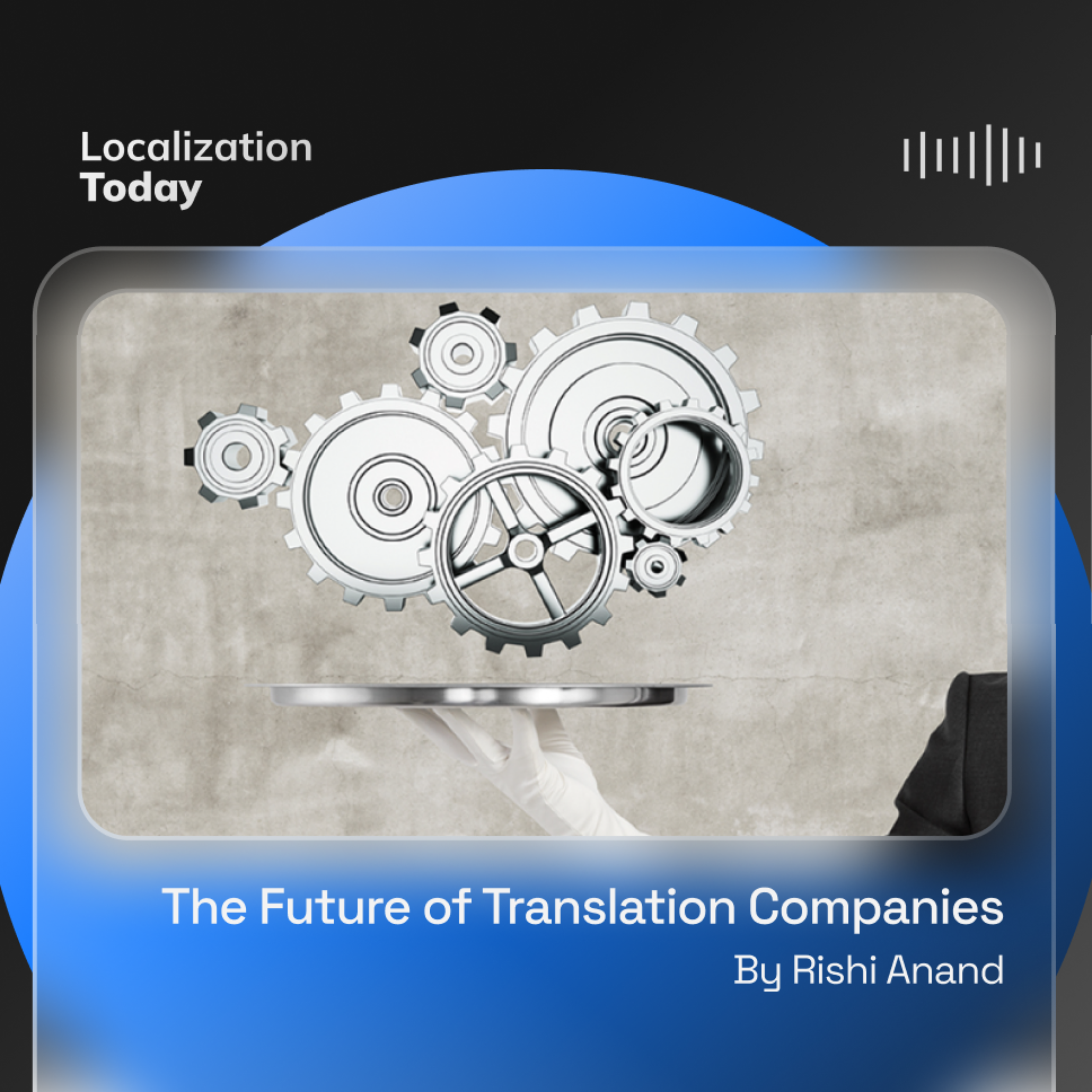
[00:00:00] The Future of Translation How Automation is Redefining Scale by Rishi Anand the industry is at an inflection point. The global language services market is no longer growing. Quietly, it's one of the most dynamic, technology driven industries on the planet. In 2025, the market was valued at $76.23 billion, projected to reach $81.45 billion in 2026, and expected to surpass $147 billion by 2034, according to Fortune Business Insights. Yet for many language service providers, the companies at the heart of this boom still rely on a patchwork of spreadsheets, email threads and disconnected tools.
[00:00:52] The gap between market opportunity and operational capacity is real, and it is widening. The answer is not hiring more project managers. It is automation, and more specifically, a new category of intelligent software purpose built for translation companies.
[00:01:10] But what does this transformation look like?
[00:01:13] Why does it matter? And how can LSPs close the gap between demand and delivery?
[00:01:19] The data behind the shift before exploring solutions, it is worth understanding the scale of the challenge that automation is designed to solve.
[00:01:29] Simply put, market growth is accelerating, but so is operational complexity. The opportunity is immense, but the challenge for translation companies is volume is scaling faster than operations.
[00:01:43] Clients now request 10, 20, and even more than 50 language pairs per project.
[00:01:50] Turnaround expectations have compressed from weeks to days.
[00:01:54] Transparent instant pricing is a baseline requirement. And with enterprise clients demanding general data protection, regulation compliance and data security, the informal inbox and spreadsheet model that many LSPs still rely on has become a genuine business liability.
[00:02:15] Industry data suggests that project managers at mid size LSPs waste 10 to 20% of their working hours on manual status updates and data entry tasks that a properly configured management system would eliminate entirely at scale. That is not inefficiency, it is a structural ceiling on growth.
[00:02:36] What Translation Automation actually Means Beyond Machine Translation when most people hear automation in a translation context, they think of machine translation artificial intelligence systems that produce translated text at speed. That conversation is important but incomplete. The deeper automation challenge for translation companies is operational, not linguistic. Consider a mid size LSP managing more than 200 projects per month across over 300 vendors and 50 active clients.
[00:03:08] The bottlenecks are rarely in the translation itself. They occur when generating quotes accurately and quickly enough to win business assigning the right vendor for each language pair, service type and subject matter tracking project status without constant email follow ups invoicing clients and paying vendors accurately in multiple currencies maintaining client relationships across years of project history and reporting on profitability by client, language pair and service type. This is the operational infrastructure that enables a translation company to scale. And it is precisely what a new generation of purpose built software is designed to automate.
[00:03:46] The operating system for modern LSPs, a translation business management system is distinct from a translation management system.
[00:03:58] While a TMS focuses on the linguistic workflow, computer assisted translation tools, translation memory and terminology management, a TBMS handles the business infrastructure that surrounds every project. The most advanced platforms now combine both layers, making TBMS the central nervous system of a modern translation operation.
[00:04:20] What LSPs need to automate the Full project life cycle follows a structured automated path request, quote order job assignment delivery client approval invoice. Each stage removes a manual touchpoint when a client submits files via email, a client portal or an integrated web form, the system automatically calculates word counts, generates a quote based on pre configured rate cards and converts an approved quote into an active project.
[00:04:55] Jobs are split by language pair and service type. Vendors are suggested based on skills availability and historical performance and automated job offers are sent without a single manually composed email.
[00:05:09] Key automation capabilities include the Project management real time project dashboards replacing email based status chasing Automated notifications for due and overdue tasks Template based workflows for repeatable project types Support for multi language projects spanning more than 50 language pairs vendor management Structured vendor profiles with rate cards, skill tags and performance history AI powered vendor suggestion engine matching capacity and expertise to project requirements Vendor portal for self service job acceptance, file delivery and payment tracking Automated purchase order generation and batch payment processing Customer relationship management for LSPs client specific pricing agreements, service level agreements and preferred language combinations Full project history and revenue analytics per account Pipeline visibility for forecasting capacity against incoming demand quote and estimate management with conversion tracking Finance automation Automatic invoice generation on project completion Multi currency support with automatic tax rule application including EUVAT vendor payables calculated automatically from completed jobs Export to accounting tools such as QuickBooks and Xero Real time margin visibility per project client and language pair integrations Connections to tools already in use at most LSPs such as Gmail, Outlook, Deep L, Microsoft Translator and WordPress with no additional configuration complexity.
[00:06:58] The Business Case for Automation Here is what operational automation translates to in concrete business terms for a growing lsp.
[00:07:08] If a project manager spends two hours daily on manual updates, quote formatting and email coordination, Automation reclaims those two hours across a team of five project managers. That is more than 50 hours per week redirected from administration to client delivery and business development.
[00:07:28] The traditional LSP growth model requires adding one project manager whenever the business reaches a threshold of additional projects per month. With a properly automated TBMS, the same team can handle significantly higher volume. A 15 person LSP, for instance, reported reducing admin time per project by 30 to 40% within the first three to six months, allowing the team to take on more work without adding headcount. Manual invoicing creates delays Delays create cash flow friction.
[00:08:04] But platform services that automate invoice generation, an action tied directly to project completion events, eliminate the gap between work delivered and billing initiated, improving day sales outstanding and reducing revenue leakage from forgotten or delayed invoices.
[00:08:23] Finally, when all project client and financial data lives in one system, patterns become visible. Which client relationships are most profitable?
[00:08:34] Which language pairs consistently underperform on margin?
[00:08:38] Which vendors deliver the highest quality at competitive rates? These are questions that data from a TBMS answers in real time, replacing gut decisions with evidence based strategy Industry Context why now is the critical moment?
[00:08:56] The urgency around operational automation is not abstract.
[00:09:00] It is driven by structural shifts currently reshaping the translation industry.
[00:09:06] First, AI integration has become a baseline expectation.
[00:09:10] Clients who once accepted two week turnarounds now expect near real time delivery for routine content.
[00:09:17] The 24.9% compound annual growth rate in the AI translation market reflects this acceleration.
[00:09:24] LSPs that cannot integrate MTE into efficient post editing workflows are already losing competitive ground.
[00:09:32] According to Tordoman Translation's research on industry trends, content volume is also exploding as organizations pursue multilingual search engine optimization, localization first, product design and multimedia translation at scale. The amount of content flowing through language service pipelines is growing faster than any manual workflow can absorb. The operational infrastructure to handle this volume must be automated by design.
[00:10:02] Likewise, margin compression demands efficiency as MT commoditizes high volume, low complexity content.
[00:10:10] The profitability of translation companies increasingly depends on operational efficiency rather than linguistic throughput alone.
[00:10:19] The LSPs that will grow in 2026 and beyond are not those with the most translators, they are those with the most intelligent business infrastructure. And finally, enterprise clients demand professionalism.
[00:10:33] GDPR compliance, SOC2 expectations, transparent audit trails and data security are now standard requirements from enterprise buyers.
[00:10:45] Inbox based workflows cannot meet these standards. A GDPR compliant business management system with role based access control is increasingly helpful for winning and retaining enterprise accounts.
[00:10:58] From tool to Strategic Advantage Automation in translation is not about replacing human expertise.
[00:11:06] The best linguists, project managers and client strategists remain irreplaceable, particularly for high stakes content where cultural nuance and brand judgment matter.
[00:11:17] What automation eliminates is the administrative overhead that prevents these professionals from doing their best work. A project manager who spends his or her day coordinating email chains and reconciling spreadsheets is not delivering the relationship driven service that retains clients. A vendor manager who manually matches translators to jobs across an unstructured database is is not building the performance tracked linguist network that ensures quality at scale. A business owner without real time margin data is making pricing decisions blindly. TBMS platforms remove the friction that consumes capacity without creating value.
[00:11:57] What replaces it is detailed clarity about project status, financial health, vendor performance and client value possible only through a purpose built system.
[00:12:09] What to look for in a TBMS For LSP leaders evaluating automation investments, there are a few key criteria.
[00:12:19] First, the platform should be built specifically for translation companies not adapted from generic project management tools. It should feature end to end workflow coverage from first client inquiry to final vendor payment. Vendor portal functionality should enable self service access for linguists with while reducing coordination overhead. Finance module depth is another key feature. Easing invoicing, payables, multi currency and accounting integration, AI powered matching and suggestions is also helpful, offering not just storage but intelligent recommendations.
[00:12:56] Scalable pricing is key. Pay for what you use. Models provide the greatest value and grow with the business.
[00:13:04] It's also important to understand the platform's security and compliance features, from GDPR regulation integration to role based access to data residency options. And finally, an integration ecosystem centralizes email, MT providers, CAT tools and accounting software the Infrastructure of Scale the future of translation companies is not defined by the languages they cover or the translators they employ.
[00:13:35] It is defined by the operational infrastructure that enables them to deliver reliably, efficiently and profitably at scale. The market is there.
[00:13:45] The technology is there. The decision is whether to build that infrastructure now or wait until the gap between demand and capacity becomes impossible to close.
[00:13:55] Translation automation anchored by intelligent platforms is not a future consideration for the LSPs growing fastest in 2026.
[00:14:05] It is already the foundation on which everything else is built.
[00:14:10] This article was written by Rishi Anand. He is the founder and CEO of Automated where he leads innovation at the intersection of technology and automation.
[00:14:21] He is passionate about building scalable solutions that transform how translation companies operate.
[00:14:27] Originally published in Multilingual Magazine, Issue 251, April 2026.