Episode Transcript
[00:00:00] When AI slows you down A Translator's Experience with Vietnamese Audio by Pham Ho Heap Last week I received a project transcribing Vietnamese audio into clear, natural English. While the deadline was tight, the content was not confidential, so I thought artificial intelligence would speed it along.
[00:00:24] My plan was simple.
[00:00:26] Let the AI transcribe the audio into Vietnamese first, then translate everything into English. But expectations are one thing and reality is another.
[00:00:37] The project took me as long or longer than when I did everything manually.
[00:00:42] Before AI, I would simply listen carefully to the audio and translate straight into natural English.
[00:00:49] This time I ended up feeling far more drained than ever.
[00:00:53] This single project revealed a hidden paradox of using AI for multilingual work. The process first appeared highly efficient. Let AI handle transcription and translation.
[00:01:05] Then I would just review and polish.
[00:01:07] However, the job became a long, exhausting cycle of checking, correcting, re prompting, and second guessing. It consumed significantly more mental energy than my old manual method.
[00:01:20] The illusion of speed.
[00:01:23] I used a paid AI transcription tool and produced a Vietnamese text incredibly fast from the audio. I then fed it into a paid AI translation model, which converted everything into English in seconds. It felt like magic until I started working with the output. What I used to do before AI was a single, seamless workflow.
[00:01:44] Listen carefully to the recording, grasp the meaning and context, and render it directly into natural English.
[00:01:52] Now that process has fragmented into a series of fragile steps. The AI generates a transcription which often struggles with names, technical terms, slang, fast or unclear speech, regional accents, overlapping voices, or background noise. I spend considerable time correcting the transcript, knowing that any error here will cascade into bigger problems later. DEI translates the revised Vietnamese text into English. I review the English version for accuracy, natural flow, tone, cultural nuance, and consistency. I understand that results vary significantly depending on the tool model, version, audio quality, and speaking conditions.
[00:02:37] Leading automatic speech recognition systems in 2025-2026 can achieve low word error rate, clean studio quality speech in high resource settings, however, performance typically degrades with conversational Vietnamese. The challenges are especially pronounced when dealing with regional accents, tonal variation, casual slang, idiomatic expressions, overlapping speech or background noise conditions that are common in real world recordings.
[00:03:09] In such contexts, error rates rise noticeably and the amount of post editing required increases accordingly. Vietnamese, as a tonal Austroasiatic language with relatively lower training data density than English or other major European languages still shows a significant gap between automated output and professional human transcription and translation quality. This gap is not just anecdotal. A 2025 study published in JAMA Network Open found that AI generated translations of discharge Instructions into Vietnamese were consistently inferior to professional human translations in fluency, adequacy, meaning preservation, and error severity. Consequently, by the time I finished reviewing, correcting, and rewriting, I had often spent more total time than if I had simply listened to the audio once or twice and translated it directly while the speaker's intent was still fresh in my mind.
[00:04:10] From creator to tireless reviewer before AI, my work felt simpler and in many ways more enjoyable. I would listen to the recording, absorb the speaker's intent, tone, and message, then craft an English version that felt right. The process had a natural rhythm with moments of genuine flow.
[00:04:32] With AI, that role has quietly shifted. I've become, in effect, a full time quality inspector.
[00:04:40] Every sentence demands constant judgment. Did the AI understand the context correctly? Does this English sentence truly convey what the speaker meant? Is the tone appropriate for the audience?
[00:04:52] Have any cultural references been lost or distorted? The problem is that AI generated text often sounds fluent and confident, and that is precisely what makes it dangerous. Errors no longer announce themselves. They hide in plain sight. I find myself reading every line more carefully than I would a colleague's draft. The model's understanding of spoken Vietnamese simply can't match my own ears and bilingual intuition.
[00:05:19] This kind of work is mentally exhausting.
[00:05:22] It reflects what research has begun to show. Decision fatigue sets in in much faster during tasks that require constant reviewing and correcting than during generative creative work. A study by Syed M. Faisal Ali Khan and Salem Soluli explores exactly these cognitive challenges in generative AI gen AI assisted tasks, highlighting how sustained verification increases mental load and fatigue.
[00:05:51] Creation invites flow. Continuous verification drains it. After just a few hours, even small decisions start to feel heavy.
[00:06:00] My brain feels fried, despite the quiet irony that AI was supposed to save me time.
[00:06:06] That said, some research on thoughtful AI integration suggests it can reduce overall cognitive load in certain repetitive scenarios.
[00:06:16] Though my experience with nuanced audio work leans heavily toward the draining side, the unpredictability headache.
[00:06:24] Another major frustration was AI's unpredictability.
[00:06:29] The same 60 minute audio file could yield slightly different transcriptions or translations depending on when or how I ran it, often influenced by factors like temperature settings or the specific model version.
[00:06:42] A sentence that sounded natural in one attempt might come back awkward or subtly wrong the next.
[00:06:48] There was never a clear explanation, no error log, no transparent reasoning, just the opaque, probabilistic nature of the system, which forced me to stay constantly on guard.
[00:07:01] More than once I fell into the familiar just one more prompt trap, adding extra context, tweaking instructions, even switching between models.
[00:07:12] Each iteration felt like it might finally produce the perfect output, but it rarely did. Looking back, I often realized I could have translated those same sections manually in a fraction of the time. What appeared to be a shortcut kept turning into a detour, one that was not only inefficient but quietly draining. The Risk of Reliance the scariest part was how AI began affecting my own abilities.
[00:07:40] When I forced myself to complete a short section manually, I noticed my once fluid ability to listen and translate felt slightly rusty.
[00:07:49] After relying heavily on AI for the first draft, that mental muscle had begun to weaken.
[00:07:55] The real craft of bilingual work lies in the deep process of listening, understanding, interpreting, and re expressing meaning across languages.
[00:08:05] That is where expertise is built. But when the first draft is outsourced to AI, that process is interrupted. Research on cognitive offloading warns that over reliance can lead to skill atrophy over time as the desirable difficulties of manual work are bypassed. This project made that painfully clear.
[00:08:26] The audio was messy technical terms, casual Vietnamese slang, overlapping speech, background noise. AI struggled with all of it.
[00:08:36] In the end, I returned to the old method, listening carefully, pausing, replaying, and writing directly in natural English.
[00:08:45] It was not only more reliable but surprisingly less frustrating.
[00:08:50] Industry wide, this experience echoes broader shifts.
[00:08:54] Surveys of translators in 2025 showed many facing reduced rates and volume for routine work while demand grows for post editing, transcreation, and high stakes nuance work.
[00:09:06] Overall, translation jobs aren't vanishing but evolving toward AI supervision with mixed effects on earnings and workload.
[00:09:15] Hybrid approaches can free humans for higher value creative tasks, yet the risk of skill erosion remains real when core linguistic intuition is underused, according to a 2025 accolade study.
[00:09:29] One could argue I simply hadn't found the right tools or fully explored advanced features such as better prompting, custom models, or agentic workflows. That may be true to some extent even after experimenting with multiple approaches. However, the constant need to review correct and second guess created more mental strain than time savings. A Method that Works after this project, I changed my approach.
[00:09:58] I now use AI only for very repetitive or simple segments and only as a rough suggestion. For anything involving spoken audio, nuance, or high accuracy, I go back to listening and translating manually. I set a firm rule no more than three attempts with AI per section.
[00:10:18] After that, I do it myself.
[00:10:20] I protect dedicated thinking time every day with no tools, just me, the audio, and a blank document. It has become clear that high quality multilingual work still depends on human ears, cultural understanding, sound judgment, and genuine linguistic intuition.
[00:10:39] AI can sometimes accelerate drafts, particularly on straightforward content, freeing time for creative polish but it often shifts extra burden onto the translator, especially with challenging audio or low resource language pairs, making the entire process slower, more stressful and more tiring. If you're a translator or transcriber using AI and finding the job harder than before, you're not doing anything wrong. The tool simply changes the nature of the work, replacing energizing creation with draining evaluation in many cases, the real skill in this era isn't using AI for everything, it's knowing when to set it aside and trust your own bilingual brain. There are moments when AI genuinely accelerates work, but there are just as many when the old way, listening closely, thinking deeply, and translating directly proves to be not only faster but far more sustainable.
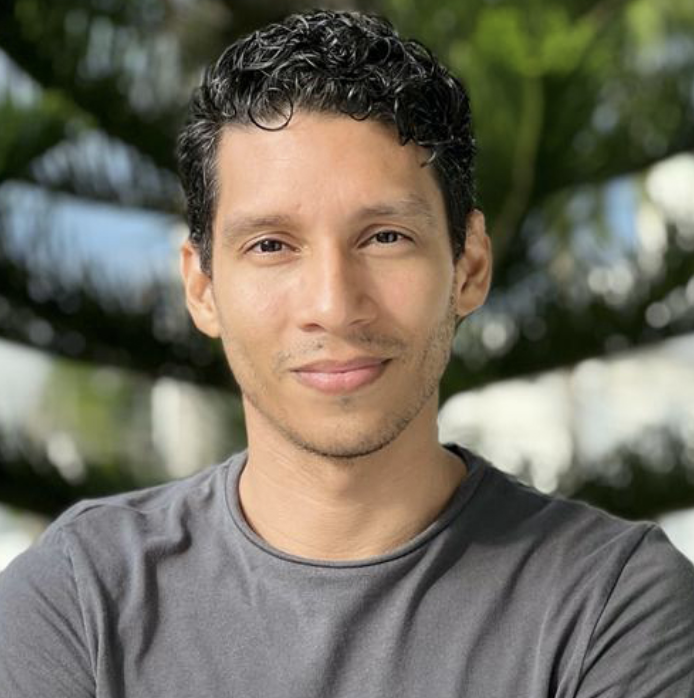
[00:11:40] This article was written by Pham Hohee.
[00:11:43] He is a seasoned language professional with nearly 20 years of comprehensive experience.
[00:11:48] His expertise encompasses translation, editing from English to Vietnamese, language consulting and translator training across diverse settings in New Zealand, the U.S. australia and Vietnam. Originally published in Multilingual Magazine, Issue 251, April 2026.