Episode Transcript
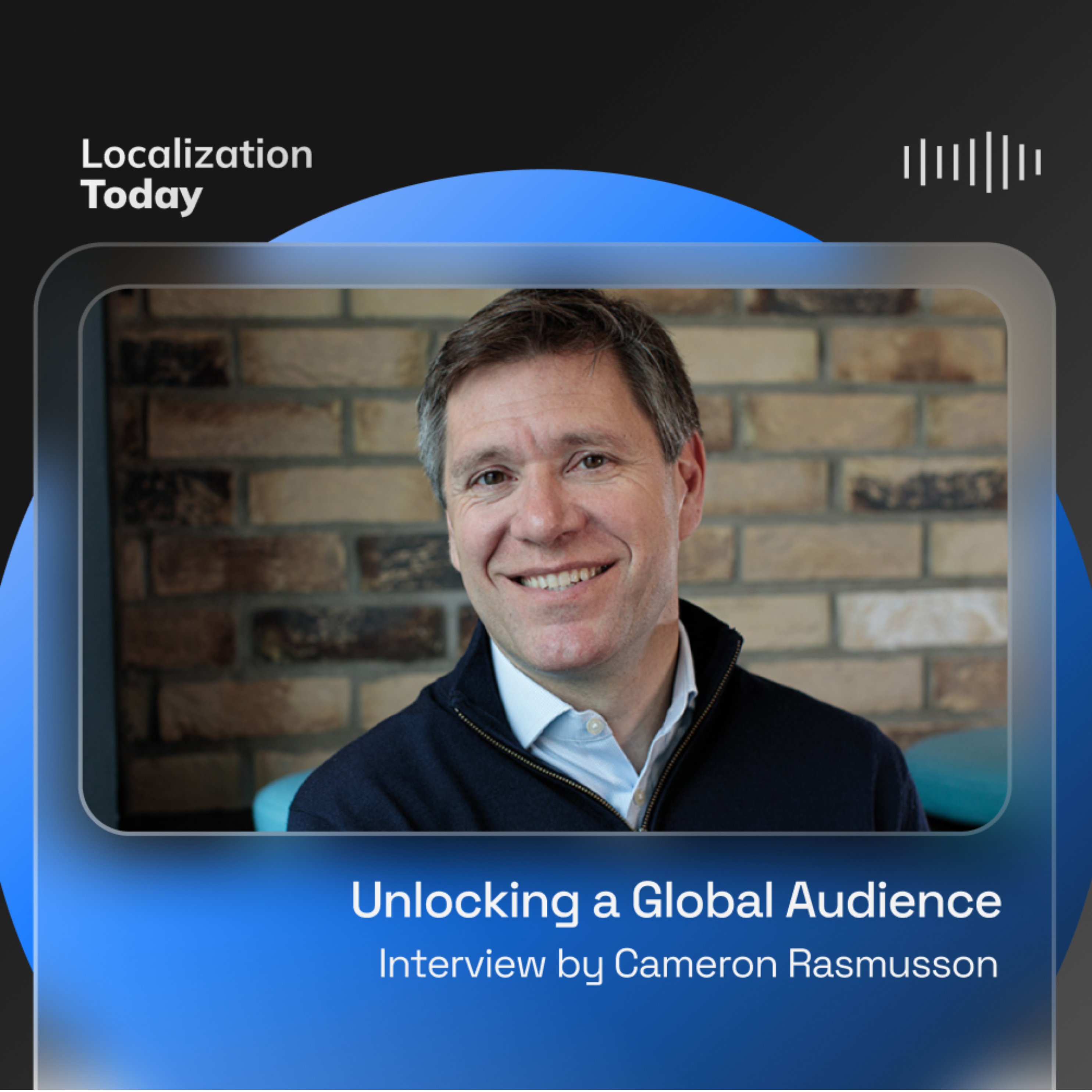
[00:00:00] Speaker A: Unlocking a Global Audience Keyword Studios and the Mechanics of Modern Game Localization Interview by Cameron Rasmussen Anyone who has played an adventure or role playing video game knows well the enticing mystery of a locked door and the excitement upon discovering the key that opens it. That's a feeling Keyword Studios, a global creative and technical solutions provider in the video games and entertainment industries, understands on multiple levels. Keywords team members are often as enthusiastic about playing their clients games as they are working on them. They understand on a personal level what makes game design tick and how players immerse themselves in digital worlds. It's safe to say they've run into their share of locked doors since the studio's founding as a localization provider in 1998 and puzzled out solutions for that thrill of discovery. But that thrill doesn't stop when they power down the console or computer and head to the office.
On the contrary, Keywords professionals find a similar satisfaction in unlocking global market potential for their clients.
Game localization, after all, is a nuanced and complex task. They understand that because one error or oversight can break a player's immersion, game localization requires accurate translations, cultural awareness and a layered alignment with their clients creative vision. Keyword Studios has witnessed massive industrial and technological changes its nearly 30 years of operation. Opening its doors when Sony's debut disc based PlayStation locked horns with the Nintendo 64's cartridges and Sega launched the sixth console generation with the release of the Dreamcast in Japan, Keywords watched as new technologies and hardware transformed the medium's capabilities and visual fidelity. And they've adapted as the Internet changed how games are developed, localized and launched to a global audience.
But despite those changes, the fundamental appeal of video games has changed little.
Finally, unlocking that mystery door is just as rewarding in 1991 as the Legend of A link to the past as it is in 2022's Elden ring. Keyword Studios CEO Bertrand Botson and director of products offers solutions and implementation. Romina Franceschina took the time to reflect on the company's long journey to the modern video game era. And while games are releasing in more countries and to more players than ever before, they're still focused on that central mission, creating great experiences for players regardless of their native language. Could you trace Keywords Studios trajectory over the past several years?
What defined your business strategy and service offerings up to this point, and what were the results?
[00:02:44] Speaker B: Bertrand Botson since our founding 28 years ago, we've grown steadily through a combination of strategic acquisitions and continued investment in technology and research and development R and D. What has remained constant throughout the years is the strength of our amazing global teams. And I'd say what differentiates us is our ability to bring together disciplines, technology and talent into a single integrated platform for the gaming in the entertainment industries.
Today we have a team of 13,000 experts all over the globe with unmatched creative and technical expertise across the full content lifecycle. From localization, development and art to marketing, QA and audio. In today's more challenging market, our integrated approach matters more than ever.
Our clients are looking for partners they can trust to deliver at scale, with consistency and quality across increasingly complex global productions. And it works. 76% of games nominated in the Game Awards had a piece of keywords Studios in We strive to be the high value partner for our clients across all of our industries with zero compromise on quality. Our team loves what they do and
[00:03:57] Speaker A: it shows how do you think evolving technology and business conditions will impact your strategy for the next several years?
What does the future of game localization look like?
[00:04:10] Speaker C: The future of game localization is happening now. Localization in itself has transformed far beyond just the business of language.
These days, localization services are more multicultural. Content services, cultural interests, sensitivities and points of view are at the center of content generation and curation.
Language is a human endeavor, continuously evolving the way we talk, what we talk about, and how we talk. Localization is the heart of representing cultures and a point of view authentically for players.
New technologies are entering the market and this will accelerate how our industry changes and evolves. But language and culture are in continuous evolution and always have been. This is nothing new for the business of localization.
[00:04:55] Speaker A: Like many industries, the video game industry is in turmoil amid widespread layoffs, major mergers and acquisitions, and sudden strategic pivots. Sony's recent decision to shift from multiplatform game releases back to an emphasis on PlayStation exclusivity is just one recent example. How does that chaotic environment influence your decision making?
[00:05:18] Speaker B: To stay ahead, we have to remain agile, which is the easy answer. But really, while the industry is certainly going through a period of change in many ways, that's not new. The games industry has always sat at the intersection of technology and creativity. Evolution is part of its DNA. For us, it just reinforces the importance of staying agile and forward focused. Our role is to help clients navigate that complexity, bringing together talent, technology, and global scale to reduce risk and enable them to move faster with confidence.
In that sense, environments like this are where we're at our most valuable, helping our clients cut through the noise and continue to make the best games possible. Keyword Studios has acquired several companies to expand its capabilities.
Do you foresee future growth through M and S? What steps do you see as necessary to ensure future growth?
Honestly, we are not short of ideas to keep investing in our growth. I Our recent transition to private ownership through EQT doesn't change our strategy, it enables us to accelerate it. There's more we could still do to provide value to our clients. In an industry that continues to evolve rapidly, our focus is always on the solutions and value we bring to our clients.
M and A remains an important part of our strategy and we're disciplined in our approach. We're not acquiring for scale alone. Any investment must be value accretive and strategically aligned as well as strengthen our ability to operate as an integrated platform for our clients. In short, it needs to fit Keywords
[00:06:53] Speaker A: Studios has worked on some massive titles, from Fortnite and Doom Eternal to Alan Wake. What are the most memorable projects you have worked on?
[00:07:02] Speaker B: Bodson A hard question to answer as we love every project we work on. We work on a huge range of incredible projects, from major AAA titles to indies to big budget film and television projects, and each one is memorable in its own way. What stands out the most though, isn't necessarily the games themselves. It's the passion of our teams. We have people across Keyword Studios who will spend the day working on a game and then go home and play it because they have such love for it. That's what I remember the people behind the projects who are incredibly talented professionals that show up with that same passion
[00:07:39] Speaker A: day after day, with game studios often preferring simultaneous global launches over staggered releases? What time pressures are involved in localizing modern titles? How do you work with developers to ensure games are ready on time?
[00:07:53] Speaker C: Franceschina Multi market launches have always been central to localization services, especially in the digital age of gaming, allowing for almost simultaneous launches across the globe. The key to success is planning. We partner with our clients to strategically implement localization schedules and ensure that we are ready on time.
Now the new frontier is really about aligning with clients to support markets that traditionally would have been underserved. It is an exciting time for every localization subject matter expert who enjoys watching cultures be represented and plays a role in the world.
[00:08:26] Speaker A: Not all games require the same localization effort. Role playing games, for instance, often contain enormous amounts of dialogue, voice acting, proper noun filled lore and more. What titles are typically the most challenging from a localization perspective?
Similarly, what titles have proven the most enjoyable and rewarding franceschina Localizing games is
[00:08:51] Speaker C: all about the experience for the player, no matter the genre. Every gaming title presents the perfect opportunity to showcase content to gamers in a way that best resonates with them. An rpg with its more story based and character based narratives can often provide different technical challenges than a puzzle title, for example. But every game is rewarding for us knowing that we are providing gamers with a gaming experience rooted in their native dialect or cultural background.
Just understanding that gamers are ending the game, watching that credit screen feeling fulfilled is incredibly rewarding.
[00:09:24] Speaker A: Can you give us a sense of how Keyword Studios internal workflows function?
How do you manage your teams and how many projects are you typically working on at one time?
[00:09:34] Speaker B: Botson the short answer is we're always working on a lot of projects.
Realistically, it's hard to provide an overview of internal workflows as each client needs a different level of support and assistance. We work across a very large number of projects at any given time, ranging in scale and complexity, so flexibility is key to how we operate. Our approach is built around adapting to our clients needs.
In some cases that means highly centralized production and in others more embedded or distributed models, depending on what best supports the project. At its core, our role is to simplify complexity for our clients. We bring together the right talent, processes and technology to ensure projects run efficiently and consistently, regardless of scale.
[00:10:23] Speaker A: From a management perspective, what does it take to ensure all team members are in sync and turning out assets on time?
[00:10:30] Speaker C: Franceschina we organize our teams around our clients and their ip.
Firstly, we aim to become deeply integrated with each client's workflow, ensuring that we are working within and to their needs.
As with most projects, communication is key.
Secondly, our team members are as passionate about gaming as our clients, often avid fans of the franchises that they now have a part within.
At our heart, we are all passionate world builders with love for the stories that we are localizing. This all works to make everything synchronized and ideally flawless in implementation.
[00:11:04] Speaker A: Are there any upcoming projects you're particularly excited about that you can share with us?
[00:11:09] Speaker B: Botson My kids ask me that every morning. I'll have to give you the same answer. I need to keep that to myself. Unfortunately, what I can say is outside of external client projects, we have some interesting internal ones cooking we're seeing that the industry is increasingly turning its eye toward new technologies and systems. Artificial intelligence is a growing technology that many studios are investigating as a potential support tool alongside human expertise. We're constantly evaluating the tools available to developers and assessing how good these tools are and what they can offer.
It's part of what we do, really analyze the truth behind these tools and be that R and D expert to give that transparent picture to our clients before they invest. But all I can say for now is watch this space.
[00:11:57] Speaker A: This article was written by Cameron Rasmussen. He is Senior writer and Editor for Multilingual Media. Originally published in Multilingual Magazine, Issue 252, 6-20-26.