Episode Transcript
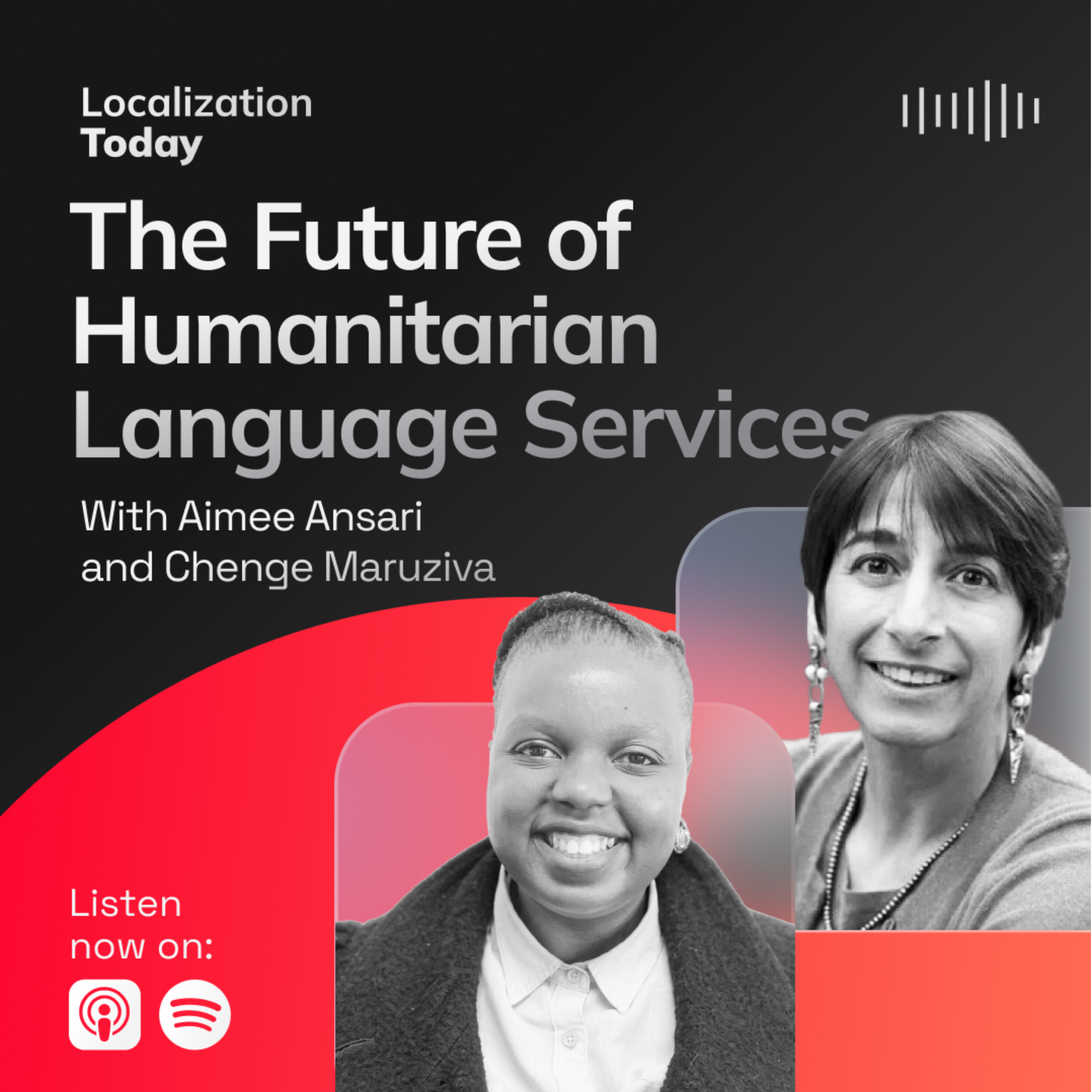
[00:00:03] Speaker A: Hello and welcome to Localization Today where we explore how language, technology and community converge to unlock ideas for everyone everywhere. I'm Eddie Arrieta, CEO at Multilingual Media. Today's episode focuses on language access as a humanitarian and social justice issue and on a major development in the non profit language space. In 2026, Star Gym leader joined Clear Global software, strengthening a shared mission to ensure that people can access critical information and services in languages they understand. Clear Global is widely known for its work through Translators Without Borders. Trimly, meanwhile, has built a powerful mobile platform connecting refugees and aid organizations with volunteer translators and interpreters in real time. Today we'll explore how this integration came about, what both organizations have achieved so far and and what it means for the future of language services in the social impact sector. Amy Tsenge, welcome.
[00:01:07] Speaker B: Hey Eddie, thanks. Thanks for having me.
[00:01:09] Speaker A: And of course it's amazing to have you here. And for our audience, how about we start with the big picture? What's the story behind the integration of Clear Global Antarctica?
[00:01:21] Speaker B: Well, Eddie, it's kind of a nice story. Tojimly was founded in 2017 and from the beginning, the founder, a lovely man named Atif Javid, he and I were talking fairly regularly, trying to figure out how we could work together, make sure that we were complementing each other and referring people to each other the whole time as the A so that we share a global mission. We share a lot of the same values we wanted to achieve. Basically the same thing, but in different ways. So Tarjimly really focusing on interpretation and Clear Global Translators Without Borders focusing on translation.
So by joining forces now we have a more comprehensive solution to language issues in the social impact sector.
We're both volunteer driven and we just felt like now was a really good time giving all the changes in the world and in the social impact sector for us to join forces and be stronger together.
[00:02:31] Speaker A: That sounds amazing, Amy. Thank you. And of course, both organizations serve the social impact sector in different ways. How do Clear Global enter Gym leader complement each other, if I may ask?
[00:02:42] Speaker C: That's a really great question, Eddie. I think I'm going to pick up where Amy left off with that statement, better Together.
So I think Tarjumi brings a platform for real time interpretation and translation, connecting frontline workers, nonprofits with interpreters and translators within seconds. So linking innovation along with kind of frontline humanitarian needs and us coming together allows us to combine a couple of things, right, so combine our volunteer community. So when I look at volunteers, both communities, right, we've got maybe call it 200,000 plus people who are volunteering and saying, hey, this is something that's important to me. This is valuable work that I want to get behind.
I think what you're also then able to find is kind of from the research component is that we're able to bring in insights from interpretation sessions and translation requests that can help inform what language research looks like, what data sets look like, and how we then develop technology that better works for people that actually need it.
[00:03:50] Speaker A: Thank you, Chenge. Amy, of course, Clear Global has a strong focus on language and voice data. How does this work connect with targymly's interpretation platform?
[00:04:02] Speaker B: Yeah, as you said, Eddie, I think you know us well enough now that you know that we have, we're really focusing on voice and voice data.
So the opportunity to team up with tarjimly was just an incredible opportunity for us because it fits very nicely with our vision forward and it's helping us to expand our voice data research. As Chengy mentioned, we can develop more tools. We have more options now given the tarjimly platform.
We can train more people to use voice technology and interpretation. And we'd really like to start exploring AI assisted interpretation tools and low resource languages.
So, I mean, I think it's a really, really good partnership because it really helps us to create both create voice data, but also find out more about insights that can support the development of better language technologies for low resource and underserved languages.
[00:04:58] Speaker A: Thank you, Amy. Both organizations, of course, operate as nonprofits, like we've said, in an industry, of course, largely driven by commercial language services.
What does it mean to frame then language access as a social justice issue?
[00:05:15] Speaker C: I think there's a couple of things that come to mind for me.
So a lot of how I think about this. So my background is in social work. So my heart and perspective and all of that is kind of informed by kind of my early experiences as well. And I think for everybody that we think of this as a privilege, right? It's really an honor to be able to, to put, to lean into how we think about and understand communities that have, that are low resourced, right. That have low resource languages, that we're able to go to places where other people can't go, right, that we're able to lean into, hey, what are some of the issues that are being faced as people are seeking care, are seeking health care, legal care, whatever it might be? What are some of the challenges that people experience? And because we're mission driven, it means that we're able to prioritize particular communities that larger organizations might not be able to prioritize at any given point in time and really build more robust solutions. Specifically for kind of the humanitarian sector and that social impact space where communication barriers are often felt and experienced on both sides. So the humanitarians working in those spaces and people seeking out care and access to essential services.
[00:06:30] Speaker A: Thank you. Cenga and Amy. We've met in many different events. We see the language industry evolving.
Looking ahead, where do you see this industry evolving, especially in the humanitarian social impact sectors, which is something that others are not really looking into at the moment.
[00:06:49] Speaker B: Thanks, Eddie, for asking that question. Because I think we have a very special way of looking at language services as clear global and translators without borders. We've really pushed the humanitarian and social impact sectors to recognize language as a critical part of humanitarian response, of social impact. If people can't get the information they need in a language they understand, that's not really helping them.
And so now like the eu, the uk, Australia, they all routinely ensure that language is taken into account before making decisions on what kind of aid or what kind of impact they want to have. And we have demonstrated that tech tools, language enabled technology tools, if they're developed with the communities, are really effective and can be developed and they can be developed in low resource languages. What that means for the language industry, I think is that while we're talking a lot about AI and whether or not you can do interpretation using artificial intelligence and large language models, what that means is that that has sort of become the expectation that you can do translation, that you can do interpretation using AI models, using, using large language models. But for most of the people that we work with, for most of the people in the social impact sector, the 3.7 billion people who don't speak one of the top 20 languages, that's just not true. And it's not going to be true for a long time.
I just, I was talking about this paper done by an organization called Robots Mali.
They work to enable access to technology for people in Mali and West Africa. And they just looked at what it would take to create voice data, so enough data to be able to create like ASR, a speech model in Bambara, which is a language spoken in Mali. And you know, in English, it takes about three to six hours to transcribe an hour of English audio recording. It takes 30 to 36 hours for Bambara. And that just means that human effort, that human input is so much so, so incredibly vital and important. When we're thinking about developing language technology in low resource Languages. So I think part of where the language industry is going and needs to go is, is to really think about how necessary humans are and in doing what, to make sure that the incredible advancements in language technology can really be leveraged for the people who need it most.
[00:09:26] Speaker A: Thank you, Amy. Thank you, Changi, of course. And our listeners, I know our audience is wondering right now, I want to support, I want to get involved, I want to do something. So for our listeners who want to support your mission, how can people get involved or contribute to the work that you both do?
[00:09:44] Speaker C: I'm sure I can start.
I think there's two kind of things that come to mind. As we both mentioned earlier, we've got a very big volunteer community and I think, as Amy's talked about, just in the example that she's mentioned, the, the need for humans in the story of us building kind of all of this data for low resource languages. So if there is a language that you speak, put your hand up and volunteer, right? It, it doesn't need to become a full time job. It's, it doesn't mean that you are becoming a linguist. It means that you're wanting to contribute to the bigger story of humanity and how we can create language access and equity where we are in the world right now. So if you'd like to volunteer, you can go to our website, you can sign up and become one of those people that's contributing to how we can move that narrative forward. I think for me, that's one of the biggest things and the simplest things ways that people can participate.
[00:10:40] Speaker B: And I would add to that that of course we rely on the incredible support we get from the language industry, from your listeners, Eddie.
They support our mission every year, every month. And we so appreciate that the donations we get, either in kind or financial, are critical. We couldn't do this work without the support of the language industry. And I would encourage everyone out there, whatever company you work for, for whatever organization you work for, please make sure that you're talking to them about how they can support language justice and language rights as a human right through the work that you do. And get in touch with us if you'd like to continue that conversation, we'd be really happy to talk to you.
[00:11:23] Speaker A: Thank you, Amy. Thank you, Chang. And of course we are going to keep our eyes opened to see how this partnership evolves, the success that's going to come from it. So we'll expect both of you to come back to localization today to let us know.
Hundreds out of hundreds of volunteers are making this a resound success.
So thank you so much for doing this today. Is there anything else you'd like to add before we go?
[00:11:50] Speaker B: I'd also like to do a big shout out to the almost 200,000 people that have signed up to volunteer for us. They are the heart and soul of the organization and they are what makes they are part of what makes this all possible.
Many of them are a part of the localization industry. And Eddie, thank you so much always. You and your team are incredible. You do such amazing work and you're always so generous to us.
[00:12:16] Speaker A: Thank you. Appreciate it. Cenge, any final message, any shout outs out there?
[00:12:22] Speaker C: I think just to echo what Amy described, I think when I reflect on the work that Tarjum Lee was able to do and as we endeavor on this partnership that there are 1500 organizations that were supported by volunteers and really the platform doesn't exist without people giving their time and recognizing that access to language, access to being heard is a human right. So thank you to everyone that chooses to show up and chooses to participate and a big encouragement to you and to everyone else in the space to continue doing this really important and critical work. Thank you.
[00:13:01] Speaker A: Thank you. And I really like what you just mentioned. Shall Wenap is something someone told me in the last event I attended. Shall Wen up is already half of the work and I'm really glad Chengge and Amy you are here showing up, building partnerships which is not easy to maintain. So Multilingual is here to give visibility to this amazing partnership and the future work that you would do to our listeners. Thank you once again for listening to Localization today.
Big thank you Amy Ansari and Cenge Maruziva for sharing how collaboration, technology and global volunteer networks can expand language access for communities around the world. If you like to learn more about Cliido Global, enter gymly or explore ways to support their work. You can find links in this episode's description. Catch new episodes of Localization today on Spotify, Apple Podcasts and YouTube. Subscribe rate and share so others can find the show. I'm Eddie Arieta with Multilingual Media. Thanks for listening and we'll see you next time. Goodbye.